/60s-posters · home
60s posters: psychedelic, op art, flower power
Make your own60s posters
Describe yours. We'll remake the whole pack your way.
More like this
the whole catalog →



every sample — three subjects, three styles ↓
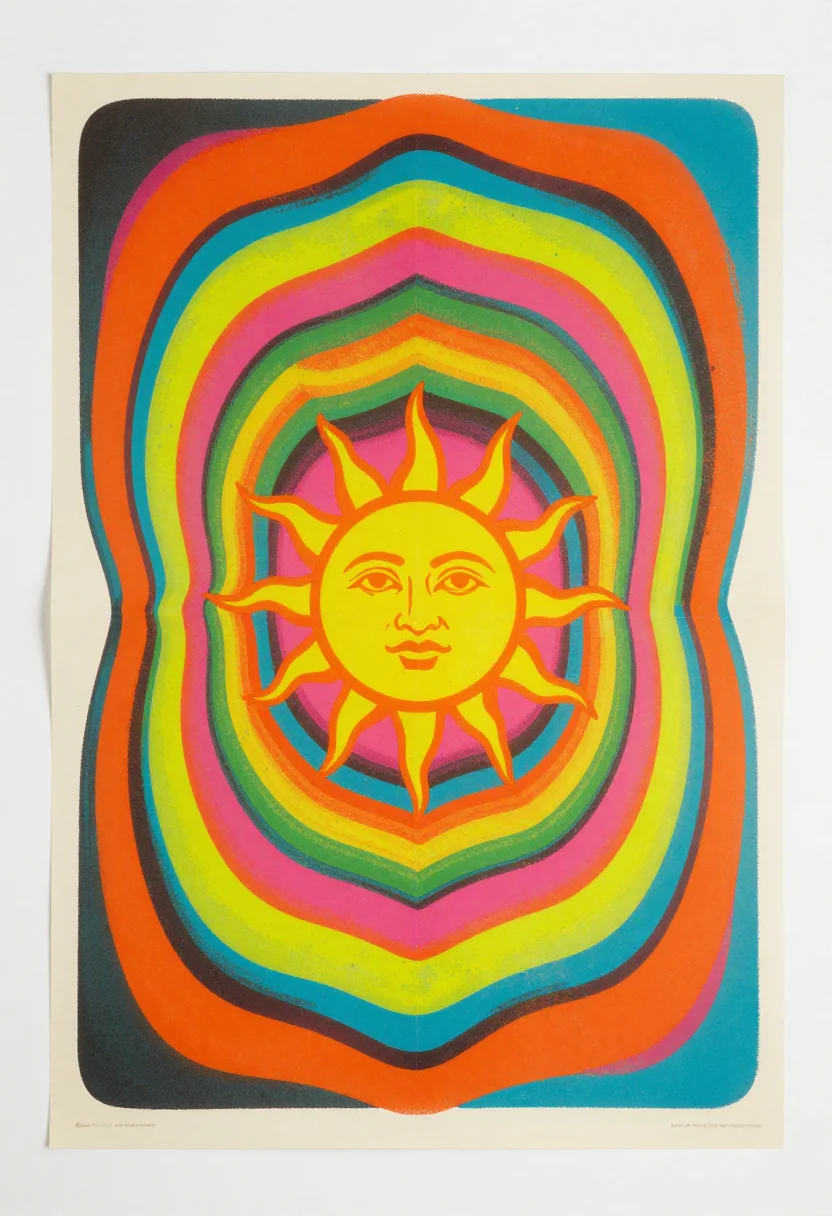
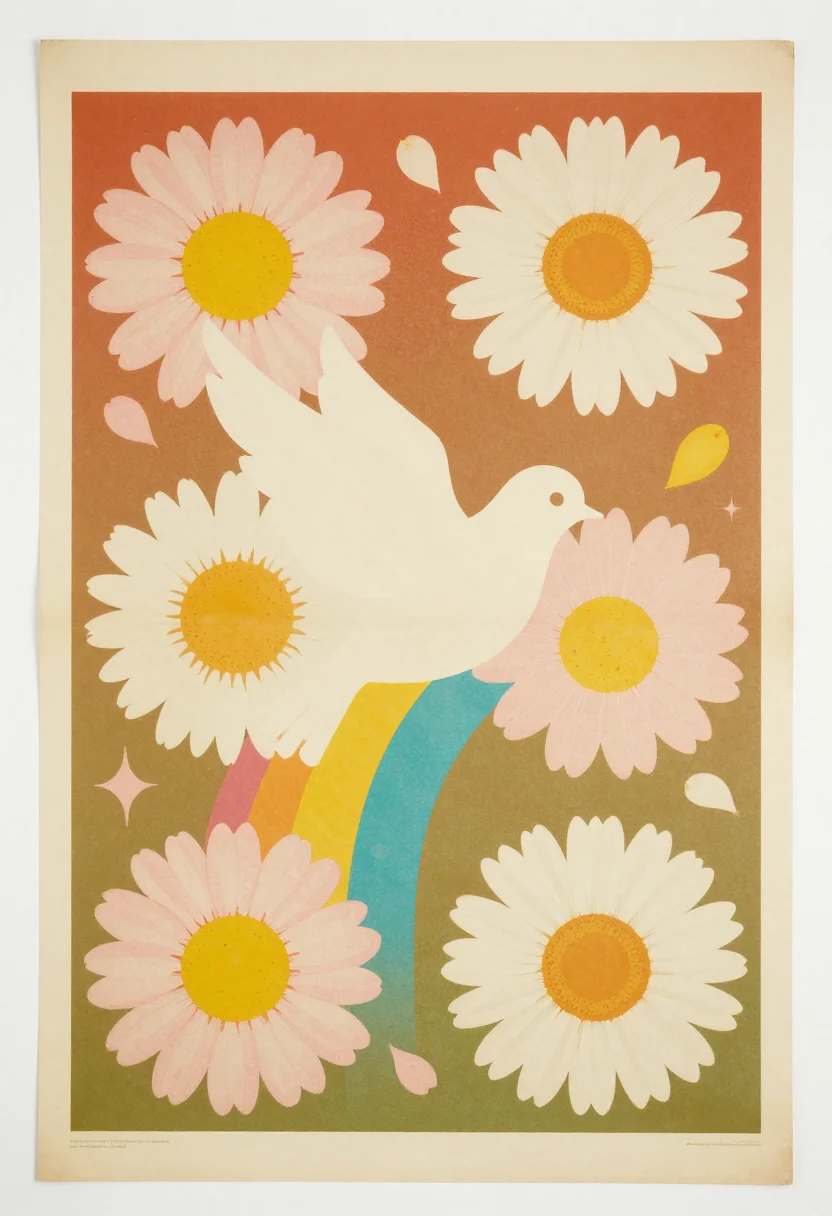
Vintage sixties posters: a psychedelic poster of melting swirls around a sun face, a mod op-art poster of black and white circles bending into a tunnel, and a flower-power poster of daisies and a peace dove. Each comes as a silkscreen, a flat vector or an aged offset print. Type a different subject or twist, such as a cat or a pastel palette, and the same poster styles carry it.
- a bedroom or dorm wall
- a party or retro-themed room
- a gift for a music or design fan
- a classroom display on sixties design
Frequently asked questions
- What do the nine pictures show?
- Three designs, a psychedelic swirl poster, a mod op-art poster and a flower-power peace poster, each drawn in three print styles.
- How do the three styles differ?
- Silkscreen has flat overlapping inks with slight misregistration and visible paper grain. Flat vector has clean shapes with hard edges and no outlines. Aged offset has soft halftone dots, faded inks and worn corners.
- Can I ask for a different subject?
- Yes. Type a subject or a twist, such as a cat or black light, and the three styles carry it. The result is a request, so the picture may differ from the samples.
- Are these real vintage posters?
- No. Each is a new design made to look like sixties poster art.
About toile
This page is a showcase and a starting point: nine samples already rendered, three readings of the pack crossed with three styles, each shown at the size and ratio it was made for. Take any of them further on the wall with a few words, or ask for all nine again under your own direction; a sign-in keeps what you make, and it is free while Toile is new. The recipe behind each sample — the subject, the style, the palette, the framing — travels with the image rather than staying private to the render: it is in the alt text of every sample and in the page's own structured data, so a search engine reads the same handles a person would.