/app-icons · brand
App icon design: a leaf, a bolt and a six-icon home screen set
Make your ownApp icons
Describe yours. We'll remake the whole pack your way.
More like this
the whole catalog →
every sample — three subjects, three styles ↓
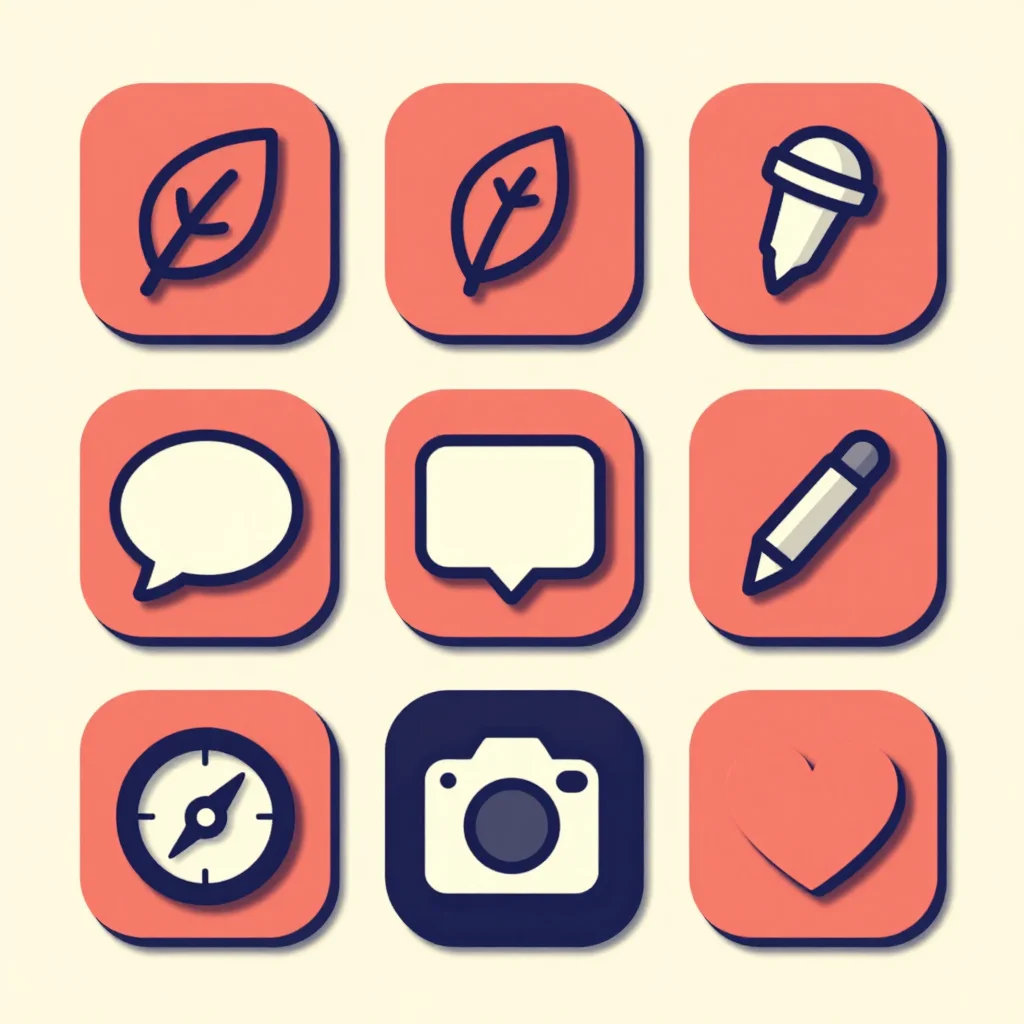
An app icon has to read at the size of a thumbnail. These nine are drawn that way: a single leaf glyph, a bolt glyph, and a matching six-icon set for a themed home screen — each rendered flat iOS-style, in soft glass, and in a playful chunky style. Ask for a different glyph and the tile redraws around it.
- a new app's icon before launch
- a rebrand of an existing app
- a themed home-screen icon pack
- a favicon derived from the same glyph
- a pitch deck mockup for a client
Frequently asked questions
- What size does the icon save at?
- Each icon is drawn on a 1024 by 1024 tile, the standard App Store and Play Store master size — scale down from there for every smaller slot.
- Can I get an icon for a different app idea?
- Yes — the direction field is for exactly that: type your app's subject and the same tile recipe redraws around it.
- Does the icon include the rounded corners the OS applies?
- The artwork is drawn as a flat square tile; iOS and Android apply their own corner mask automatically when the icon is installed, so no mask is baked in.
- Can I get the whole home-screen set in one download?
- The six-icon set reading shows a matching grid in one image — download it and split the tiles, or ask for each glyph as its own square.
About toile
This page is a showcase and a starting point: nine samples already rendered, three readings of the pack crossed with three styles, each shown at the size and ratio it was made for. Take any of them further on the wall with a few words, or ask for all nine again under your own direction; a sign-in keeps what you make, and it is free while Toile is new. The recipe behind each sample — the subject, the style, the palette, the framing — travels with the image rather than staying private to the render: it is in the alt text of every sample and in the page's own structured data, so a search engine reads the same handles a person would.