/carnival-mask-templates · season
Carnival mask templates: half mask, animal mask, feather mask
Make your ownCarnival mask templates
Describe yours. We'll remake the whole pack your way.
More like this
the whole catalog →

every sample — three subjects, three styles ↓
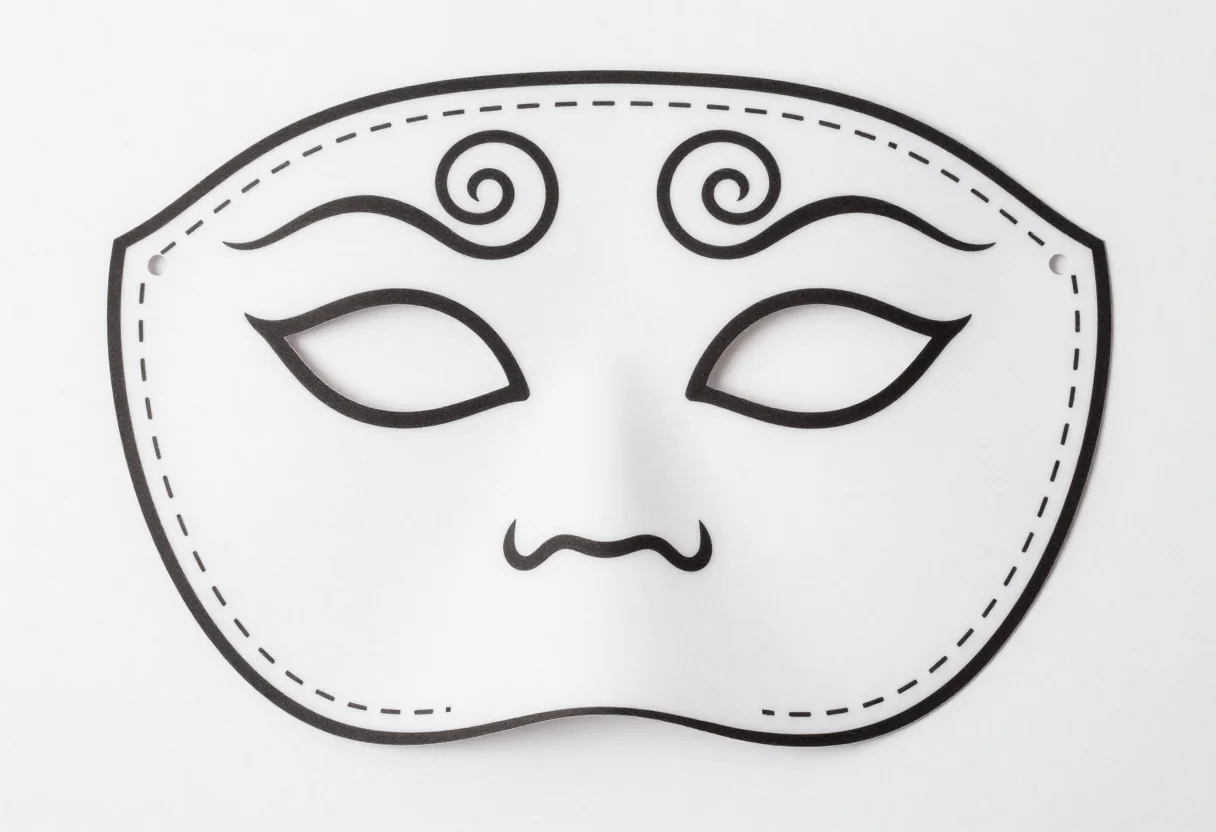
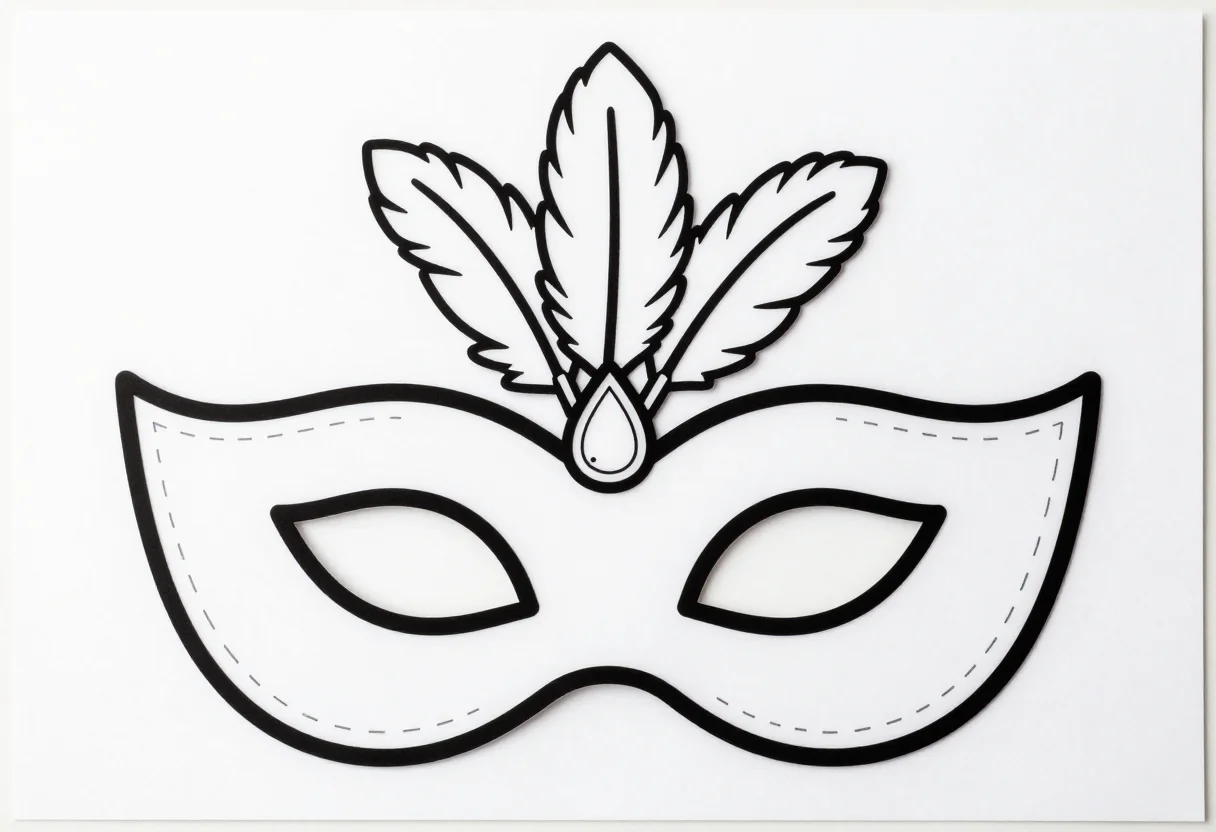
Mask outlines on plain paper, with the eye holes marked and a dashed cut line round each shape. Parents and teachers print them for Carnival, Fasching or Mardi Gras, colour them in and tie them on with elastic. The three shapes are a Colombina half mask, a child's cat-and-fox mask and a masquerade eye mask with feathers. Type a different subject, such as a wolf, and the same outline is drawn with it.
- a school Carnival or Fasching craft
- a kids' party activity table
- a Mardi Gras parade costume
- a rainy-day activity at home
Frequently asked questions
- How do I make the mask?
- Print the sheet on paper or card, cut along the dashed line, colour the mask, then punch the side holes and thread elastic through them.
- Should I print on card or paper?
- Card holds its shape better for a mask worn for a whole afternoon. The outline is the same on either.
- What is the difference between the three styles?
- Plain outline leaves large open areas to colour. Ornate pattern divides the surface into small decorative sections. Chunky kids uses thick lines and few shapes for a young child.
- Can I ask for a different animal or design?
- Yes. Type it in the direction field. The result is a request, so check the outline on the printed sheet before cutting.
About toile
This page is a showcase and a starting point: nine samples already rendered, three readings of the pack crossed with three styles, each shown at the size and ratio it was made for. Take any of them further on the wall with a few words, or ask for all nine again under your own direction; a sign-in keeps what you make, and it is free while Toile is new. The recipe behind each sample — the subject, the style, the palette, the framing — travels with the image rather than staying private to the render: it is in the alt text of every sample and in the page's own structured data, so a search engine reads the same handles a person would.