/cbt-worksheets · classroom
CBT worksheets: thought record, CBT triangle, thinking traps
Make your ownCBT worksheets
Describe yours. We'll remake the whole pack your way.
More like this
the whole catalog →
every sample — three subjects, three styles ↓
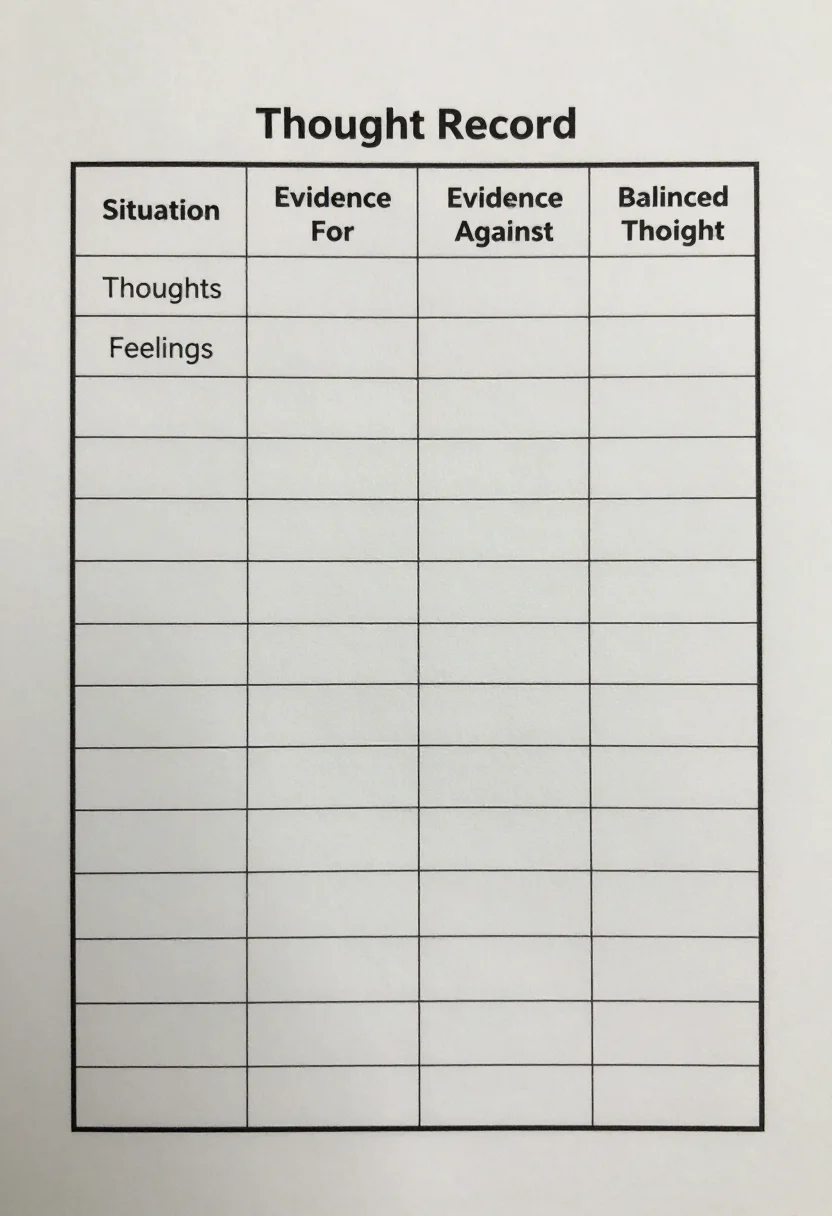
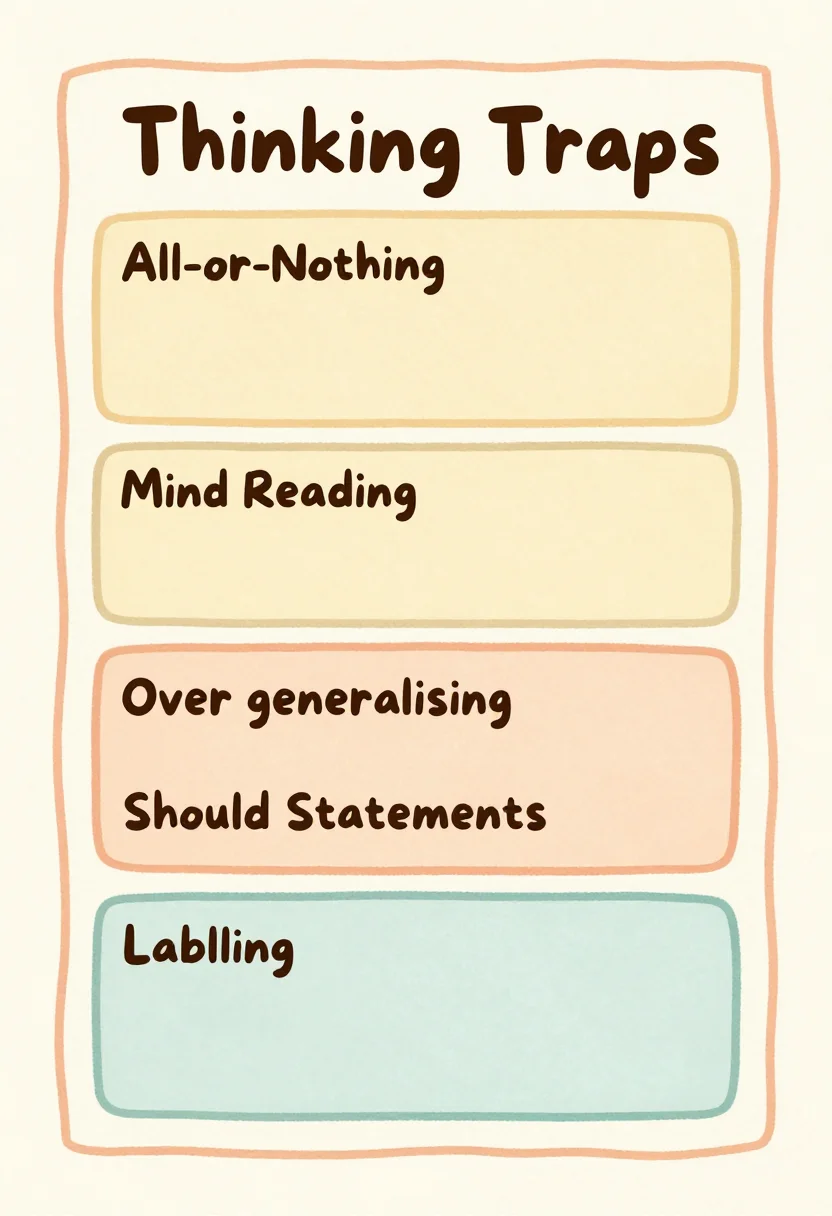
Printable CBT worksheets for catching and questioning unhelpful thoughts. The nine pages are a thought record with columns for the situation, thoughts, feelings, evidence and a balanced thought, the CBT triangle linking thoughts, feelings and behaviours to a situation, and a chart of six common thinking traps with a one-line meaning each. Therapists hand them out, and people working through cognitive behavioural therapy on their own print them. Type a different subject or twist, such as for teens, with examples or large print, and the same layouts carry it.
- a therapist's session handout
- a client's homework between sessions
- a self-guided CBT practice folder
- a training room or workshop handout
Frequently asked questions
- What is on the nine pages?
- Three worksheets, each in three styles: a thought record with six columns, the CBT triangle with an empty situation box, and a chart of six thinking traps.
- Are the thinking traps labelled and explained?
- Yes, each of the six traps has its name and a one-line meaning: all-or-nothing, catastrophising, mind reading, overgeneralising, should statements and labelling.
- What is the difference between the three styles?
- Black and white uses thin black lines only; calm blue uses soft blue, sage and lavender accents; warm hand-drawn has wobbly outlines, peach and yellow tones and visible paper grain.
- Can I change the subject or the layout?
- Yes, type a different direction such as for teens or with examples; the result is a new picture and is not guaranteed to match the nine samples.
About toile
This page is a showcase and a starting point: nine samples already rendered, three readings of the pack crossed with three styles, each shown at the size and ratio it was made for. Take any of them further on the wall with a few words, or ask for all nine again under your own direction; a sign-in keeps what you make, and it is free while Toile is new. The recipe behind each sample — the subject, the style, the palette, the framing — travels with the image rather than staying private to the render: it is in the alt text of every sample and in the page's own structured data, so a search engine reads the same handles a person would.