/character-design-sheets · illustration
Character design sheets: turnaround, details and model poses
Make your ownCharacter design sheets
Describe yours. We'll remake the whole pack your way.
More like this
the whole catalog →
every sample — three subjects, three styles ↓
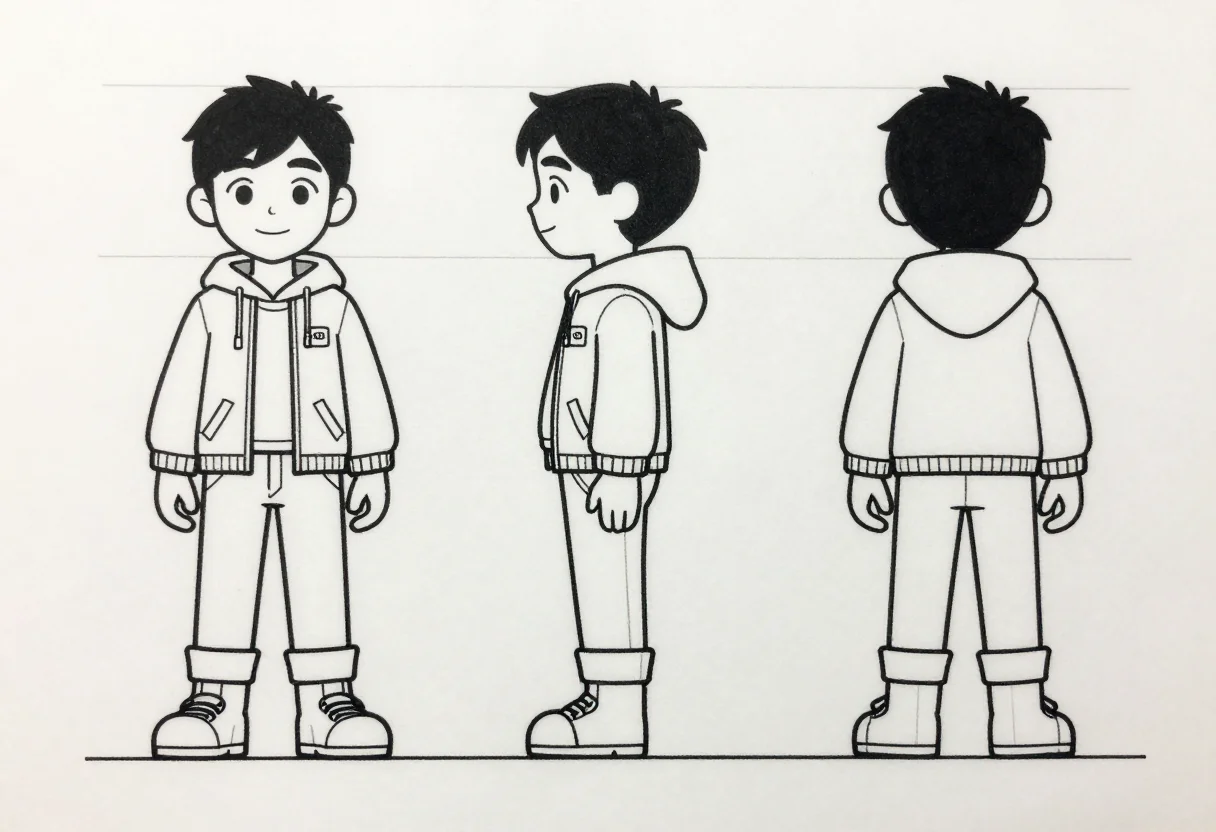
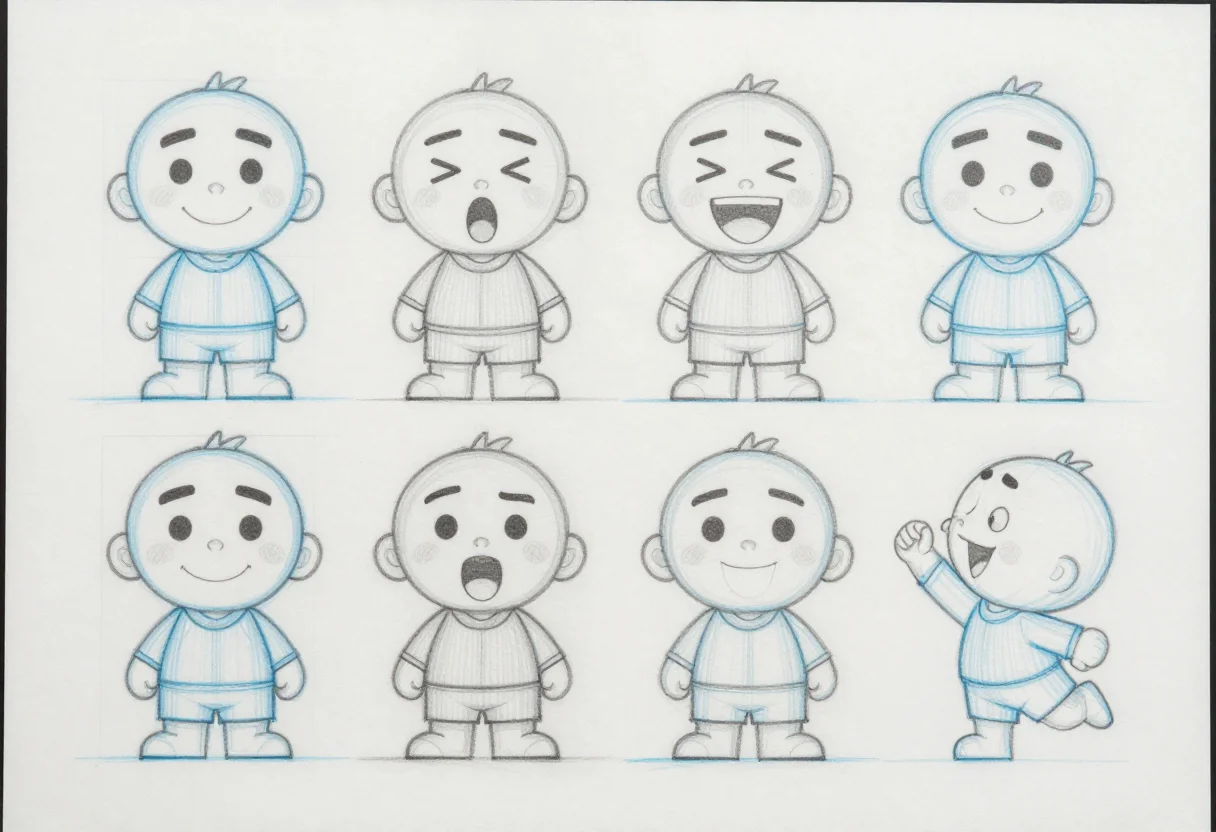
Animators, comic artists and game artists draw a character design sheet so the character looks the same every time it is drawn. These sheets show one character in a turnaround of front, three-quarter, side and back views, in a row of detail close-ups, and in a model sheet of expressions and action poses. Each comes as black lineart, gray cel-shading tones, or an animation pencil rough. Type a different character and the sheet is drawn to match.
- a model sheet for a character you are developing
- a turnaround reference for a comic or animation pitch
- a reference for keeping a character's look the same
- a concept sheet for a game character
Frequently asked questions
- What is a turnaround?
- A row of views of the same character, from front to back, standing on a shared ground line with guidelines for the head, shoulders, waist and knees.
- What does the details sheet show?
- One front view with close-ups of the face, a gloved hand, a boot and a shoulder bag, each drawn larger in its own area of the sheet.
- How do the three styles differ?
- Clean lineart is black ink with no shading, gray tones adds one flat gray shadow tone, and pencil rough shows light blue construction lines under a graphite clean-up line.
- Can I ask for a different character?
- Yes. Type it in the direction field and the sheet is drawn to match, though a request is not a promised result.
About toile
This page is a showcase and a starting point: nine samples already rendered, three readings of the pack crossed with three styles, each shown at the size and ratio it was made for. Take any of them further on the wall with a few words, or ask for all nine again under your own direction; a sign-in keeps what you make, and it is free while Toile is new. The recipe behind each sample — the subject, the style, the palette, the framing — travels with the image rather than staying private to the render: it is in the alt text of every sample and in the page's own structured data, so a search engine reads the same handles a person would.