/christmas-cards · occasions
Christmas cards: village, holly and reindeer in three styles
Make your ownChristmas cards
Describe yours. We'll remake the whole pack your way.
More like this
the whole catalog →
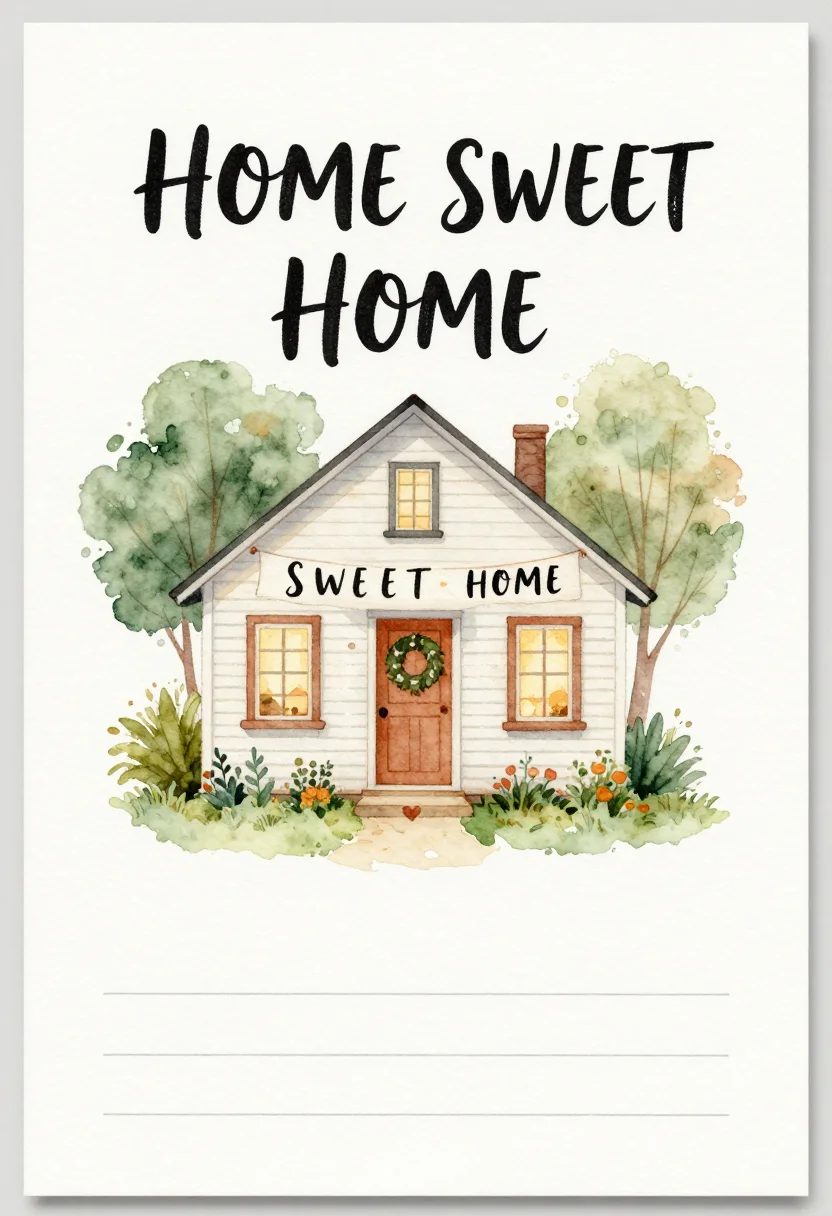
every sample — three subjects, three styles ↓
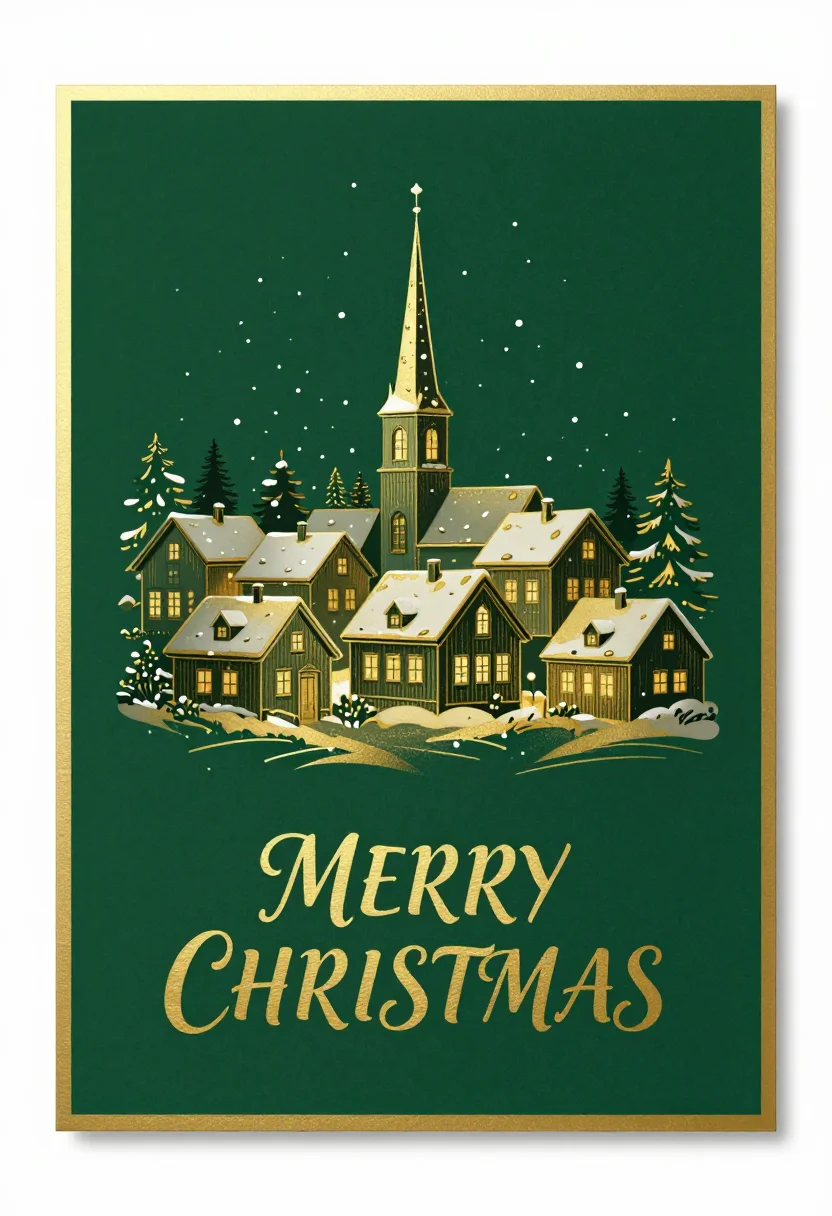
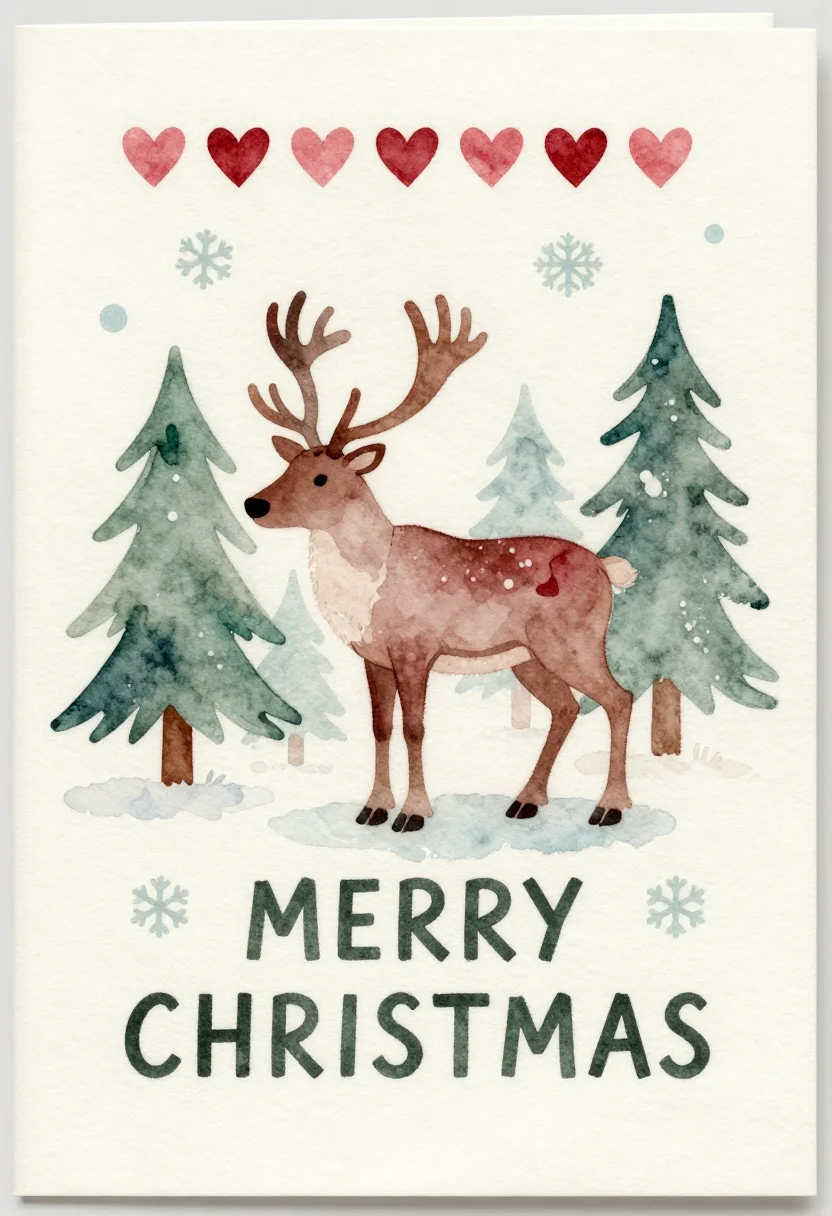
A Christmas card is a small canvas that has to say a lot: a snowy village with lit windows, a single sprig of holly, a Scandinavian reindeer. These nine are drawn as the folded card front — gold-foil-look script for the traditional send, hand-painted folk pattern for the cozy one, loose watercolor for the quiet one — printed two to a sheet with a fold line, the inside left blank for your own note. Ask for a different color or a dog in the scene and it redraws.
- a holiday card to fold and mail
- a family Christmas card with a photo added later
- a set to print two-up and cut
- a thank-you card in the same design family
Frequently asked questions
- What size are the folded cards?
- Each sheet is drawn at portrait A4 with two card fronts and a fold line, so a single sheet makes two finished cards after cutting and folding.
- Is the inside of the card printed too?
- No — the inside is left blank on purpose, for your own handwritten note; only the front design is drawn.
- Can I change the colors or add something personal?
- Yes — type a direction like 'in blue and silver' or 'with a dog in it' and the same three styles redraw around it.
- Does MERRY CHRISTMAS print exactly, or do I add my own words?
- Where a design carries text — the gold-foil script version — it's spelled exactly as shown; the plainer scenes are wordless, ready for your own greeting.
About toile
This page is a showcase and a starting point: nine samples already rendered, three readings of the pack crossed with three styles, each shown at the size and ratio it was made for. Take any of them further on the wall with a few words, or ask for all nine again under your own direction; a sign-in keeps what you make, and it is free while Toile is new. The recipe behind each sample — the subject, the style, the palette, the framing — travels with the image rather than staying private to the render: it is in the alt text of every sample and in the page's own structured data, so a search engine reads the same handles a person would.