/cloud-drawing-references · illustration
Cloud drawing reference: puffy clouds, storm clouds, wispy clouds
Make your ownCloud drawing references
Describe yours. We'll remake the whole pack your way.
More like this
the whole catalog →


every sample — three subjects, three styles ↓
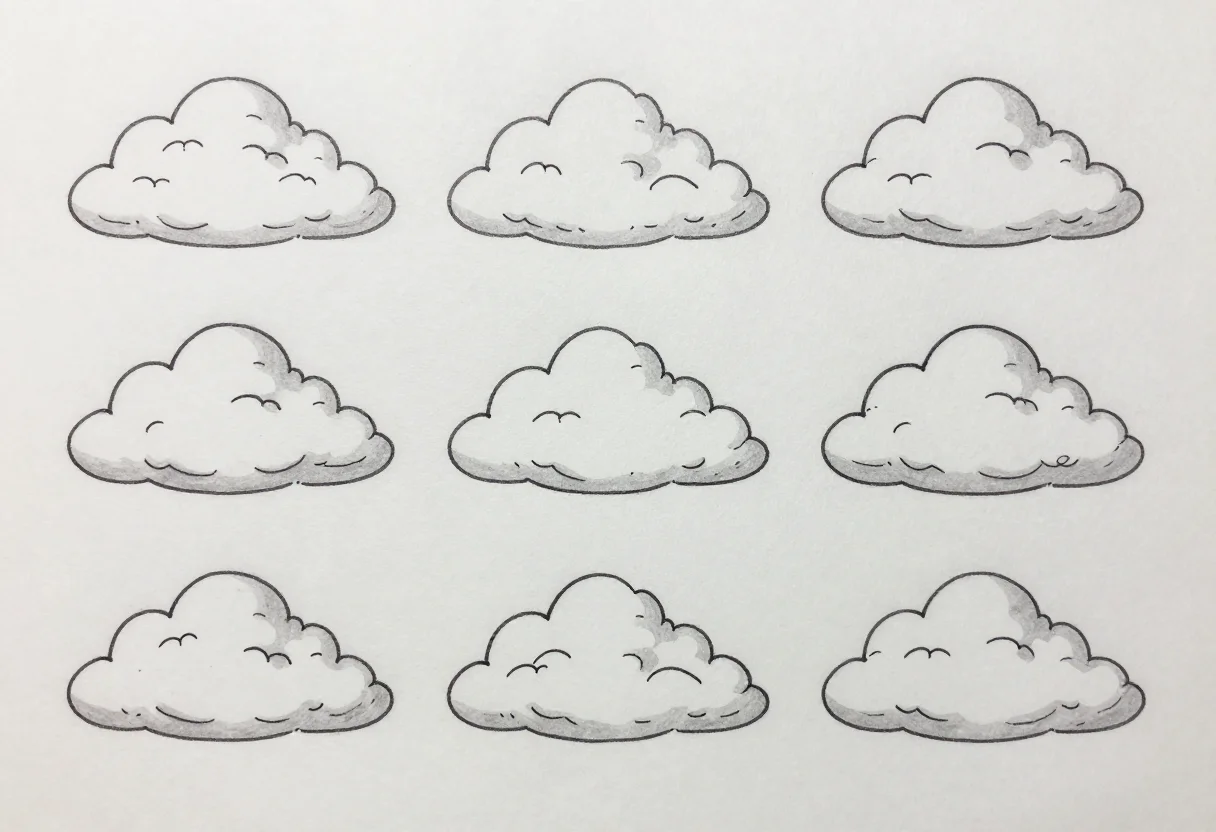
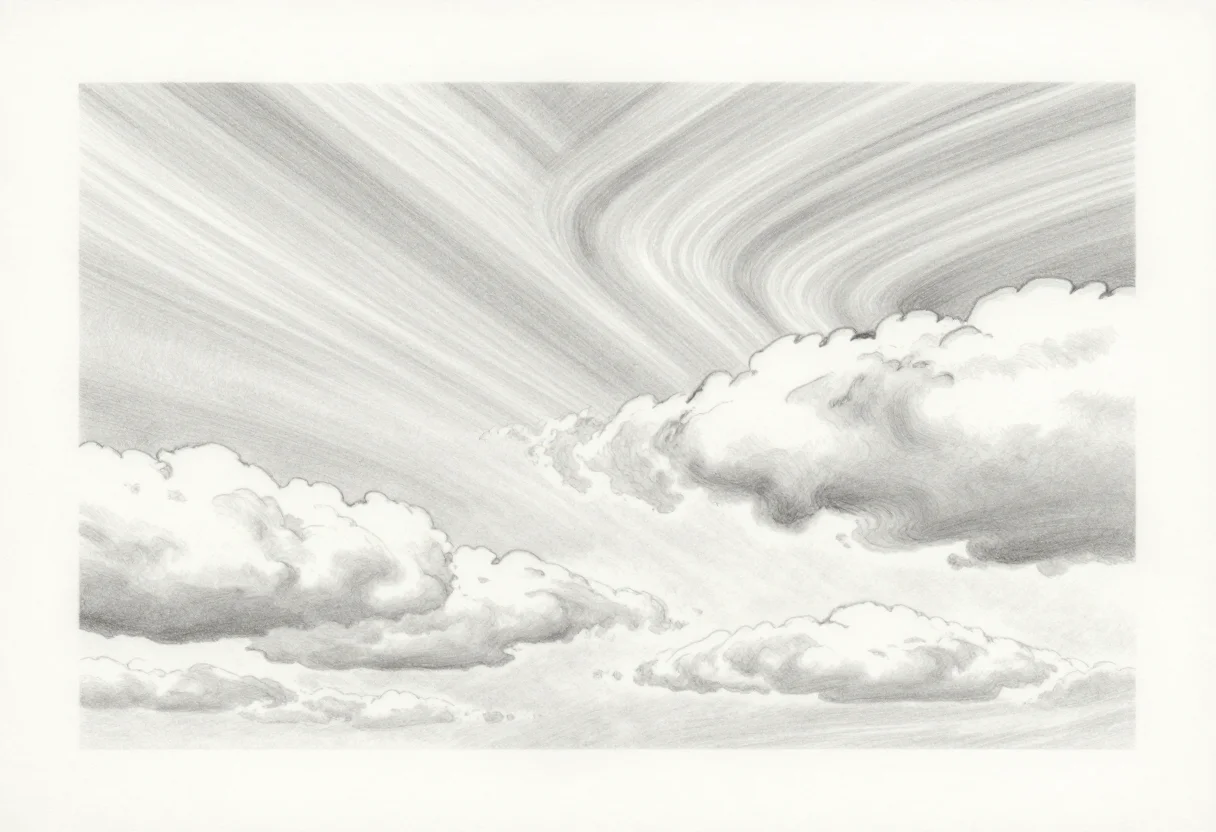
A sky that looks real depends on how each cloud type sits, from its edges and bases to the shade under it. These sheets show puffy cumulus with lit tops and flat bases, a towering storm cloud with rain falling from its base, and thin high cirrus above small rippled clouds. Each sky comes in clean contour, hatched shade, and graphite sky. Type a different sky, such as sunset clouds, and the same types carry it.
- a background for a landscape painting
- a reference for the sky in a fantasy scene
- a sketchbook page on cloud types
- a study of a storm for a game backdrop
Frequently asked questions
- What cloud types are shown?
- Puffy cumulus, storm clouds with an anvil top, and thin high cirrus with small rippled clouds.
- What is the difference between the three styles?
- Clean contour marks the edges and bases of each cloud, hatched shade uses hatching on the underside and folds, and graphite sky uses soft blended shading for the form and depth.
- Are these photographs?
- No. Each sheet is a flat drawing of the sky on a plain white sheet, with no text and no labels.
- Can I ask for a different sky?
- Yes. Type a direction such as mountain sky or rain clouds, and it is a request for that, not a promised result.
About toile
This page is a showcase and a starting point: nine samples already rendered, three readings of the pack crossed with three styles, each shown at the size and ratio it was made for. Take any of them further on the wall with a few words, or ask for all nine again under your own direction; a sign-in keeps what you make, and it is free while Toile is new. The recipe behind each sample — the subject, the style, the palette, the framing — travels with the image rather than staying private to the render: it is in the alt text of every sample and in the page's own structured data, so a search engine reads the same handles a person would.