/condition-cards · tabletop
Condition cards: poisoned, stunned, cut sheet
Make your ownCondition cards
Describe yours. We'll remake the whole pack your way.
More like this
the whole catalog →
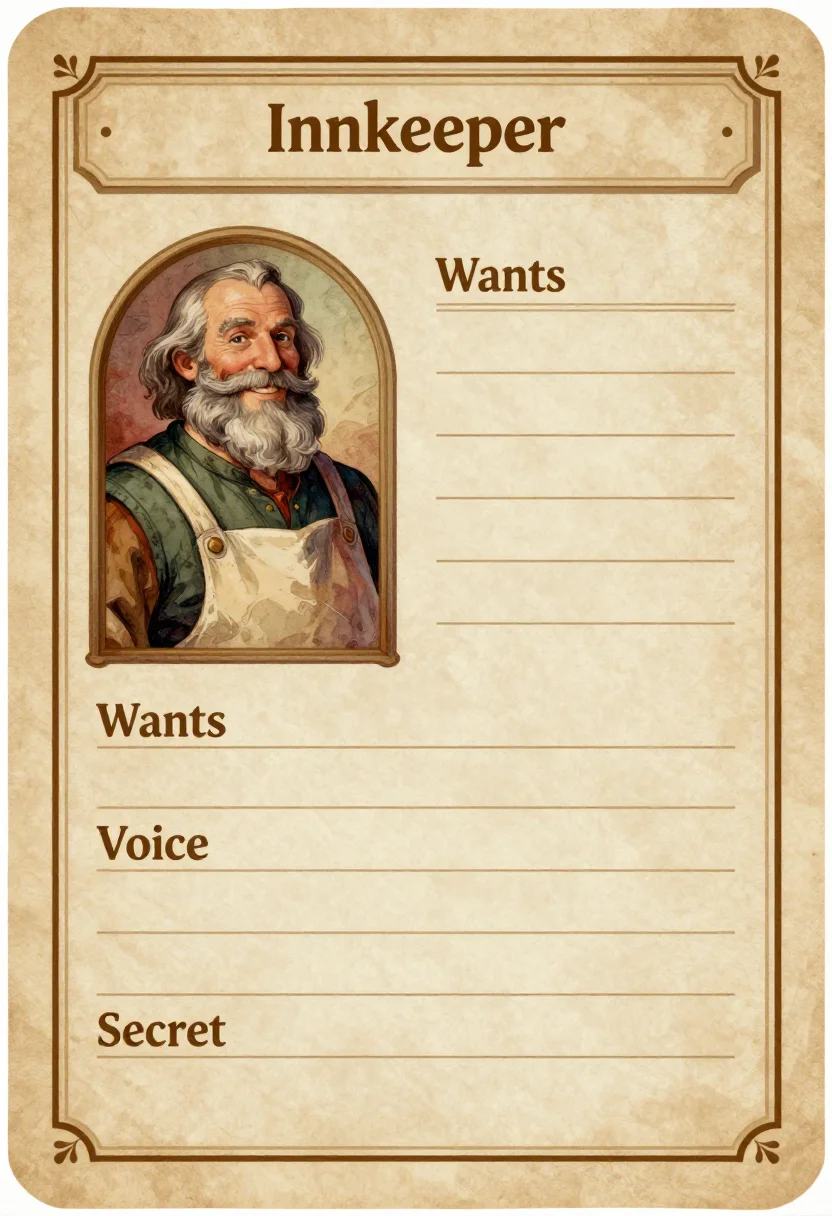
every sample — three subjects, three styles ↓
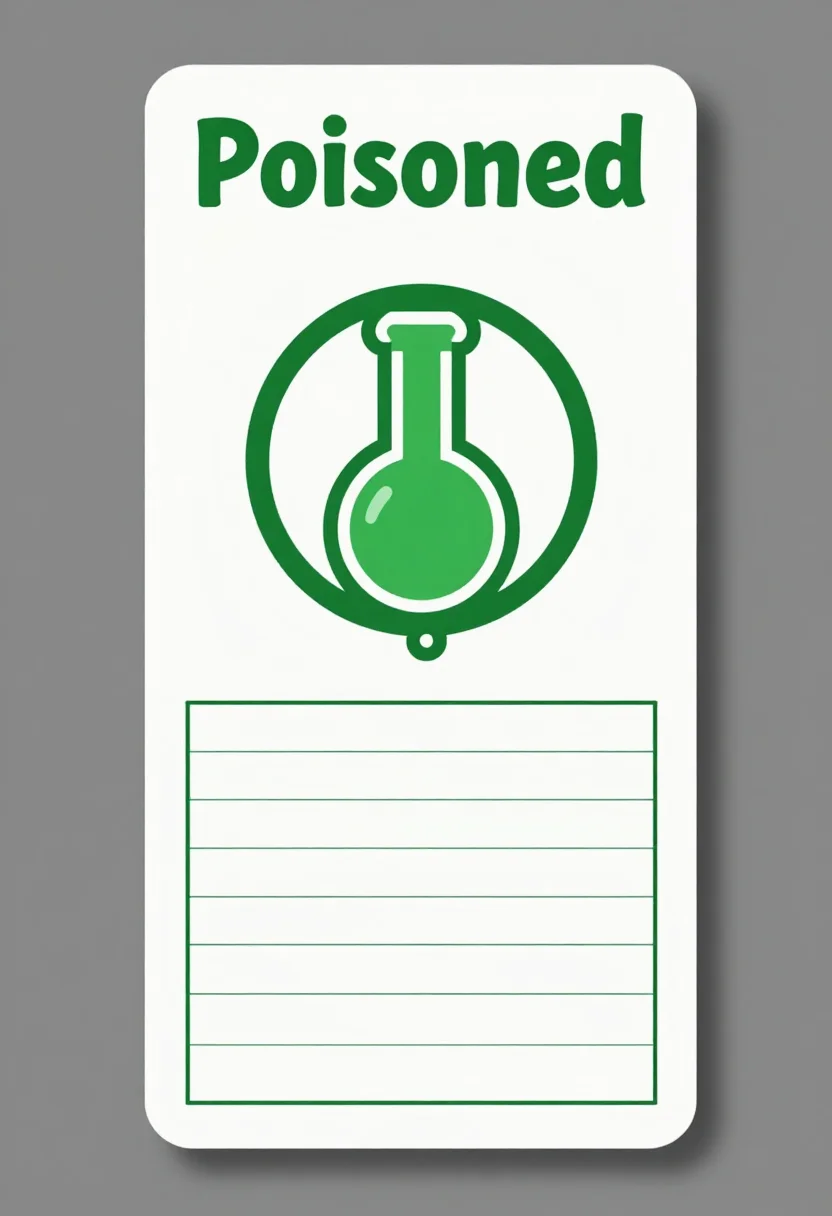
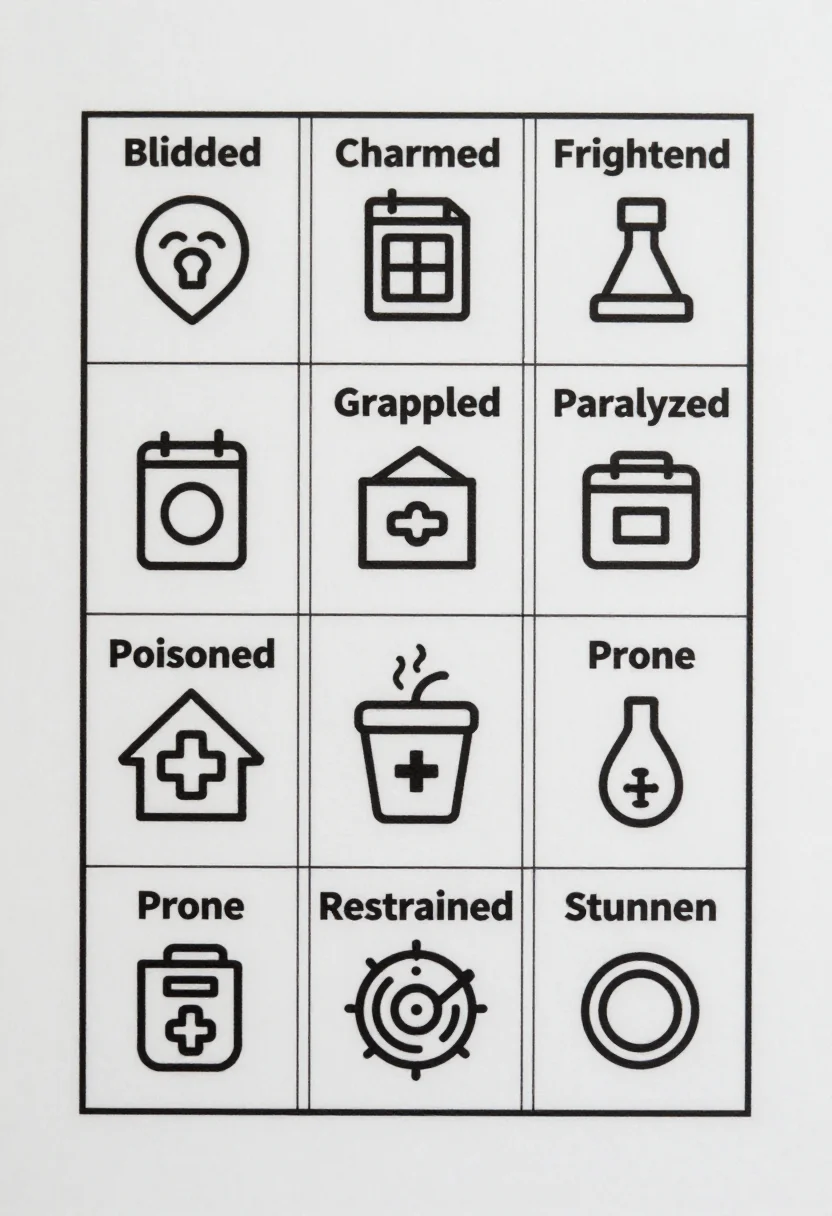
Printable condition cards to lay in front of a character who is poisoned, stunned or grappled, so the effect stays in view. The samples are a single Poisoned card and a single Stunned card, each with one plain icon and an empty rule box, and a cut sheet of nine named conditions. Each comes in flat icon, parchment and black ink treatments. Type a direction, such as advantage, and it is a request for that look.
- a card placed in front of a poisoned character
- a cut sheet kept on the table
- a black-and-white print for a low-ink run
- a reference card for a new player
Frequently asked questions
- Which conditions are on the cut sheet?
- Blinded, Charmed, Frightened, Grappled, Paralyzed, Poisoned, Prone, Restrained and Stunned, each with one icon.
- Is the rule text printed on the card?
- No. The rule box is empty, so you can write the effect in your own words.
- What is the difference between the styles?
- Flat icon uses one accent color per card on white. Parchment is cream with dark brown ink and a muted red accent. Black ink is one color on white, to save ink.
About toile
This page is a showcase and a starting point: nine samples already rendered, three readings of the pack crossed with three styles, each shown at the size and ratio it was made for. Take any of them further on the wall with a few words, or ask for all nine again under your own direction; a sign-in keeps what you make, and it is free while Toile is new. The recipe behind each sample — the subject, the style, the palette, the framing — travels with the image rather than staying private to the render: it is in the alt text of every sample and in the page's own structured data, so a search engine reads the same handles a person would.