/couple-mehndi · tattoo
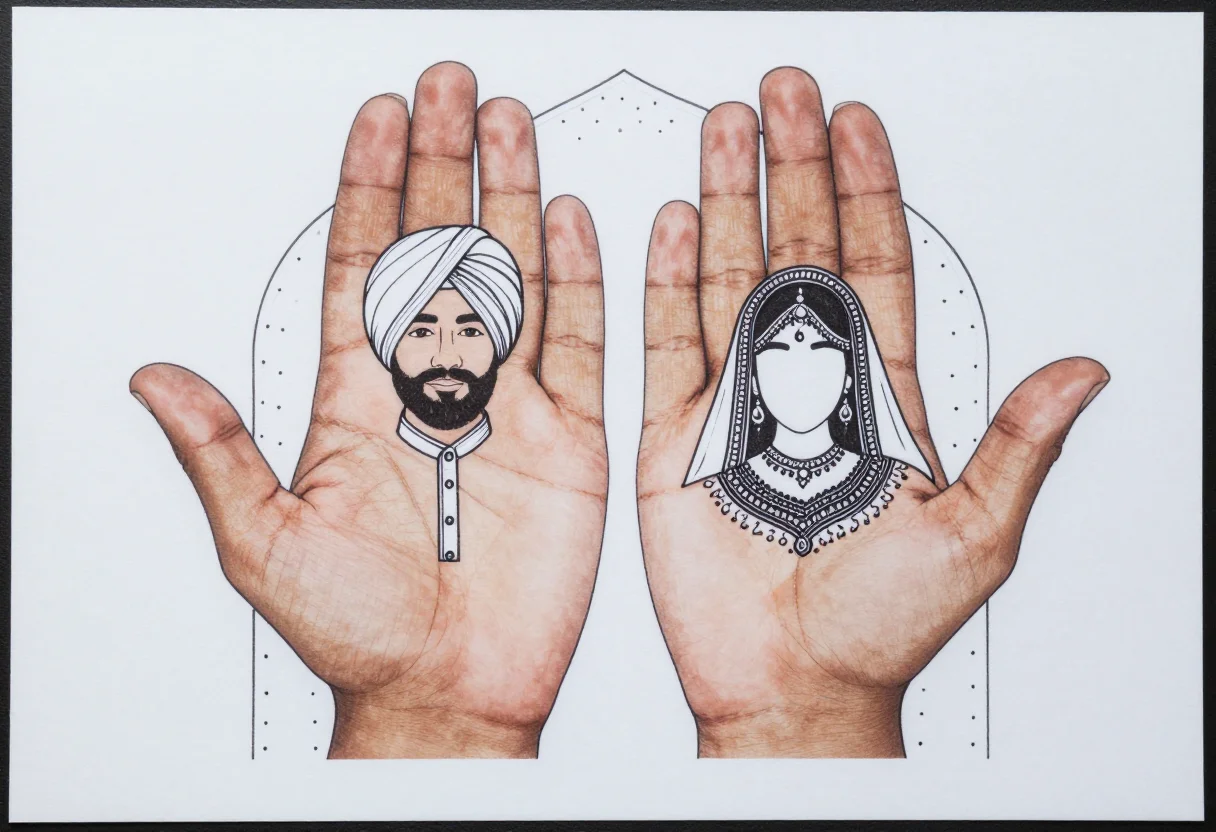
Couple mehndi design: bride and groom, varmala, split heart
Make your ownCouple mehndi
Describe yours. We'll remake the whole pack your way.
More like this
the whole catalog →
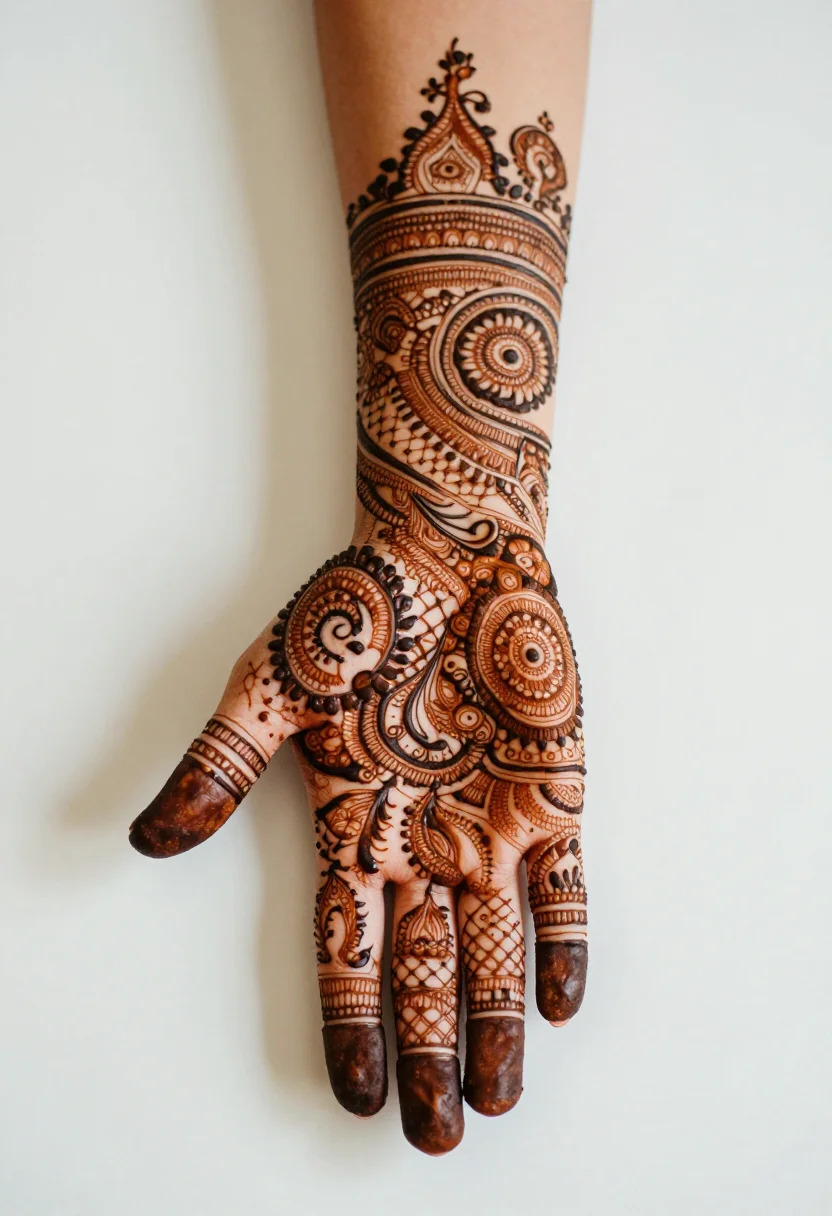
every sample — three subjects, three styles ↓
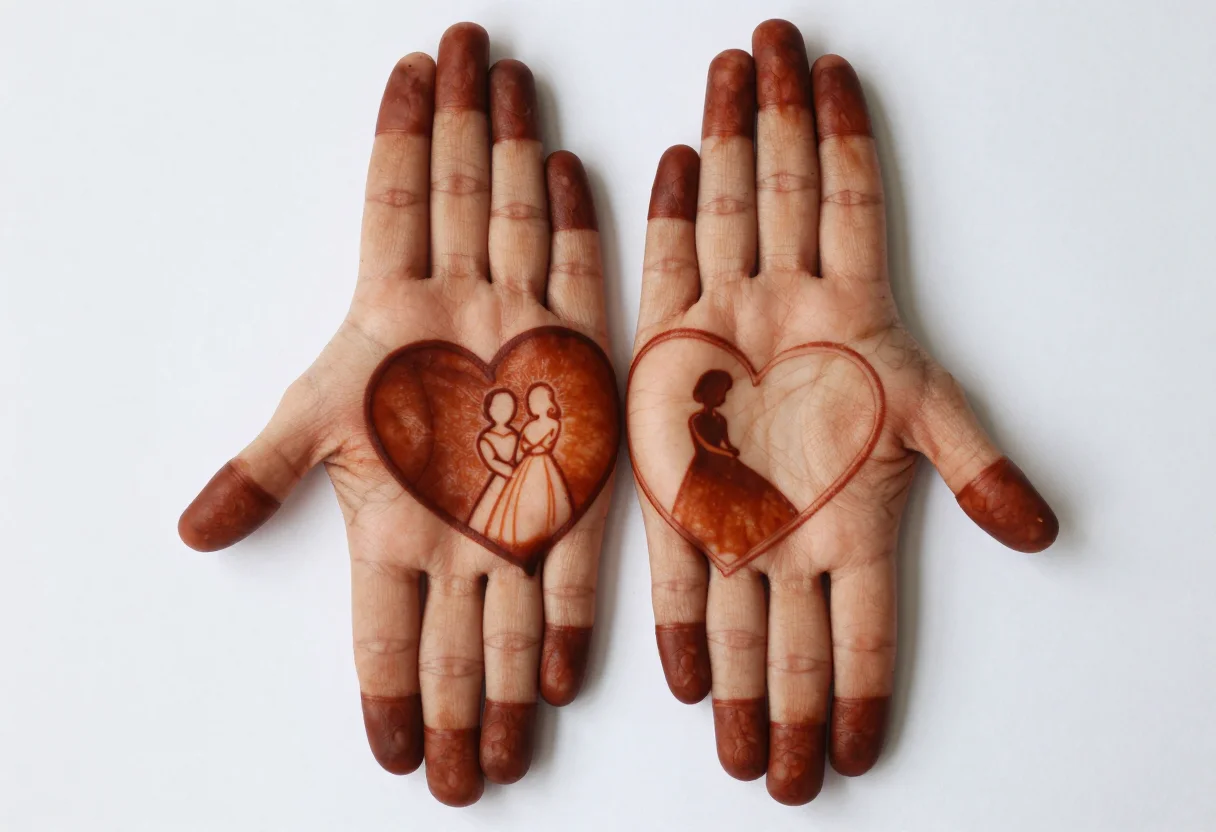
The bride's design that shows the couple, split across her two hands so the picture is whole when they meet. The designs are the groom in a turban on one palm and the bride in a veil on the other, in matching arches; the couple exchanging garlands; and half a heart on each palm that meets into one. Type a subject of your own and the design is drawn with it as a request.
- a bride's two-hand design
- a varmala picture for a wedding
- a split heart for an engagement
- a picture for a couple's gift
Frequently asked questions
- How does the split design work?
- Each hand carries half of the picture, so the two halves make one design when the hands are held together.
- What is the difference between the styles?
- Fine detail uses a fine line with the figures drawn small, bold shapes uses large simple figures, and henna brown shows the reddish stroke of dried henna.
- Can I add a date or a doli?
- Yes. Type it and the design is drawn with it, as a request rather than a fixed result.
- Are these drawn on real hands?
- No. Each is a drawing on white paper, showing both hands as outlines side by side.
About toile
This page is a showcase and a starting point: nine samples already rendered, three readings of the pack crossed with three styles, each shown at the size and ratio it was made for. Take any of them further on the wall with a few words, or ask for all nine again under your own direction; a sign-in keeps what you make, and it is free while Toile is new. The recipe behind each sample — the subject, the style, the palette, the framing — travels with the image rather than staying private to the render: it is in the alt text of every sample and in the page's own structured data, so a search engine reads the same handles a person would.