/day-of-the-dead · style
Day of the Dead art: La Catrina, ofrenda altar, papel picado
Make your ownDía de Muertos
Describe yours. We'll remake the whole pack your way.
More like this
the whole catalog →

every sample — three subjects, three styles ↓
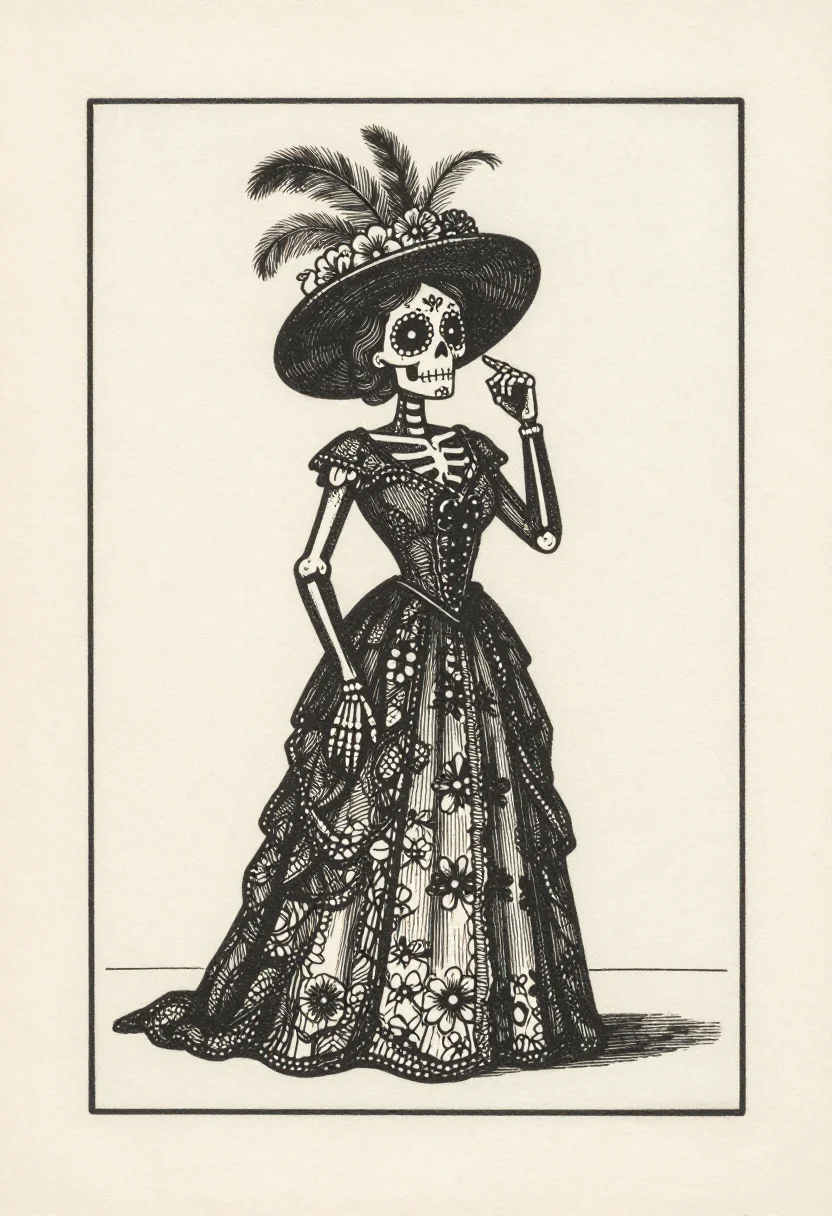
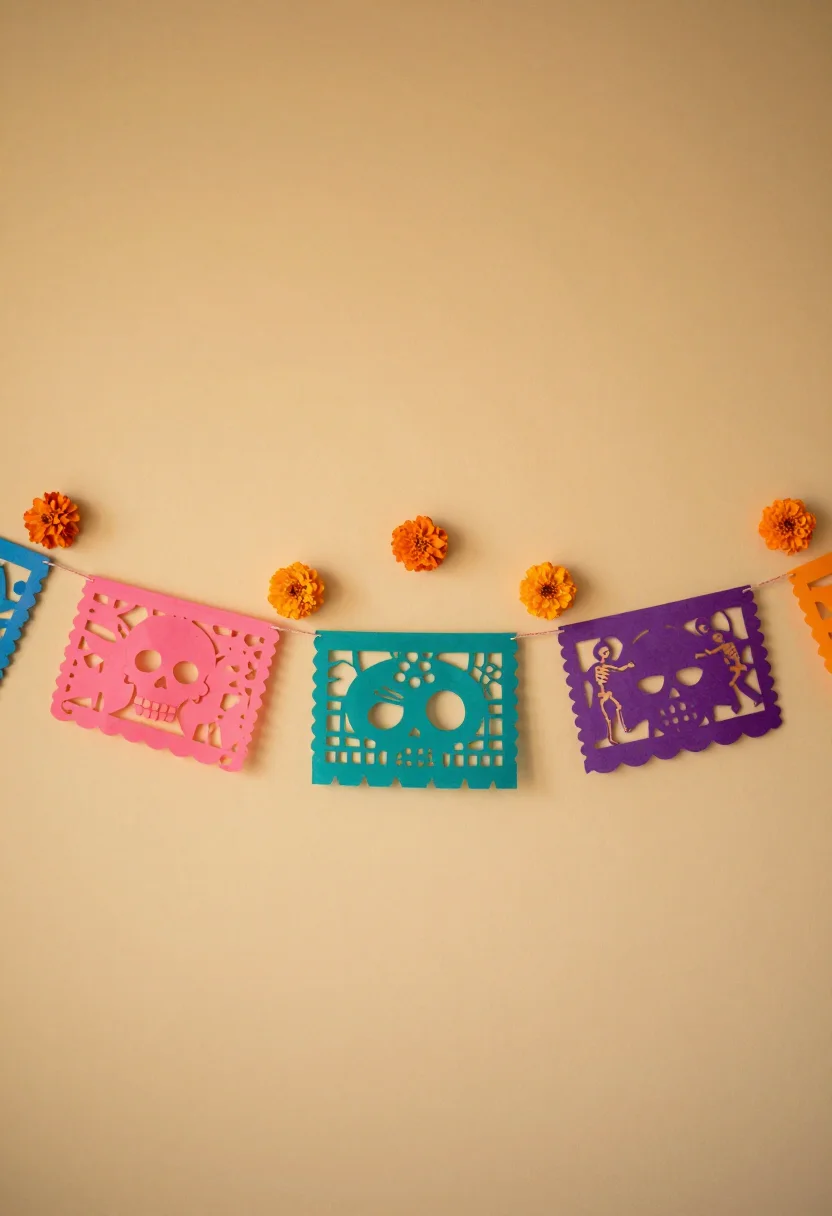
Day of the Dead art is Mexico's festival visual language: an elegant skeleton lady in a wide feathered hat, an ofrenda stacked with marigolds and candles, a papel picado banner cut with skulls. These nine render each as a Posada-style engraving, sugar skull ornament and cut paper. Ask for a cat skeleton instead and the same three readings carry it.
- a Día de Muertos altar or party decoration
- a coloring page
- a banner or bunting print
- a classroom cultural studies handout
- a greeting card for the season
Frequently asked questions
- What size do these print at?
- Each piece is drawn at A3 proportions with an even margin, so it prints clean at A3 or scales to a banner set.
- Can I get a different figure, like a cat skeleton?
- Yes — the direction field takes any figure, such as a cat skeleton or a wedding couple, and the same three readings render it.
- What's the difference between the three styles?
- The Posada reading is a black-and-white engraved line in the tradition of the original calavera prints; sugar skull is bright ornamental colour on a skull motif; cut paper reads as papel picado, flat silhouette shapes cut from coloured paper.
- Is this a coloring page I can print?
- The Posada engraving reading works well as line art for printing and colouring in.
About toile
This page is a showcase and a starting point: nine samples already rendered, three readings of the pack crossed with three styles, each shown at the size and ratio it was made for. Take any of them further on the wall with a few words, or ask for all nine again under your own direction; a sign-in keeps what you make, and it is free while Toile is new. The recipe behind each sample — the subject, the style, the palette, the framing — travels with the image rather than staying private to the render: it is in the alt text of every sample and in the page's own structured data, so a search engine reads the same handles a person would.