/dice-reference-charts · tabletop
Dice reference charts: dice set, dice notation, d20 results
Make your ownDice reference charts
Describe yours. We'll remake the whole pack your way.
More like this
the whole catalog →
every sample — three subjects, three styles ↓
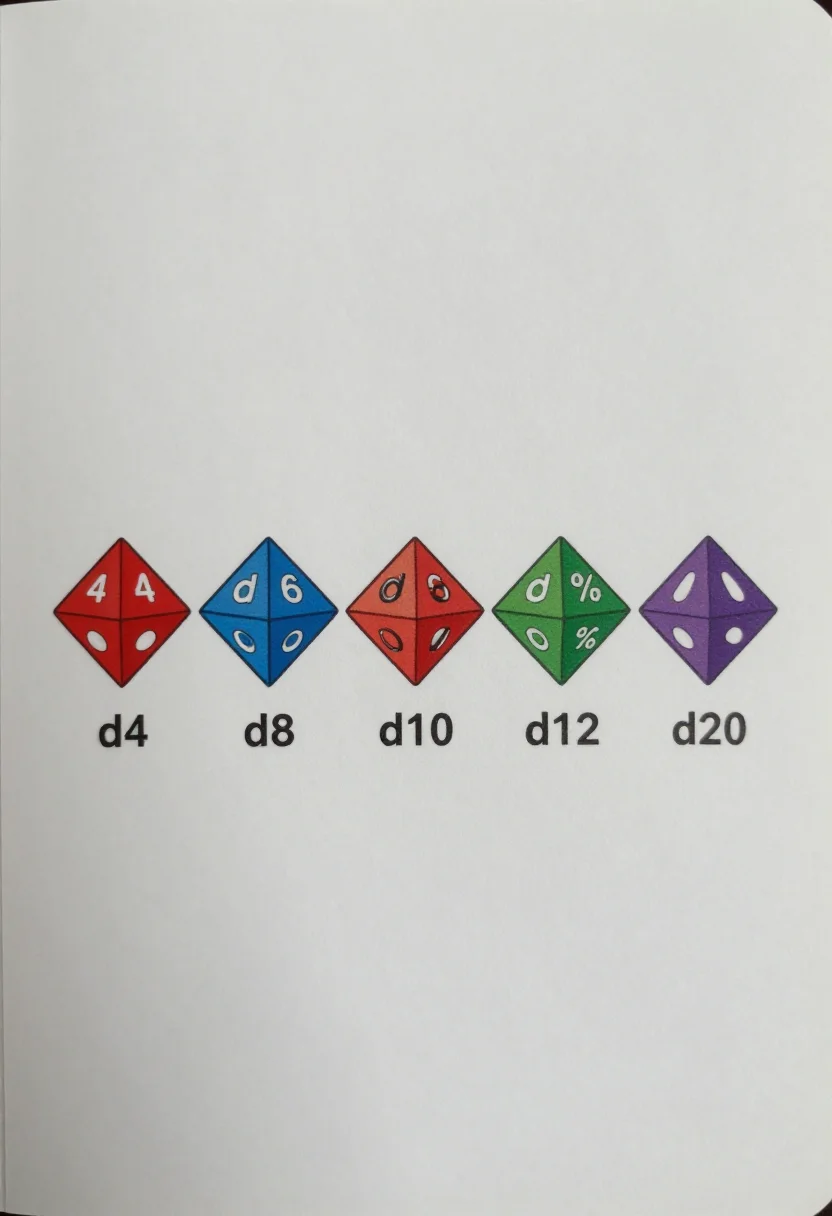
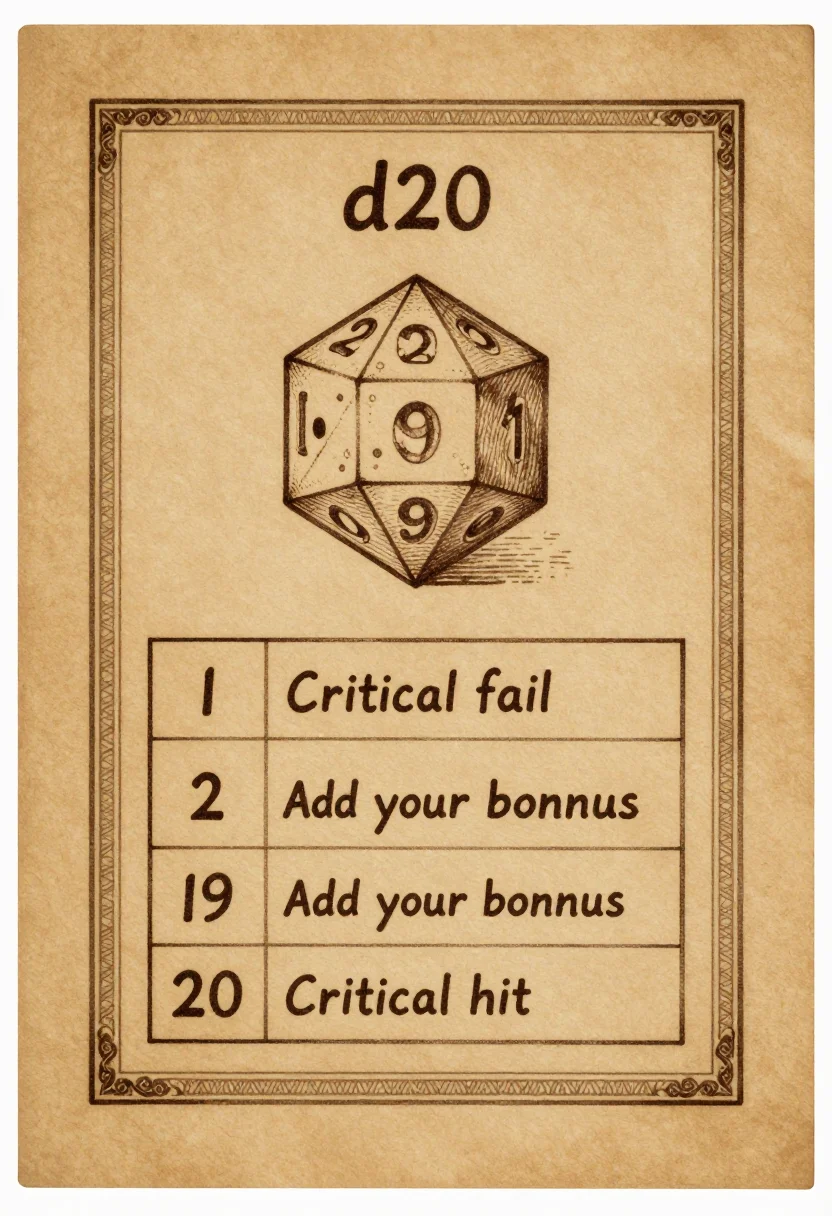
New players pin a dice chart up to learn which die is which and how to read a roll. This pack shows the seven polyhedral dice labelled d4 to d20, a Reading a Roll chart with worked lines such as 1d20 and 2d6, and a d20 result table. Each comes as flat bright dice, a technical blueprint or an old parchment guide. Type a subject, such as metal dice, and the chart keeps its labels.
- a chart pinned up for a new player
- a notation guide at the game table
- a d20 result table for a game master
- a reference for a class learning dice
Frequently asked questions
- What do the nine pictures show?
- Three readings in three styles: the labelled dice set, a dice notation guide, and a d20 result table.
- Which dice are shown?
- Seven polyhedral dice: d4, d6, d8, d10, d%, d12 and d20, each with its face count beneath.
- What does the notation guide explain?
- How to read a roll such as 1d20, 2d6 or 1d8 + 3, each beside a small drawing of the dice it means.
- What does the d20 table show?
- A ruled table with three rows: 1 for a critical fail, 2 to 19 to add your bonus, and 20 for a critical hit.
About toile
This page is a showcase and a starting point: nine samples already rendered, three readings of the pack crossed with three styles, each shown at the size and ratio it was made for. Take any of them further on the wall with a few words, or ask for all nine again under your own direction; a sign-in keeps what you make, and it is free while Toile is new. The recipe behind each sample — the subject, the style, the palette, the framing — travels with the image rather than staying private to the render: it is in the alt text of every sample and in the page's own structured data, so a search engine reads the same handles a person would.