/diwali-chart-paper · classroom
Diwali chart paper: diyas, rangoli and lanterns
Make your ownDiwali chart paper
Describe yours. We'll remake the whole pack your way.
More like this
the whole catalog →
every sample — three subjects, three styles ↓
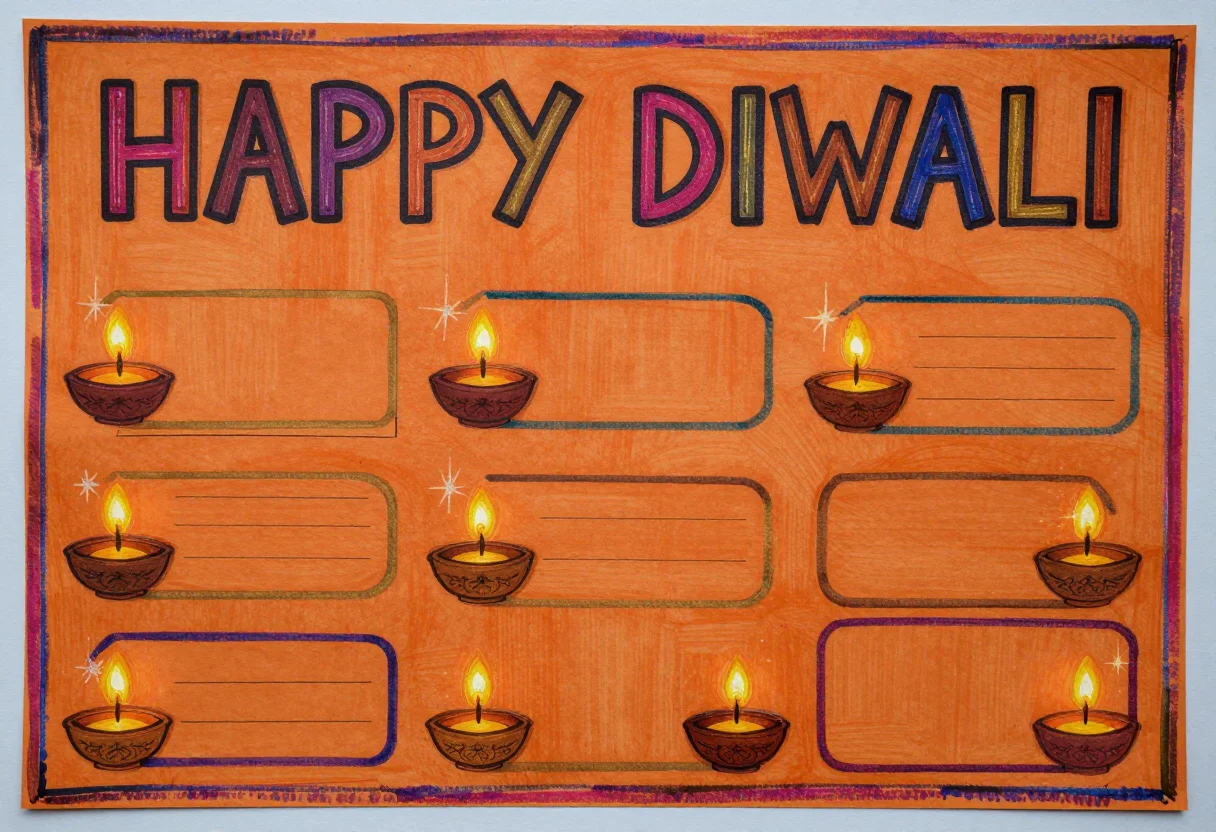
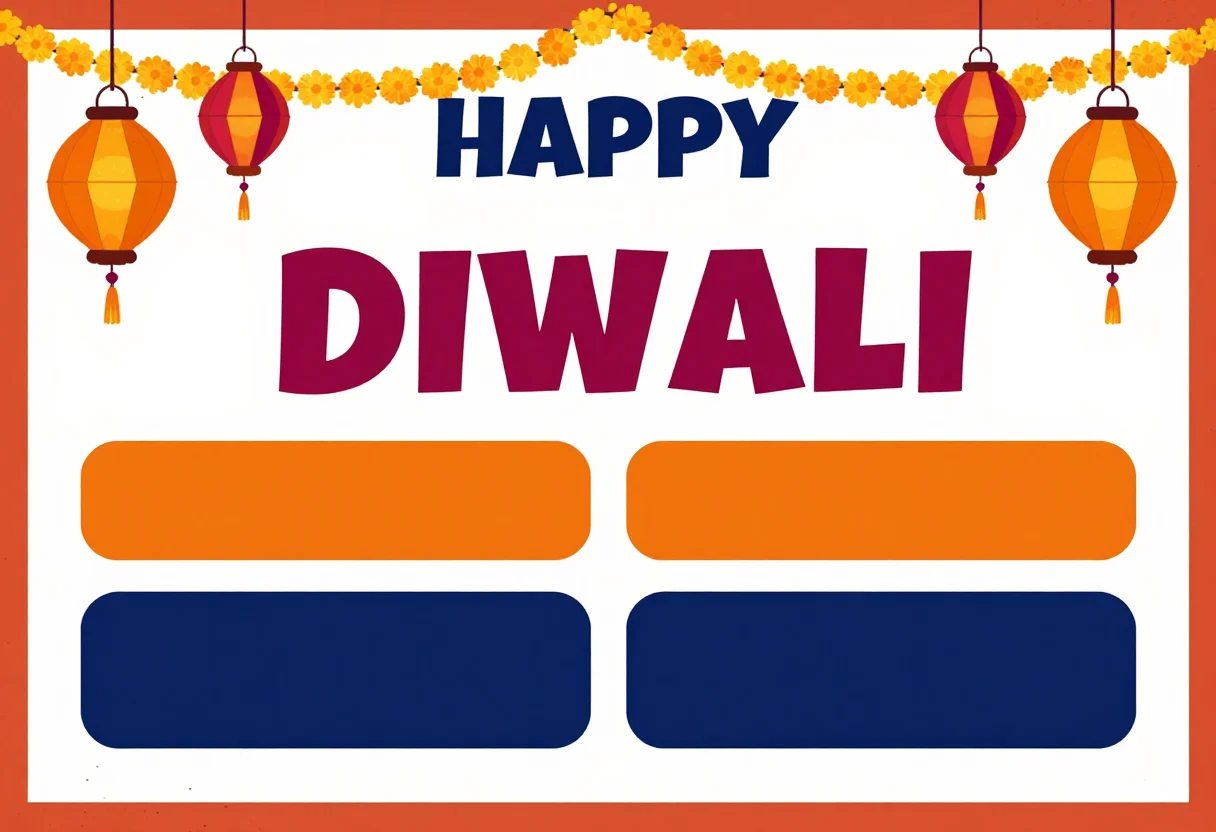
Chart papers for Diwali, decorated in India by students and teachers to pin on the classroom wall or carry to assembly: rows of glowing clay diyas with sparkles, a large petal rangoli at the centre, and hanging paper lanterns with marigolds. The heading reads Happy Diwali and the centre is left open for the class's message. Type a different subject or a twist, such as fireworks or sweets, and the same three styles carry it.
- classroom wall display for Diwali
- chart to carry to the school assembly
- decoration for a Diwali mela stall
- group project for a class
Frequently asked questions
- What is on each chart?
- Rows of glowing clay diyas, a petal rangoli in the centre, and hanging paper lanterns with marigolds, each with a Happy Diwali heading.
- What is the difference between the three styles?
- Crayon hand-drawn uses wobbly marker and crayon outlines on visible paper grain, cut-paper collage uses layered coloured paper, and clean printable is a flat version on white.
- Can I ask for a different design?
- Yes. Type a subject or a twist and the same three styles carry it, though a request is not a promised result.
- Is there room for the class to write?
- The centre of each chart is left open for the class's message, and the heading is the only printed text.
- Are these photographs?
- No. All nine are flat illustrations seen straight on, with no mockup, hands or desk around them.
About toile
This page is a showcase and a starting point: nine samples already rendered, three readings of the pack crossed with three styles, each shown at the size and ratio it was made for. Take any of them further on the wall with a few words, or ask for all nine again under your own direction; a sign-in keeps what you make, and it is free while Toile is new. The recipe behind each sample — the subject, the style, the palette, the framing — travels with the image rather than staying private to the render: it is in the alt text of every sample and in the page's own structured data, so a search engine reads the same handles a person would.