/diya-designs · faith
Diya designs: painted diya, mirror and bead, diya cluster
Make your ownDiya designs
Describe yours. We'll remake the whole pack your way.
More like this
the whole catalog →

every sample — three subjects, three styles ↓
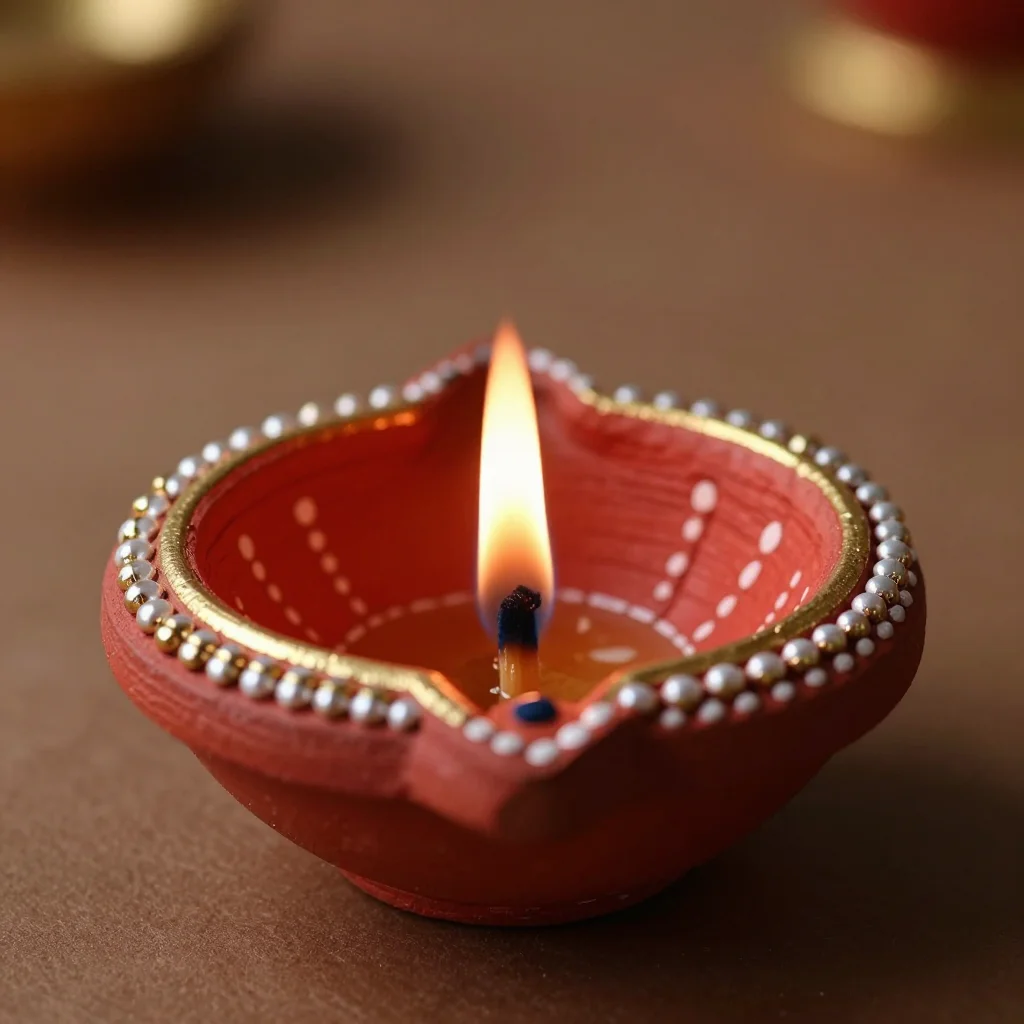
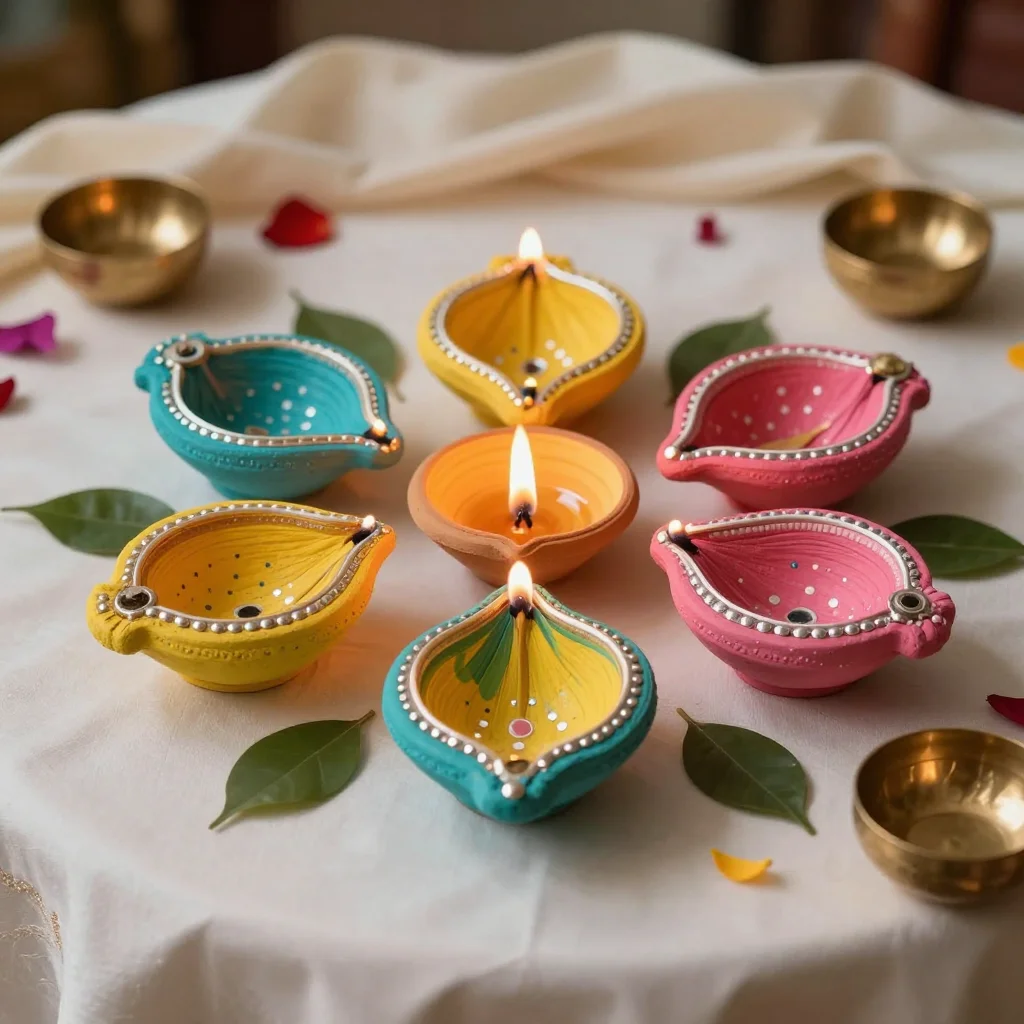
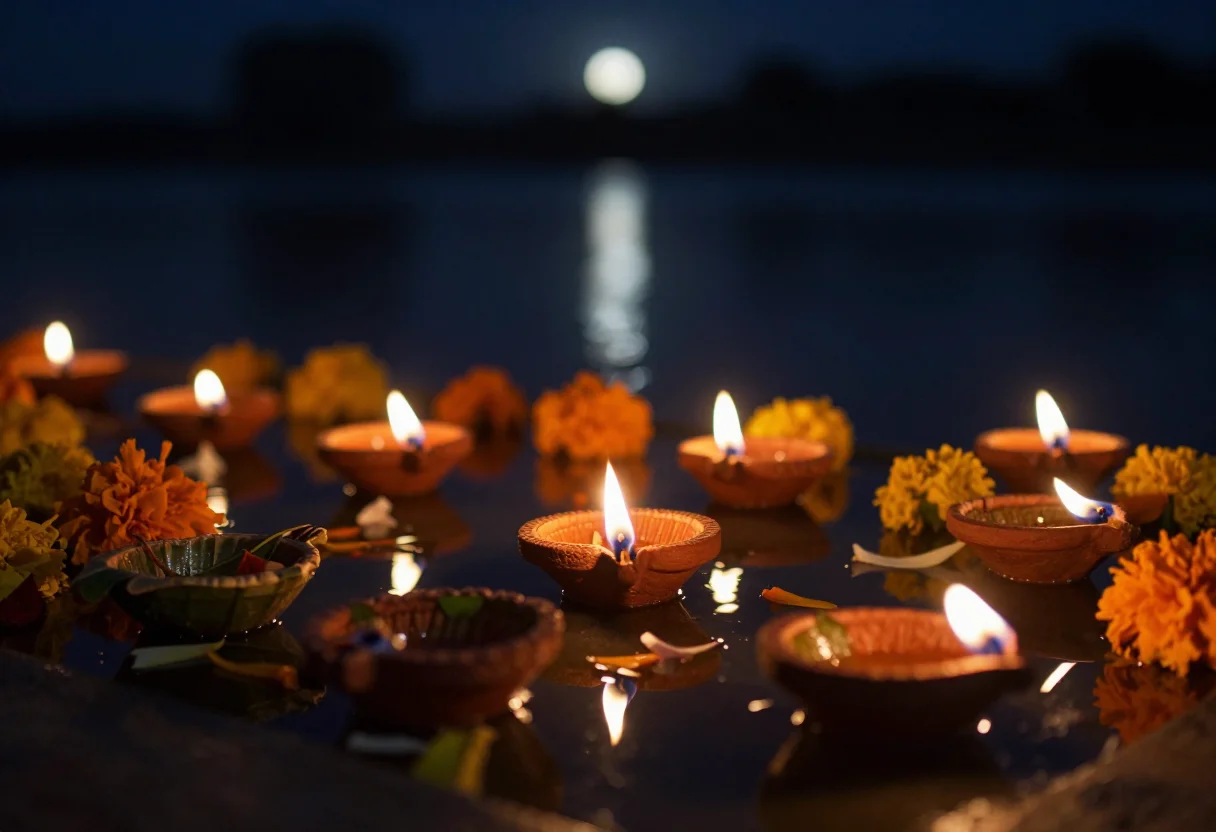
Families paint and decorate clay diyas at home for Diwali, Karthigai Deepam, a puja or a wedding, rather than buying plain lamps. These nine photographs show finished, lit diyas with the paint, trim and dot work clearly visible: a deep red painted diya with a gold rim, a diya trimmed with mirrors and beads, and a cluster of five in turquoise, yellow and pink. Each is shown close up, on a brass puja thali, or on a celebration table.
- a model for painting plain diyas before a festival
- a centrepiece for a puja thali
- a table setting for a wedding or a mehndi
- a gift of hand-decorated lamps
Frequently asked questions
- Are these photographs of real lamps?
- They are photographs of finished, lit diyas in the styles shown. The decoration is what to copy; the picture is not a product listing.
- What is the difference between the three settings?
- The close-up shows one diya at the height of its rim, the puja thali sets it among brass, kumkum and petals, and the table setting shows a cluster on a white cloth with loose petals.
- What decoration is shown?
- Dot work and a gold rim on a red diya, mirrors and seed beads with kundan stones, and five cluster diyas each with its own dot pattern.
- Can I ask for a different design?
- Yes. The direction field takes a change such as a lotus shape, pastel colours or a design for gifting. A direction you type is a request, not a promised result.
About toile
This page is a showcase and a starting point: nine samples already rendered, three readings of the pack crossed with three styles, each shown at the size and ratio it was made for. Take any of them further on the wall with a few words, or ask for all nine again under your own direction; a sign-in keeps what you make, and it is free while Toile is new. The recipe behind each sample — the subject, the style, the palette, the framing — travels with the image rather than staying private to the render: it is in the alt text of every sample and in the page's own structured data, so a search engine reads the same handles a person would.