/doodle-art · coloring
Doodle art: everyday things, back-to-school and summer in three styles
Make your ownDoodle art sheets
Describe yours. We'll remake the whole pack your way.
More like this
the whole catalog →
every sample — three subjects, three styles ↓
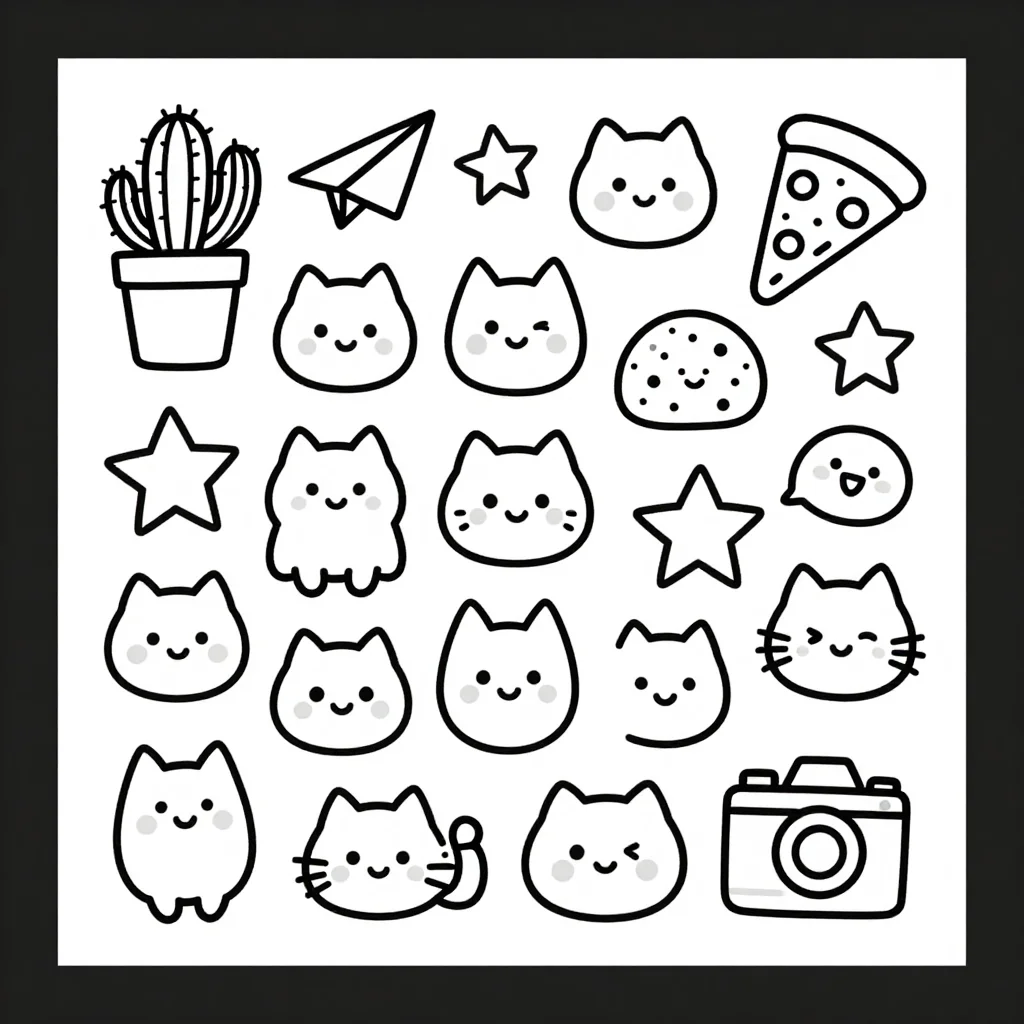
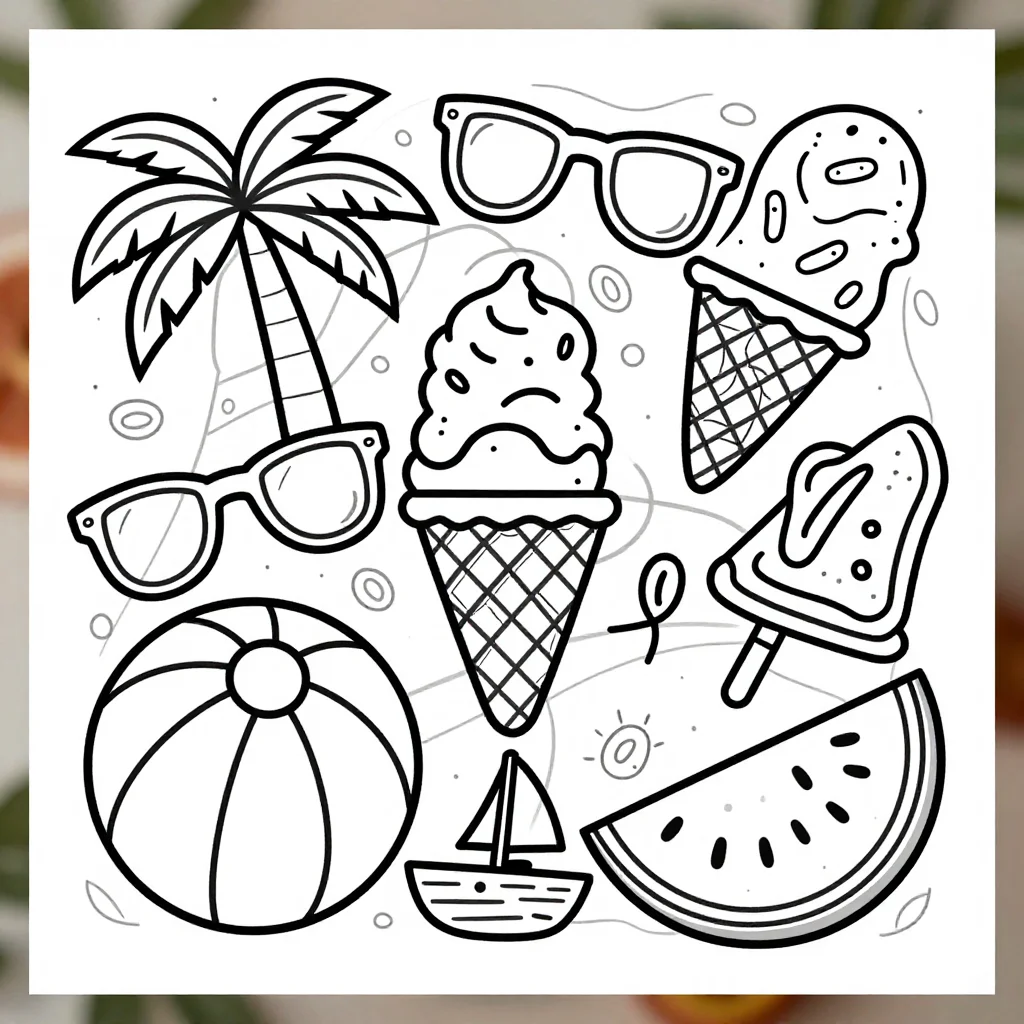
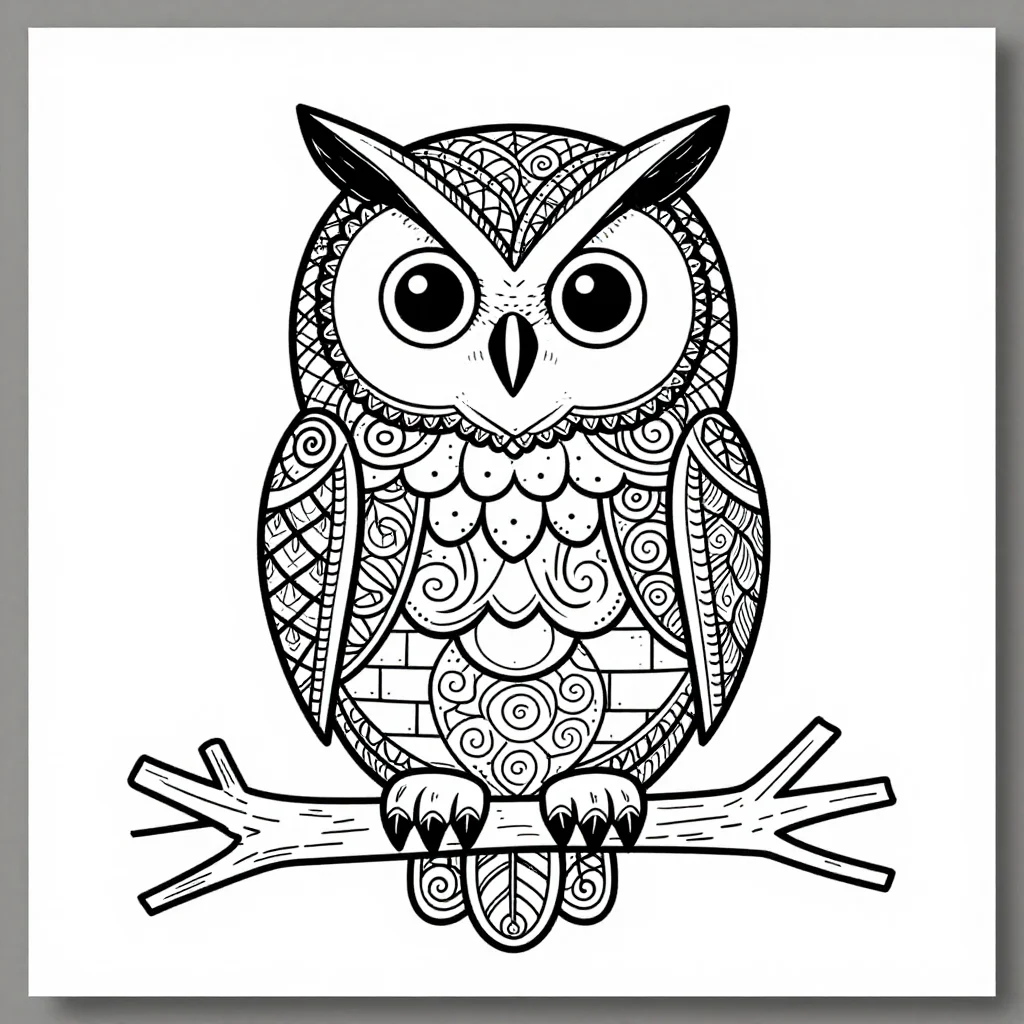
Doodle art fills the page edge to edge: a hundred small things — a cactus, a paper plane, a slice of pizza — packed tight with no gaps. These nine sheets run three themes (everyday objects, back-to-school, summer holiday) in kawaii, sticker-sheet, or dense-tangle style. Color the whole page, trace the shapes, or cut a sheet apart into stickers. Ask for a different theme and the sheet redraws.
- a sticker-making craft session
- a classroom filler activity
- a phone-case or notebook decoration source
- a summer-camp coloring table
Frequently asked questions
- What size do the sheets print at?
- Each sheet is drawn square (1024 by 1024) with a white margin, so it prints clean on standard paper.
- Can a sheet be cut apart into stickers?
- Yes — the sticker-sheet style draws each doodle with its own clear outline, loosely spaced for cutting.
- Can I get a different doodle theme?
- Yes — that is what the direction field on the page is for. Type a different theme and the sheet is drawn again in the same three styles.
About toile
This page is a showcase and a starting point: nine samples already rendered, three readings of the pack crossed with three styles, each shown at the size and ratio it was made for. Take any of them further on the wall with a few words, or ask for all nine again under your own direction; a sign-in keeps what you make, and it is free while Toile is new. The recipe behind each sample — the subject, the style, the palette, the framing — travels with the image rather than staying private to the render: it is in the alt text of every sample and in the page's own structured data, so a search engine reads the same handles a person would.