/dreidel-templates · season
Dreidel templates: fold-up net, color-in dreidel, game rules
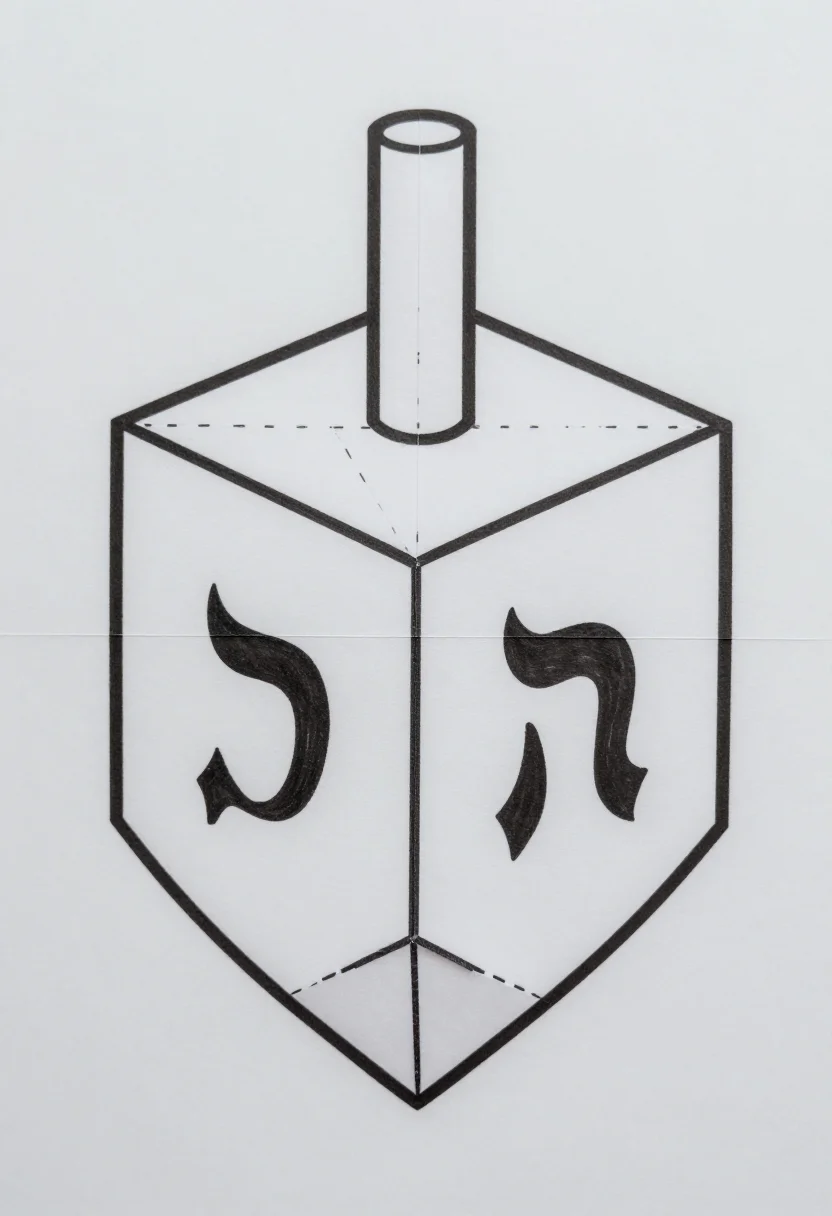
Make your ownDreidel templates
Describe yours. We'll remake the whole pack your way.
More like this
the whole catalog →

every sample — three subjects, three styles ↓
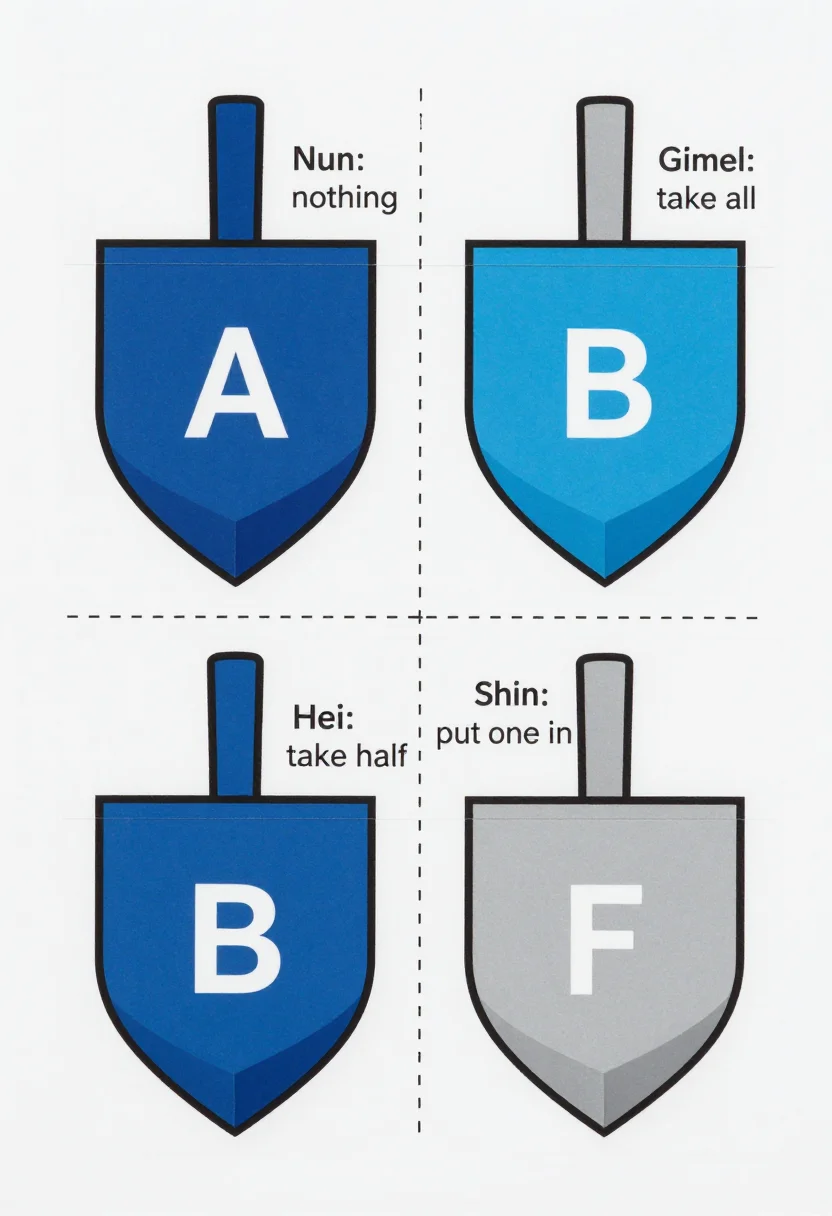
A printable dreidel template is a sheet that children cut out, fold and glue into a spinning top marked with the four Hebrew letters nun, gimel, hei and shin. Each of the nine sheets gives a fold-up net, a version to color in, or the rules of the game. Plain outline, patterned faces and a pre-colored print give the three styles. Type a different direction, such as wooden look, and the same template carries it.
- A class craft before Hanukkah
- A spinning game for a family evening
- A learning sheet on the Hebrew letters
- A craft station at a Hanukkah party
Frequently asked questions
- How do I make the dreidel from the sheet?
- Cut along the solid lines, fold along the dashed lines and glue the tabs to close the shape.
- What do the four letters mean in the game?
- The rules sheet gives them: nun means nothing, gimel means take all, hei means take half, and shin means put one in.
- What is the difference between the three styles?
- Plain outline is a clean template with empty faces. Patterned faces have borders of stars, candles and olive leaves to color. Color print has the faces already printed in blue and silver.
- Can I change the look?
- Type a direction such as wooden look and the template is made in that look. It is a request, not a guaranteed result.
About toile
This page is a showcase and a starting point: nine samples already rendered, three readings of the pack crossed with three styles, each shown at the size and ratio it was made for. Take any of them further on the wall with a few words, or ask for all nine again under your own direction; a sign-in keeps what you make, and it is free while Toile is new. The recipe behind each sample — the subject, the style, the palette, the framing — travels with the image rather than staying private to the render: it is in the alt text of every sample and in the page's own structured data, so a search engine reads the same handles a person would.