/dupatta-draping-charts · beauty
Dupatta draping charts: six everyday drapes, the bridal double dupatta, lehenga drapes
Make your ownDupatta draping charts
Describe yours. We'll remake the whole pack your way.
More like this
the whole catalog →
every sample — three subjects, three styles ↓
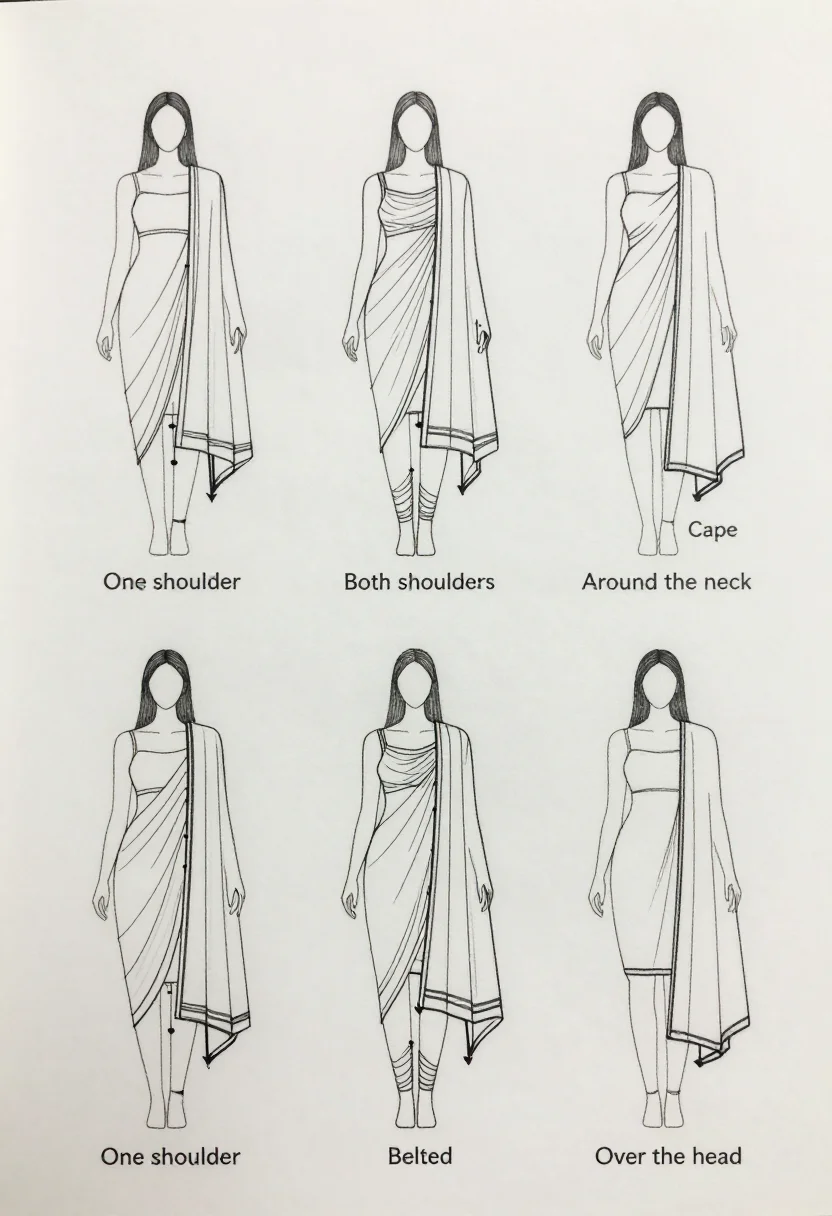
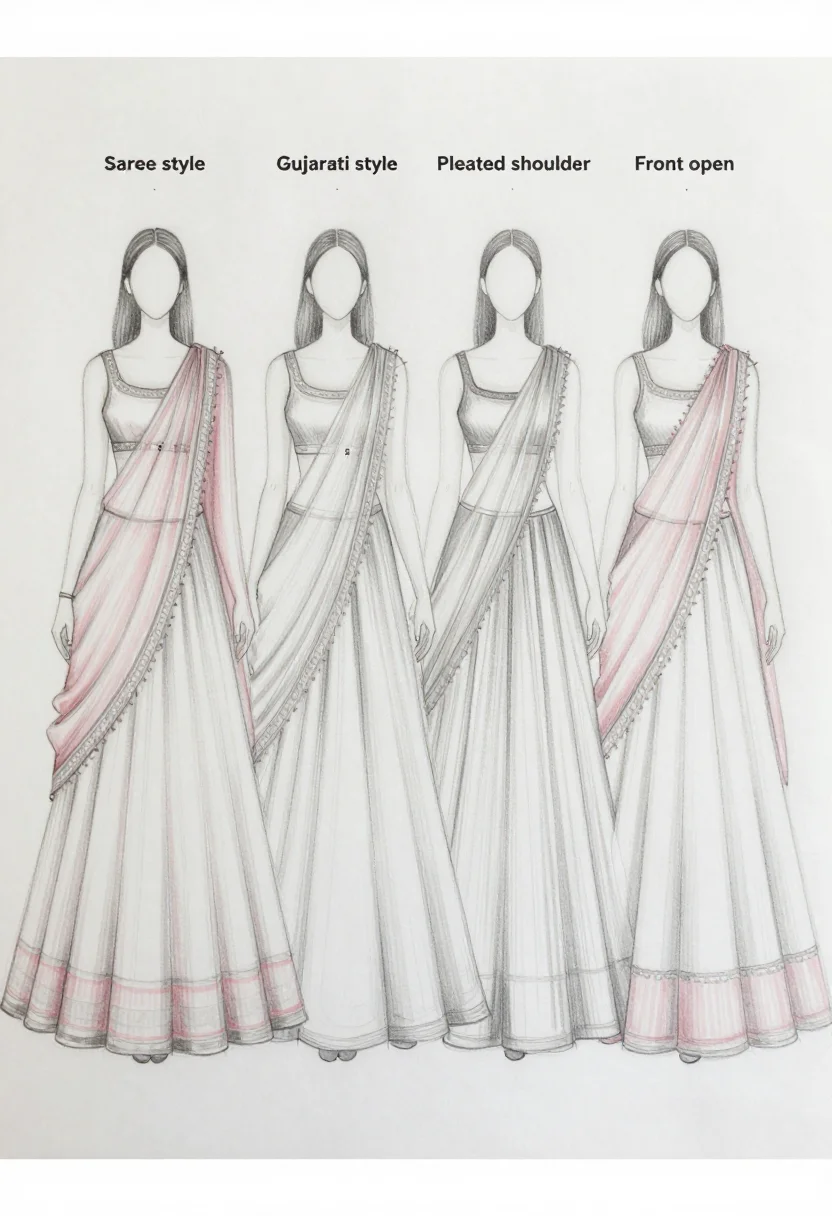
A dupatta draping chart helps you choose how to drape a dupatta with a lehenga, a salwar kameez or a kurta. One picture shows six everyday drapes on figures, from One shoulder to Over the head. Another sets a bridal double dupatta in four numbered steps. A third shows four lehenga drapes. Type a drape or outfit, such as net dupatta, and the chart is drawn for it.
- choosing a drape for a wedding guest outfit
- setting a bridal double dupatta
- pairing a drape with a lehenga
- a dressing reference for a family event
Frequently asked questions
- What is a double dupatta?
- It is a bridal set of two dupattas. The second picture shows the first draped across the front and the second placed over the head.
- Which drape suits a lehenga?
- The third picture shows four lehenga drapes side by side, so you can compare how the dupatta falls on each.
- Can I type a different outfit?
- Yes. Type the outfit or drape you want, such as sharara suit, and the chart is drawn for it in place of the one shown.
- What do the three styles look like?
- The line diagram uses thin black outline with pin points, the flat color version fills the dupatta in magenta with a gold border, and the pencil sketch lightly tints the sheer fabric in rose.
About toile
This page is a showcase and a starting point: nine samples already rendered, three readings of the pack crossed with three styles, each shown at the size and ratio it was made for. Take any of them further on the wall with a few words, or ask for all nine again under your own direction; a sign-in keeps what you make, and it is free while Toile is new. The recipe behind each sample — the subject, the style, the palette, the framing — travels with the image rather than staying private to the render: it is in the alt text of every sample and in the page's own structured data, so a search engine reads the same handles a person would.