/emotions-coloring-pages · coloring
Emotions coloring pages: feelings chart, happy face, how I feel today
Make your ownEmotions coloring pages
Describe yours. We'll remake the whole pack your way.
More like this
the whole catalog →
every sample — three subjects, three styles ↓
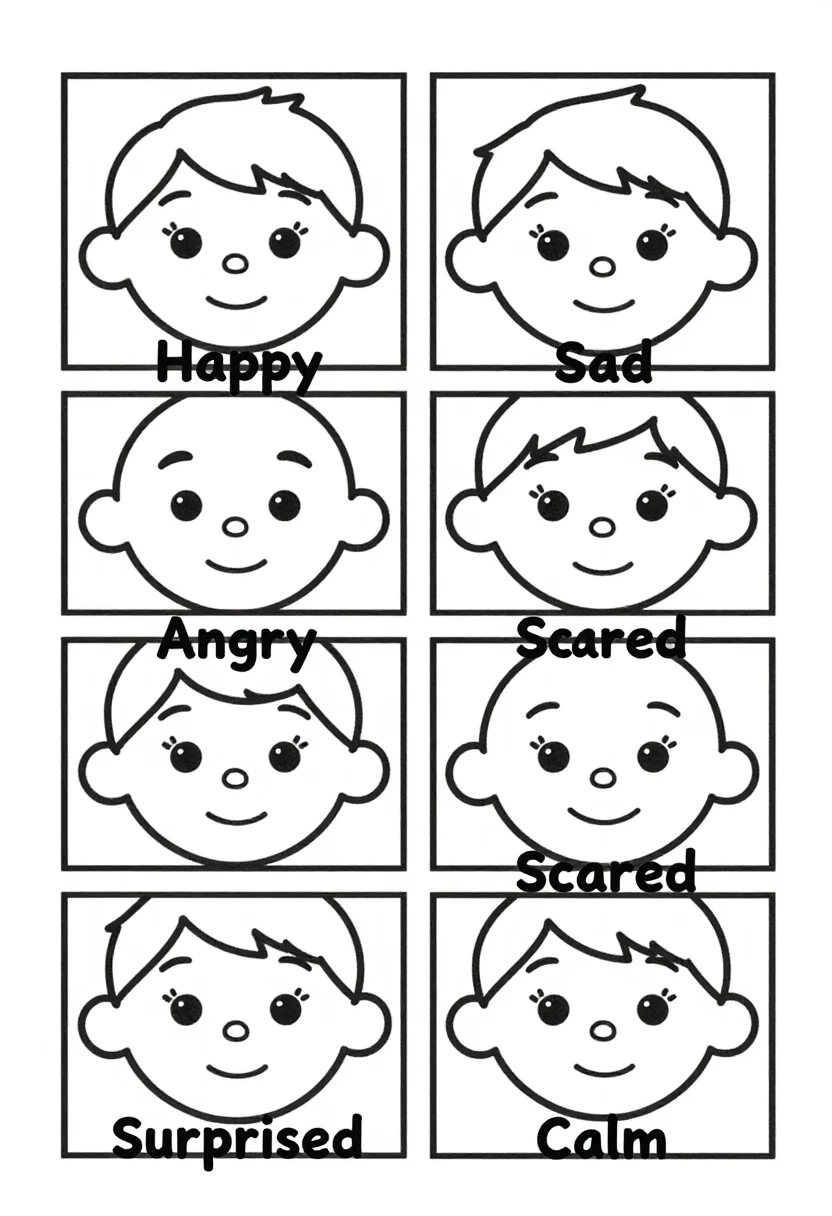
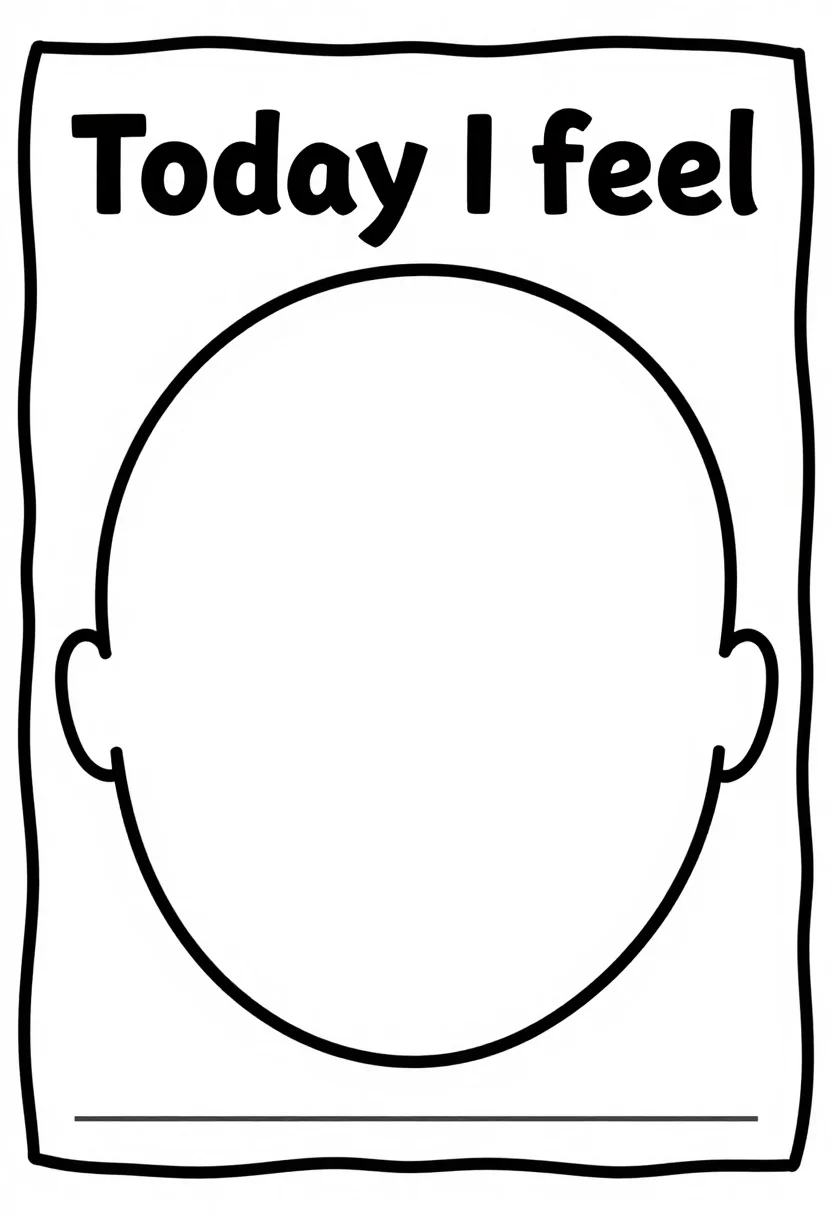
Emotions coloring pages used by parents, teachers and counsellors to help children name what they feel. The nine pages show a chart of six faces with their feelings written under them, a child's face laughing in one clear mood, and a blank face to draw today's feeling. The styles are easy, kawaii and doodle. Type a different feeling, and the same style carries it.
- a feelings chart on a classroom wall
- a check-in page for a child at home
- a session page for a school counsellor
- a daily page to draw how the day felt
Frequently asked questions
- Which six feelings are on the chart?
- Happy, sad, angry, scared, surprised and calm, each written under its face.
- What is on the blank face page?
- A large face outline with no features, and the words Today I feel above an empty line, for the child to draw the feeling.
- What is the difference between the styles?
- Easy uses thick outlines and very clear expressions. Kawaii adds round cheeks and small hearts and stars, and doodle is a hand-drawn marker line with a squiggle border.
- Are the pages in color?
- No. Each page is a black line drawing on white paper, ready to print and color.
About toile
This page is a showcase and a starting point: nine samples already rendered, three readings of the pack crossed with three styles, each shown at the size and ratio it was made for. Take any of them further on the wall with a few words, or ask for all nine again under your own direction; a sign-in keeps what you make, and it is free while Toile is new. The recipe behind each sample — the subject, the style, the palette, the framing — travels with the image rather than staying private to the render: it is in the alt text of every sample and in the page's own structured data, so a search engine reads the same handles a person would.