/face-angle-references · illustration
Face angle references: head turns, up and down, Loomis method
Make your ownFace angle references
Describe yours. We'll remake the whole pack your way.
More like this
the whole catalog →
every sample — three subjects, three styles ↓
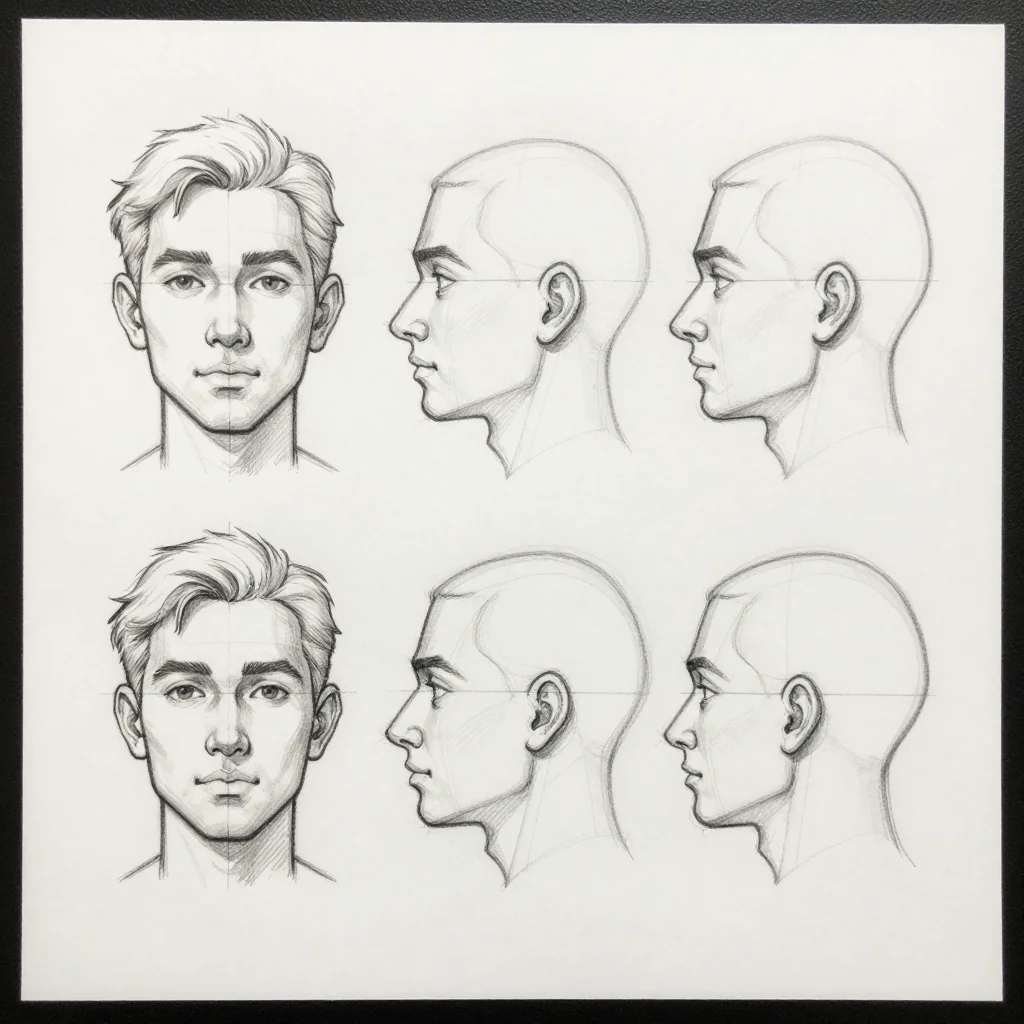
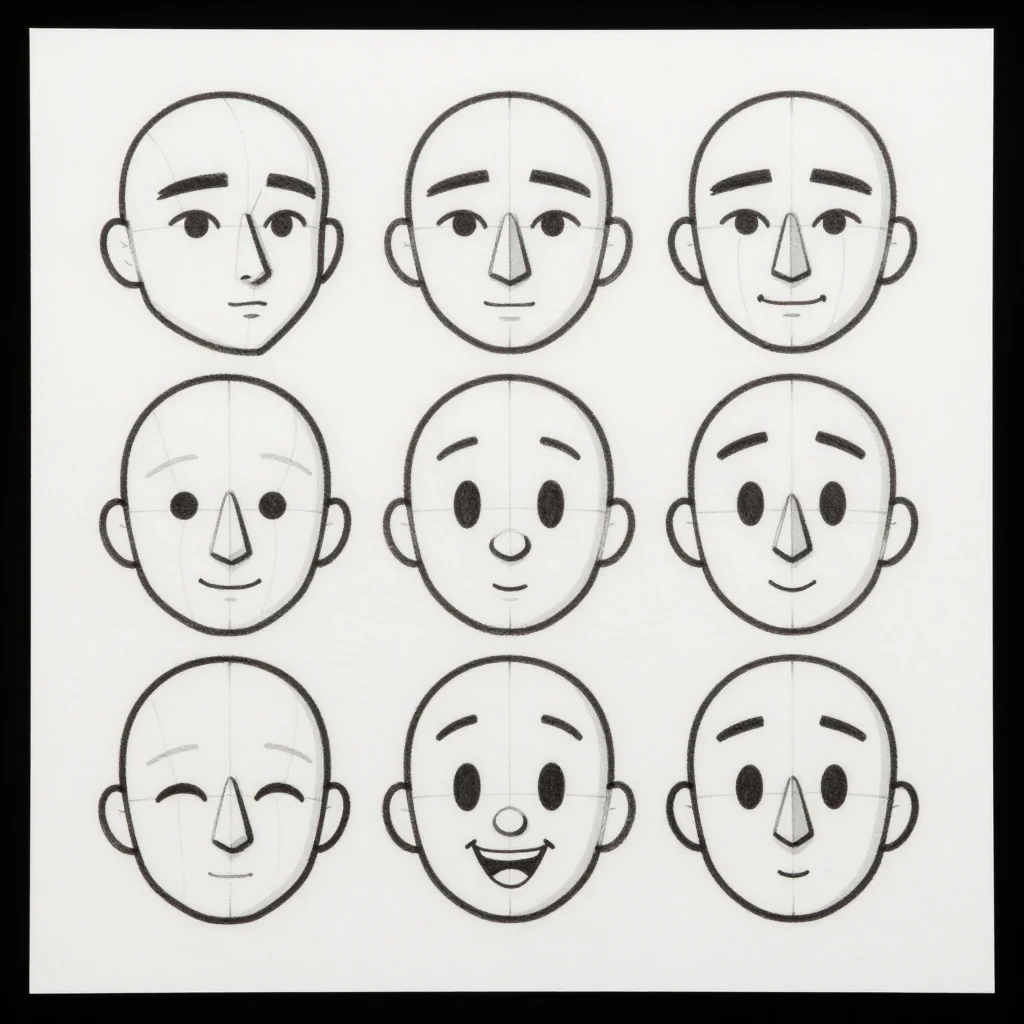
Turning a head is a basic drawing exercise: the same face seen from every angle, with guidelines for the eyes, nose and mouth. These sheets show one head turned through a full turnaround, tilted up and down, and built from simple shapes with the Loomis method. Each sheet is drawn as clean lines on white in realistic, anime and cartoon styles, with the construction lines visible. Type a different face or angle and the sheet is drawn to it.
- a head turn study for a portrait sketchbook
- a reference for keeping one character's face the same
- a classroom handout on head construction
- a tracing guide for a profile drawing
Frequently asked questions
- What is the Loomis method?
- It builds the head from a ball with one side sliced off, with lines for the brow, nose and chin marked on it, and the jaw added at different angles.
- How do the three styles differ?
- Realistic uses natural proportions, anime has large eyes and a pointed chin, and cartoon is built from round shapes with thick friendly outlines.
- Are the guidelines part of the picture?
- Yes. The construction lines for the eyes, nose and mouth stay visible on every head.
- Can I ask for a different face or angle?
- Yes. Type it in the direction field and the sheet is drawn to match, though a request is not a promised result.
About toile
This page is a showcase and a starting point: nine samples already rendered, three readings of the pack crossed with three styles, each shown at the size and ratio it was made for. Take any of them further on the wall with a few words, or ask for all nine again under your own direction; a sign-in keeps what you make, and it is free while Toile is new. The recipe behind each sample — the subject, the style, the palette, the framing — travels with the image rather than staying private to the render: it is in the alt text of every sample and in the page's own structured data, so a search engine reads the same handles a person would.