/fantasy-city-maps · tabletop
Fantasy city maps: harbour city, river town, mountain fortress
Make your ownFantasy city maps
Describe yours. We'll remake the whole pack your way.
More like this
the whole catalog →
every sample — three subjects, three styles ↓
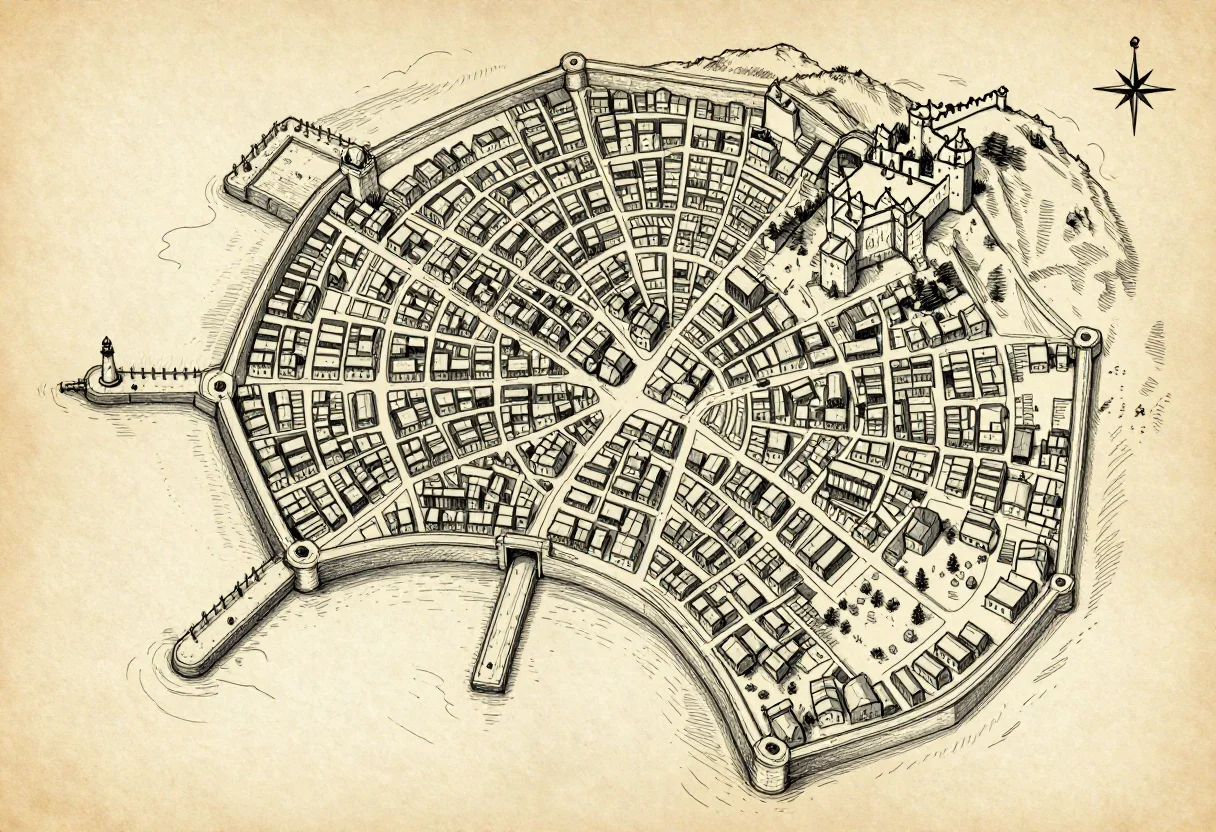
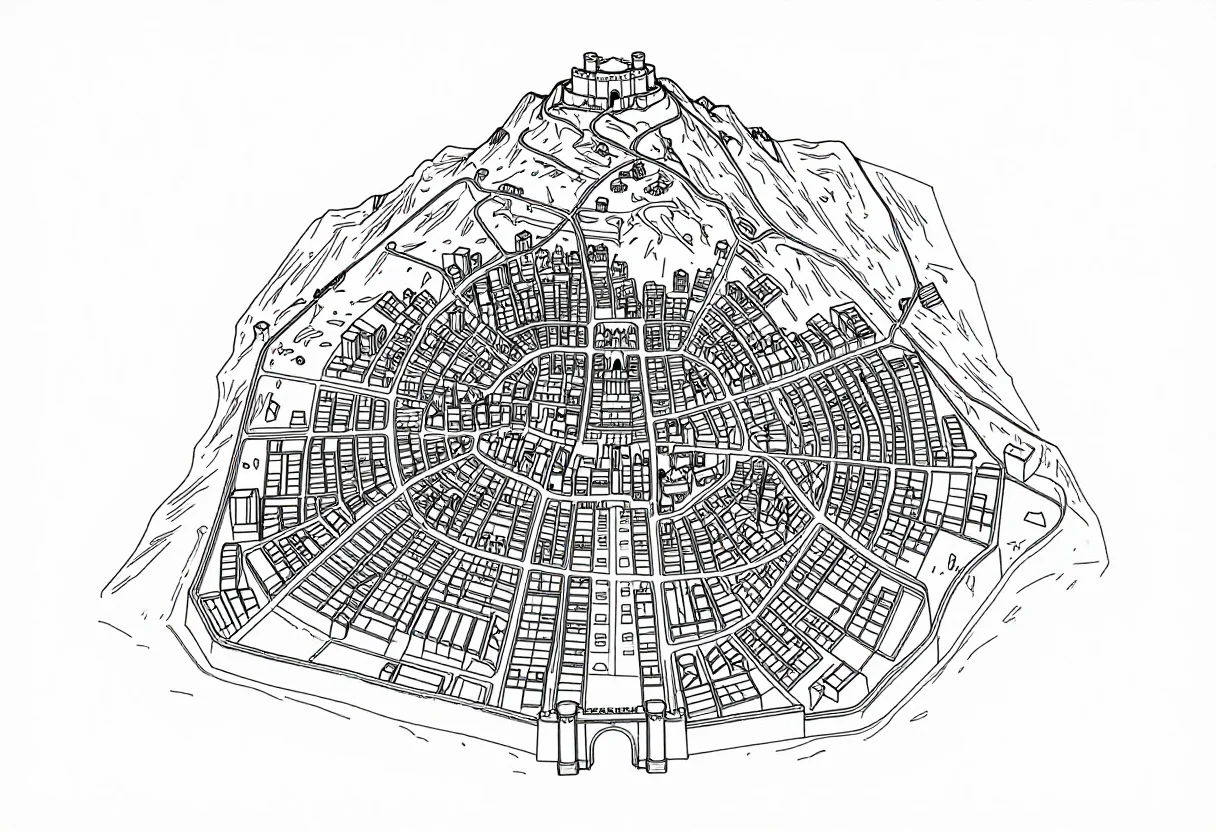
Overhead city maps for a game master planning a campaign town, or for players to see where they stand. The samples are a walled harbour city, a river market town with three bridges, and a mountain fortress city terraced up a slope. Each comes in fine pen-and-ink, watercolor atlas and clean battle map styles, with no lettering. Type a setting, such as a desert oasis, and it is a request for that town.
- a campaign town for a fantasy roleplaying game
- a map to show players where they are
- a battle map printed and cut into tiles
- a wall print for a fantasy game room
Frequently asked questions
- Does the map have names or labels?
- No. The samples carry no lettering, so you can add your own district and street names.
- What is the difference between the styles?
- Ink map is fine pen work in black on aged parchment. Watercolor is a painted atlas with terracotta, moss green and sea blue washes. Battle map is one even black line on white, with no fills.
- How is the map laid out on the page?
- Each map fills its page with a margin around it, ready to print.
About toile
This page is a showcase and a starting point: nine samples already rendered, three readings of the pack crossed with three styles, each shown at the size and ratio it was made for. Take any of them further on the wall with a few words, or ask for all nine again under your own direction; a sign-in keeps what you make, and it is free while Toile is new. The recipe behind each sample — the subject, the style, the palette, the framing — travels with the image rather than staying private to the render: it is in the alt text of every sample and in the page's own structured data, so a search engine reads the same handles a person would.