/festivals-of-india-charts · classroom
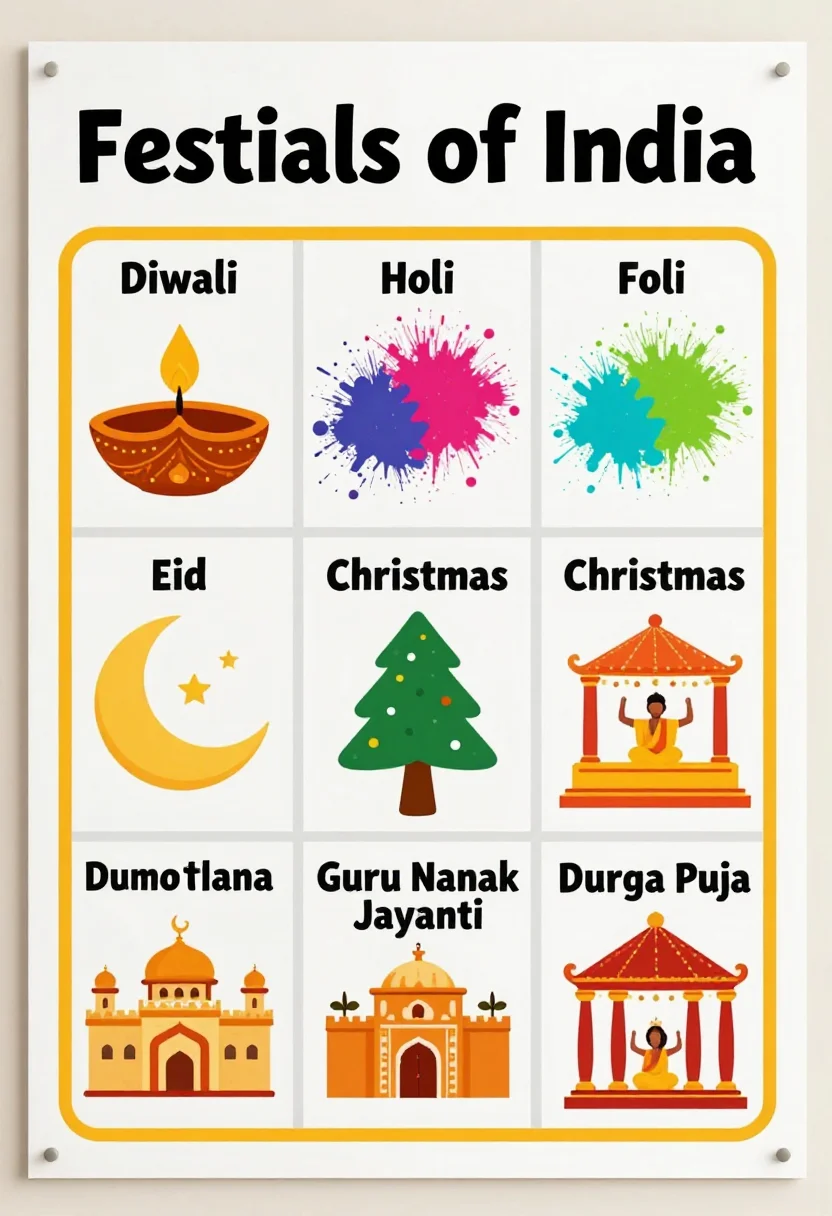
Festivals of India chart: faiths, harvest and national festivals
Make your ownFestivals of India charts
Describe yours. We'll remake the whole pack your way.
More like this
the whole catalog →

every sample — three subjects, three styles ↓
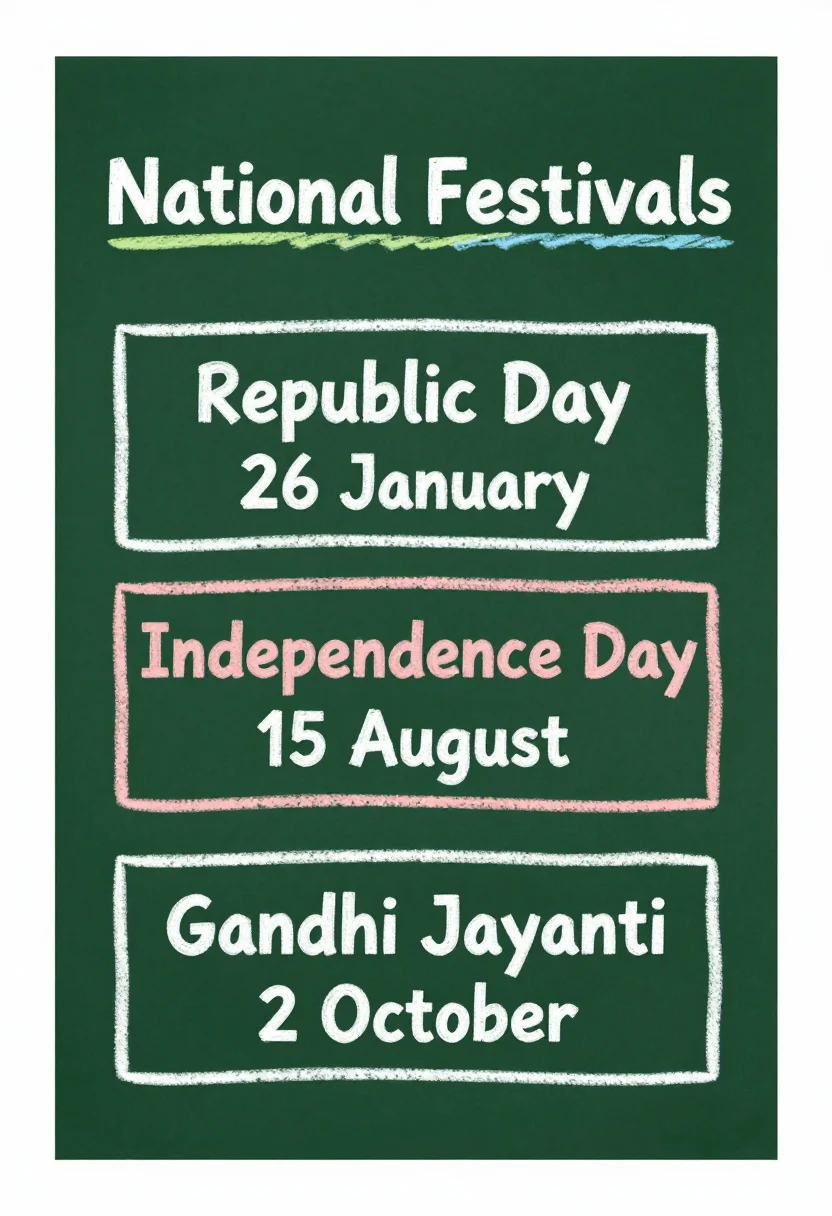
A festivals of India chart is a primary social studies project that shows how each faith and region celebrates. The nine pictures cover religious festivals, including Diwali, Holi, Eid, Christmas, Guru Nanak Jayanti and Durga Puja; harvest festivals, Pongal, Onam, Baisakhi and Bihu; and the three national festivals, Republic Day, Independence Day and Gandhi Jayanti. Type a different angle, such as winter festivals, sweets or rangoli, and the same styles carry it.
- primary social studies project
- classroom wall during festival season
- school assembly display
- a unit on the festivals of India
Frequently asked questions
- Which festivals are on the chart?
- Religious festivals such as Diwali, Holi, Eid and Christmas, harvest festivals such as Pongal, Onam and Baisakhi, and the three national festivals.
- What are the three styles?
- A bright wall poster with flat shapes, a crayon project on cream chart paper, and a chalk drawing on a green blackboard.
- Can I ask for a different angle?
- Yes. Type a direction such as winter festivals, sweets or rangoli. It is a request for a new picture, not a guaranteed result.
- Is the chart ready to print?
- The page is vertical, with a clean margin and no watermark.
About toile
This page is a showcase and a starting point: nine samples already rendered, three readings of the pack crossed with three styles, each shown at the size and ratio it was made for. Take any of them further on the wall with a few words, or ask for all nine again under your own direction; a sign-in keeps what you make, and it is free while Toile is new. The recipe behind each sample — the subject, the style, the palette, the framing — travels with the image rather than staying private to the render: it is in the alt text of every sample and in the page's own structured data, so a search engine reads the same handles a person would.