/flower-bouquet-coloring-pages · coloring
Flower bouquet coloring pages: roses and peonies, wildflower jar, wedding bouquet
Make your ownFlower bouquet coloring pages
Describe yours. We'll remake the whole pack your way.
More like this
the whole catalog →

every sample — three subjects, three styles ↓
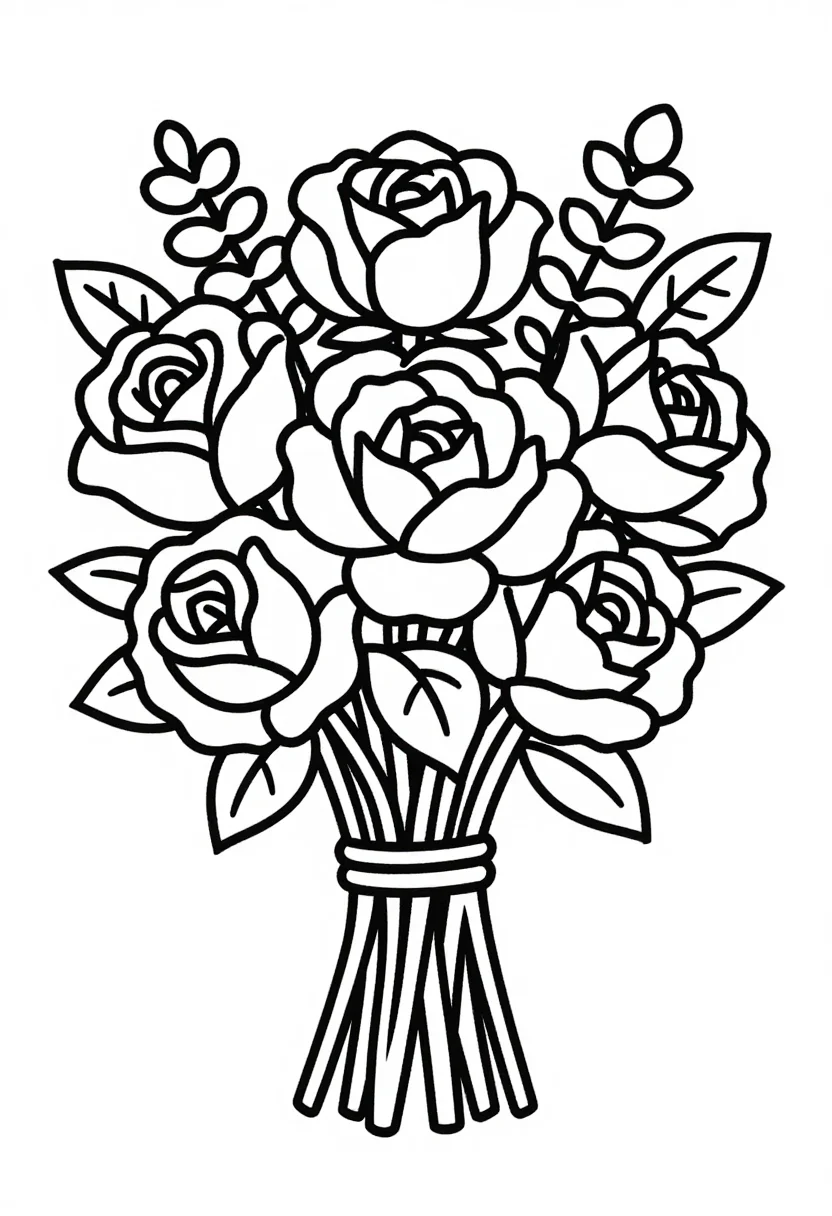
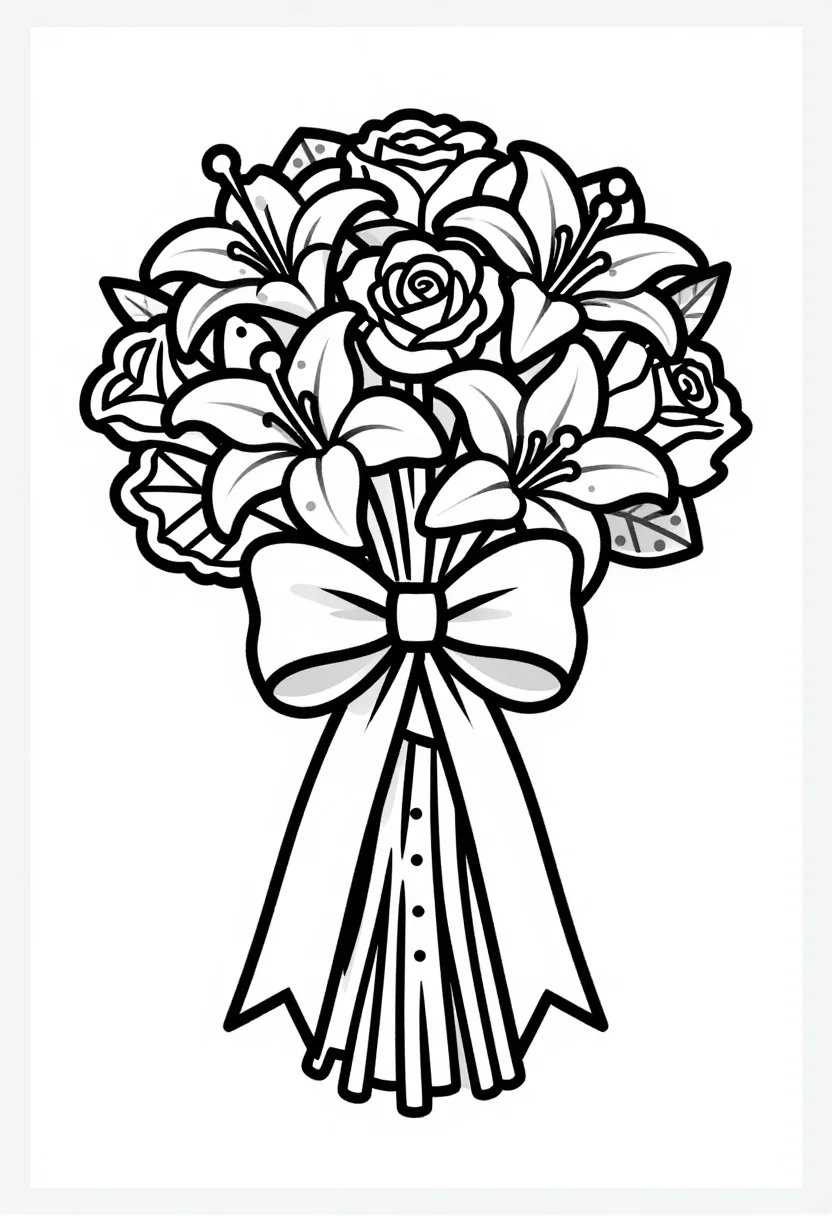
Printable black-and-white flower bouquet pages for grown-ups who want an arrangement to color rather than a single flower. The three scenes are a lush bouquet of roses, peonies and eucalyptus tied with twine, a mason jar of daisies, cosmos and lavender on a windowsill, and a cascading wedding bouquet with lilies and a satin ribbon. Fine detail closes every petal, leaf vein and ribbon fold as its own small shape.
- a relaxing adult coloring session
- a wedding or shower activity table
- a framed floral print
- a sketchbook study of arranged flowers
Frequently asked questions
- How do I print these pages?
- Save the page you want and print it in black at the paper size your printer uses. The drawings are black line art on white.
- Can I ask for a different flower?
- Yes. Type a flower such as tulips or sunflowers, or a vase, and the three styles keep the same clean, closed line work. The result is a request, drawn fresh each time.
- What is the difference between the three styles?
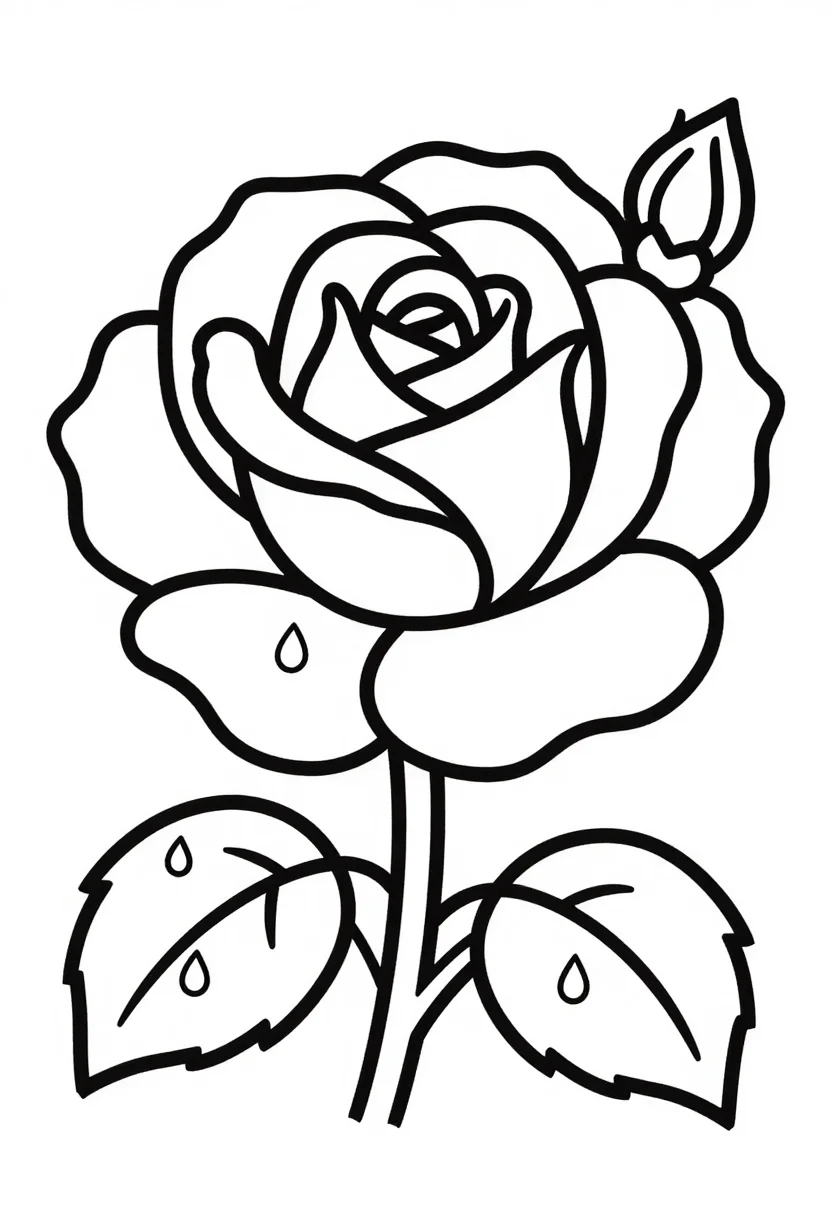
- Bold uses large simple blooms and leaves with open areas to color. Fine detail closes every petal, stem and ribbon fold as a small shape. Patterned divides the inside into panels of dots, swirls, stripes and scallops.
- Are these photographs of real flowers?
- No. Every page is a drawn line illustration, not a photograph.
About toile
This page is a showcase and a starting point: nine samples already rendered, three readings of the pack crossed with three styles, each shown at the size and ratio it was made for. Take any of them further on the wall with a few words, or ask for all nine again under your own direction; a sign-in keeps what you make, and it is free while Toile is new. The recipe behind each sample — the subject, the style, the palette, the framing — travels with the image rather than staying private to the render: it is in the alt text of every sample and in the page's own structured data, so a search engine reads the same handles a person would.