/haft-sin-labels · season
Haft-sin labels: seven items, their meanings, write-in tags
Make your ownHaft-sin labels
Describe yours. We'll remake the whole pack your way.
More like this
the whole catalog →


every sample — three subjects, three styles ↓
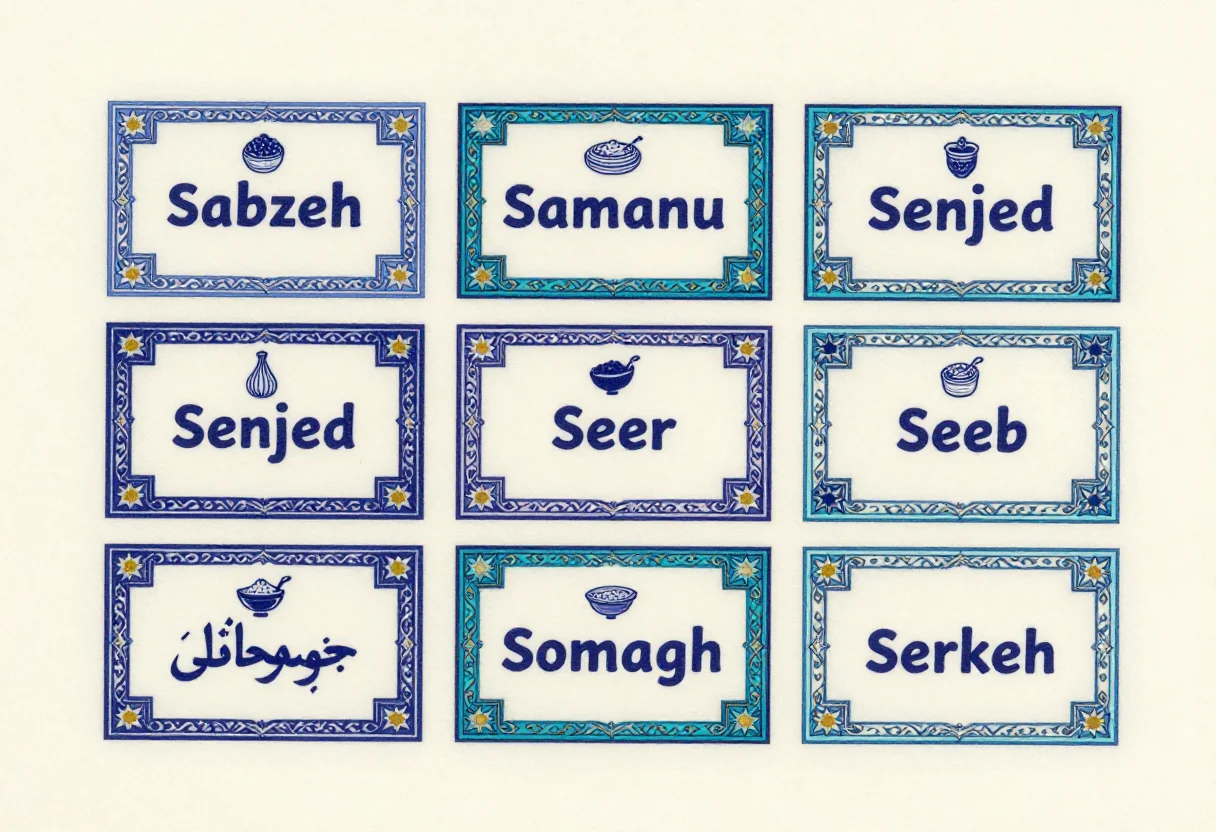
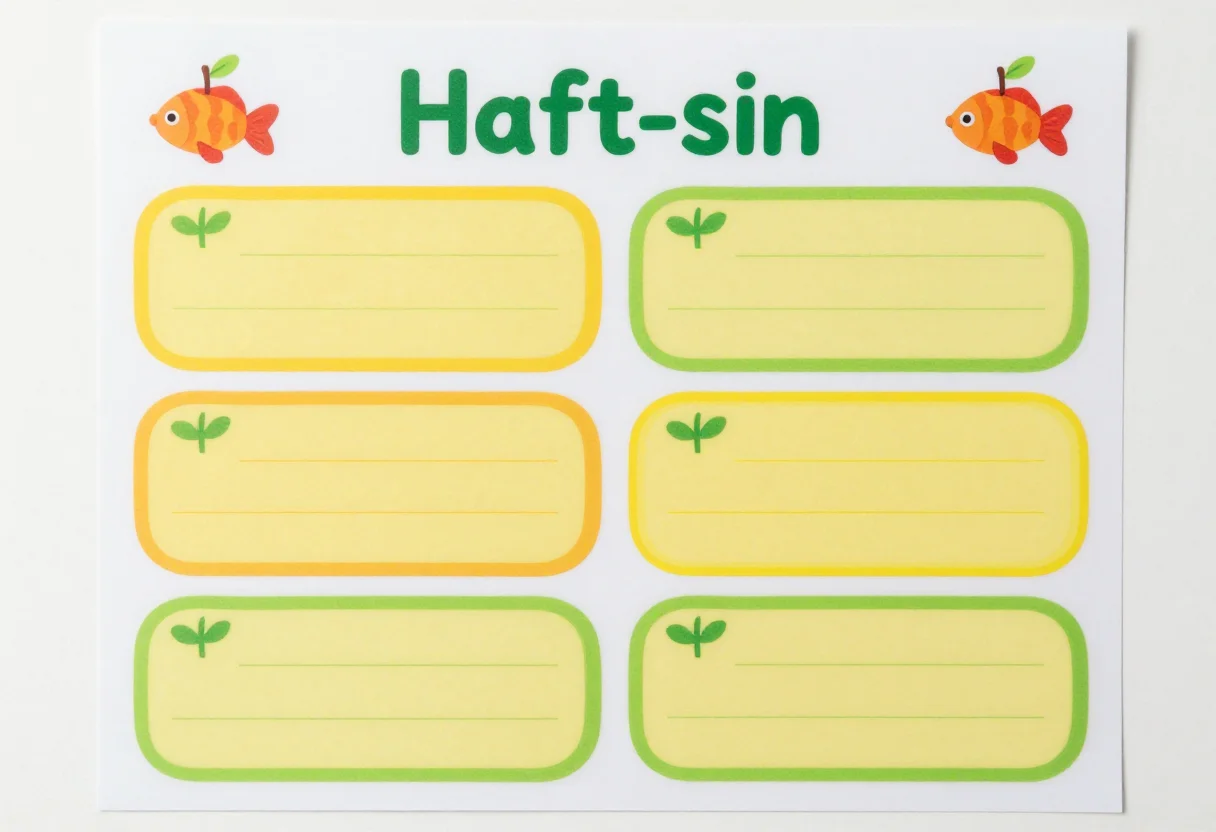
Haft-sin is the table of seven items whose names begin with S, set by Persian families for Nowruz. These labels go beside each dish so children and guests can read what each item is and means. Each kind comes in three finishes: item names with a small drawing, names with meanings, and blank tags to fill in by hand. Print, cut and fold the tents. Type a different list of names and the layout carries it.
- labels beside each dish on the haft-sin table
- a classroom display for a Nowruz lesson
- a children's activity with blank tags to fill in
- a community hall table for a new year party
Frequently asked questions
- What do I get when I download this pack?
- Nine print-ready sheets: three sheets of item names, three of names with meanings, and three of blank write-in tags, each in a different finish.
- Can I print these at home?
- Yes. The sheets are landscape pages with a clean margin and thin cut lines, laid out to be printed and cut by hand.
- Can I use a different list of items?
- Yes. Type the names you want and the label layout is drawn with them.
- What is the difference between the styles?
- Persian tile uses cobalt and ivory ornament, watercolor has soft painted washes, and kids flat uses bright shapes with thick friendly outlines.
About toile
This page is a showcase and a starting point: nine samples already rendered, three readings of the pack crossed with three styles, each shown at the size and ratio it was made for. Take any of them further on the wall with a few words, or ask for all nine again under your own direction; a sign-in keeps what you make, and it is free while Toile is new. The recipe behind each sample — the subject, the style, the palette, the framing — travels with the image rather than staying private to the render: it is in the alt text of every sample and in the page's own structured data, so a search engine reads the same handles a person would.