/hair-drawing-references · illustration
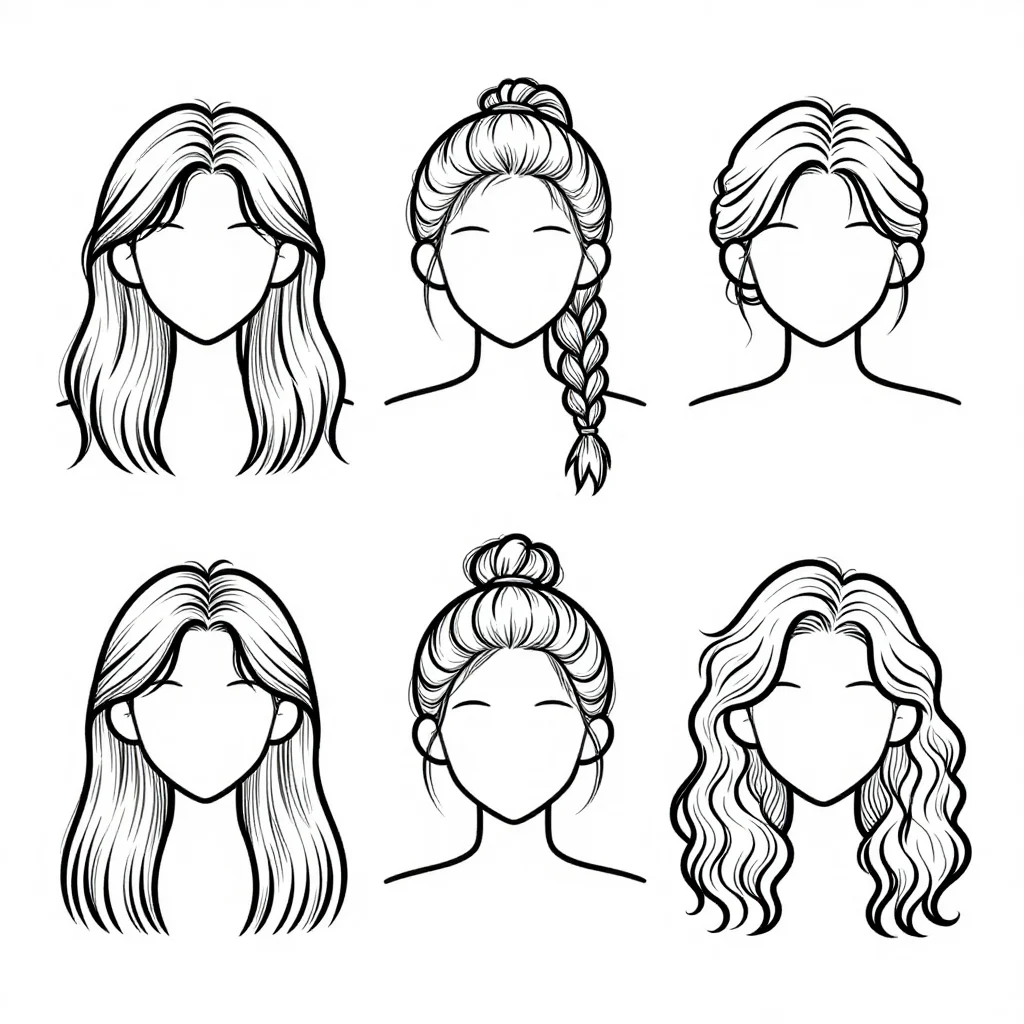
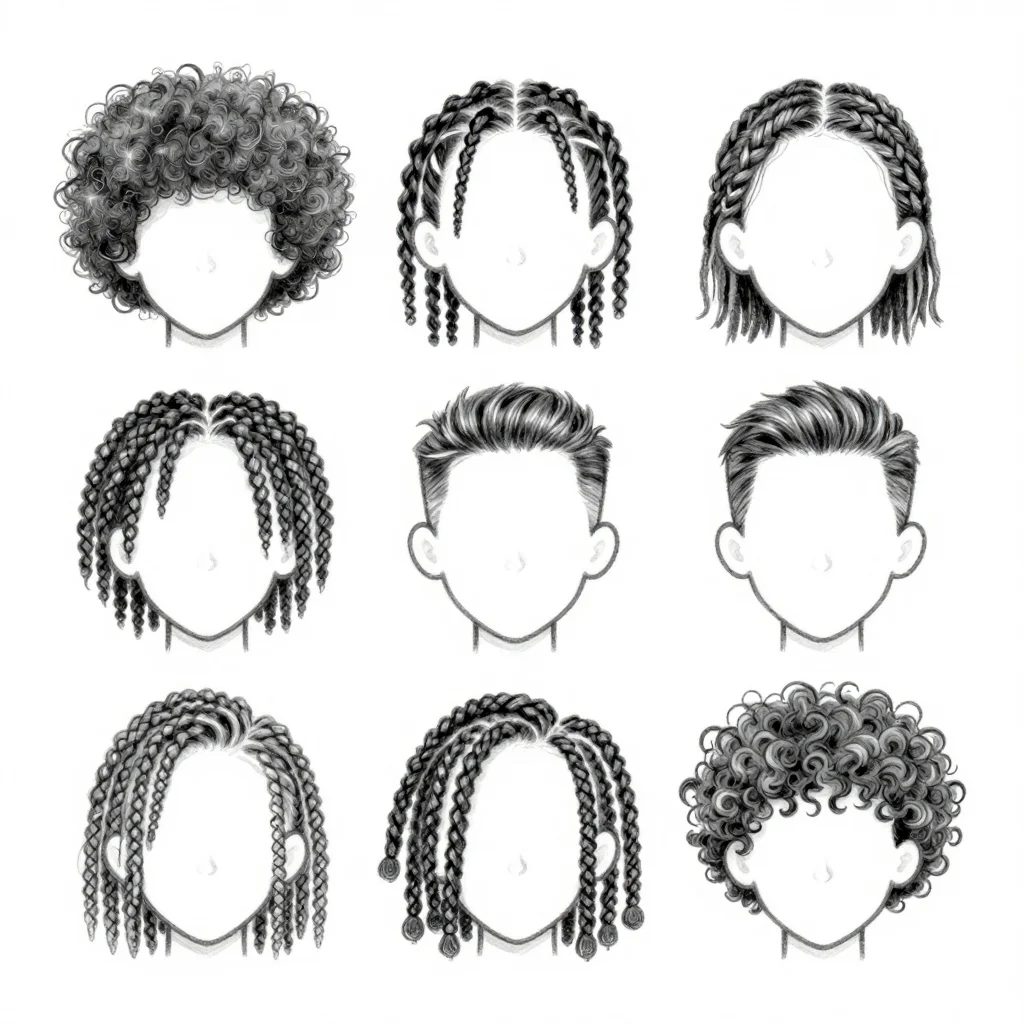
Hair drawing references: long, short and textured hairstyles
Make your ownHair drawing references
Describe yours. We'll remake the whole pack your way.
More like this
the whole catalog →
every sample — three subjects, three styles ↓
Artists learning to draw hair look for sheets with many hairstyles on the same head, and for how strands group into locks. These are grids of heads: long hairstyles, short cuts and textured hair such as curls, braids and locs, each drawn in lines on white. Each set comes as black ink lineart, a lock-blocking study in light blue and black, and a graphite pencil study with shading. Type a different hairstyle and the sheet is drawn to it.
- a hairstyle reference for a character sheet
- a study page on how strands group into locks
- a reference for drawing a curly or braided style
- a sketchbook page of hairstyles on one head
Frequently asked questions
- What are the three subjects?
- Long hairstyles such as waves, a ponytail and a braid; short cuts such as a buzz cut, a bob and a pixie; and curls and coils such as an afro, cornrows and locs.
- What is lock blocking?
- The hair is first blocked in as large simple lock shapes in light blue pencil, then refined in black line into groups of strands.
- How does the pencil study differ?
- It is a graphite drawing with soft hatching along the strands to show volume and a bright band of shine.
- Can I ask for a different hairstyle?
- Yes. Type it in the direction field and the sheet is drawn to match, though a request is not a promised result.
About toile
This page is a showcase and a starting point: nine samples already rendered, three readings of the pack crossed with three styles, each shown at the size and ratio it was made for. Take any of them further on the wall with a few words, or ask for all nine again under your own direction; a sign-in keeps what you make, and it is free while Toile is new. The recipe behind each sample — the subject, the style, the palette, the framing — travels with the image rather than staying private to the render: it is in the alt text of every sample and in the page's own structured data, so a search engine reads the same handles a person would.