/how-to-draw-horses · coloring
How to draw horses: a standing horse, a galloping horse, a horse's head
Make your ownHow to draw horses
Describe yours. We'll remake the whole pack your way.
More like this
the whole catalog →

every sample — three subjects, three styles ↓
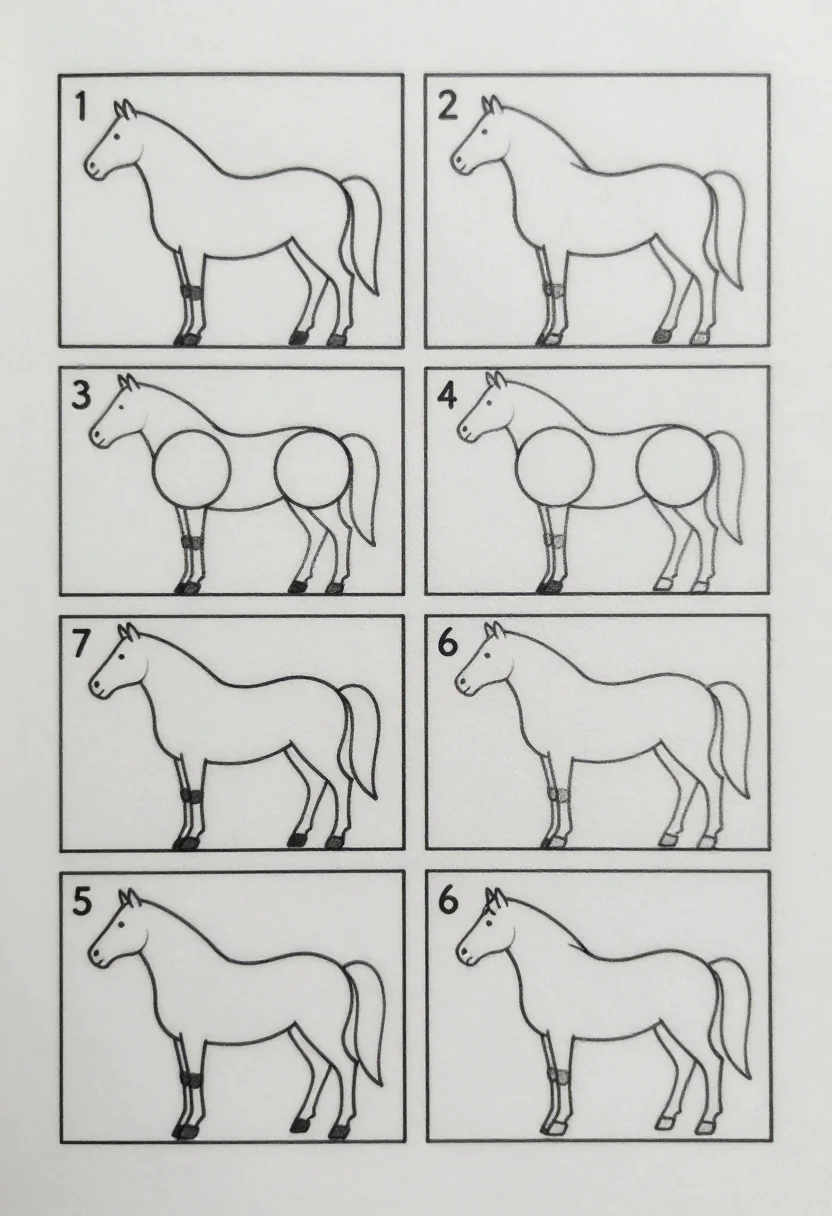
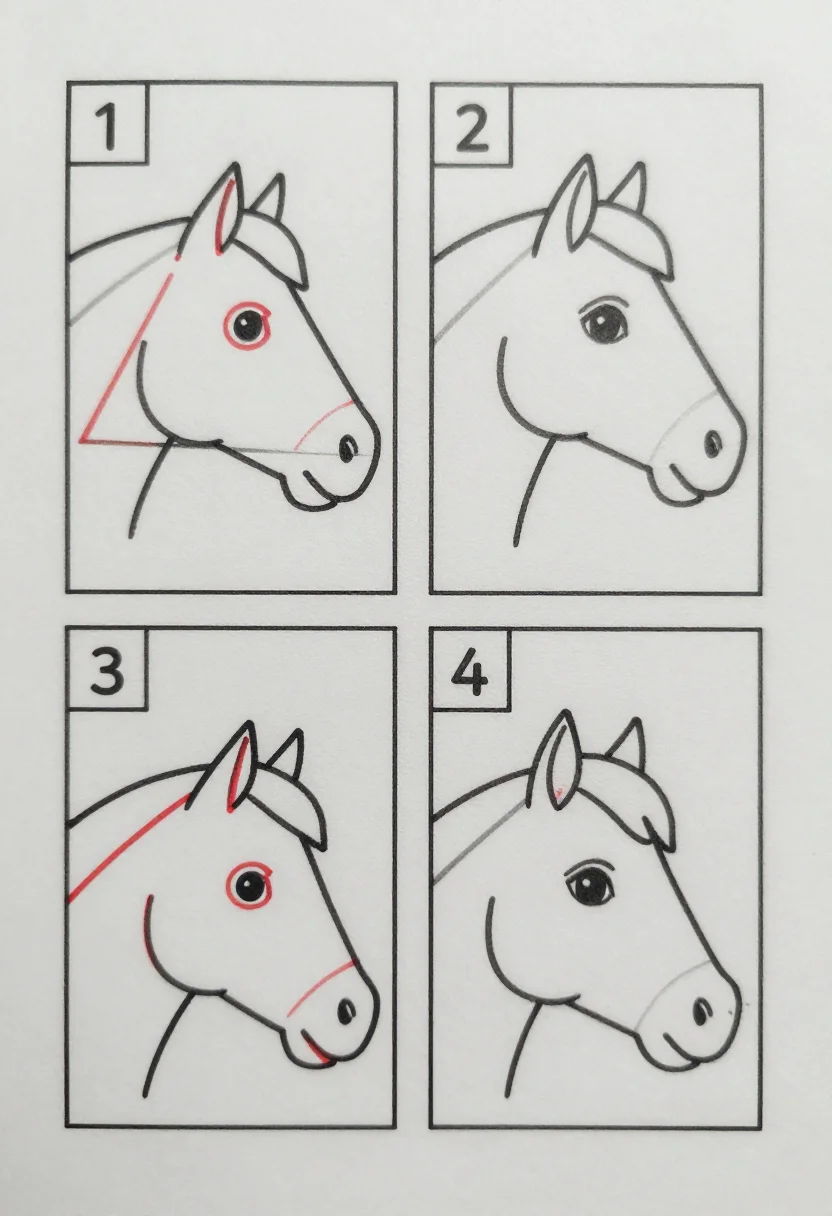
Step sheets for children and riders who want a horse that stands right. Each picture builds one horse in numbered panels, starting from two circles for the chest and the hindquarters, then adding the neck, head, legs, mane and tail. The three subjects are a standing horse in side view, a galloping horse and a horse's head. Type a different horse, such as a foal or a pony, and the page is built to that request.
- a children's drawing lesson
- a riding club handout
- a horse-themed sketchbook
- a classroom animal unit
Frequently asked questions
- Why does the horse start from circles?
- The chest and the hindquarters are drawn as two circles first, so the body has its weight before the legs and head are added.
- What is the difference between the styles?
- Classic is a plain black outline built up one panel at a time. Guide shapes starts from light gray circles and ovals and traces the black outline over them. New lines in red shows each step's lines in red over the black lines before.
- Can I ask for a different horse?
- Yes. Type a different horse, such as a foal or a pony, and the page is built to that request. The result is not guaranteed to match the nine shown.
- Are these hand-drawn?
- No. They are illustrations made for this page, not scans of hand drawings.
About toile
This page is a showcase and a starting point: nine samples already rendered, three readings of the pack crossed with three styles, each shown at the size and ratio it was made for. Take any of them further on the wall with a few words, or ask for all nine again under your own direction; a sign-in keeps what you make, and it is free while Toile is new. The recipe behind each sample — the subject, the style, the palette, the framing — travels with the image rather than staying private to the render: it is in the alt text of every sample and in the page's own structured data, so a search engine reads the same handles a person would.