/kannada-alphabet-charts · classroom
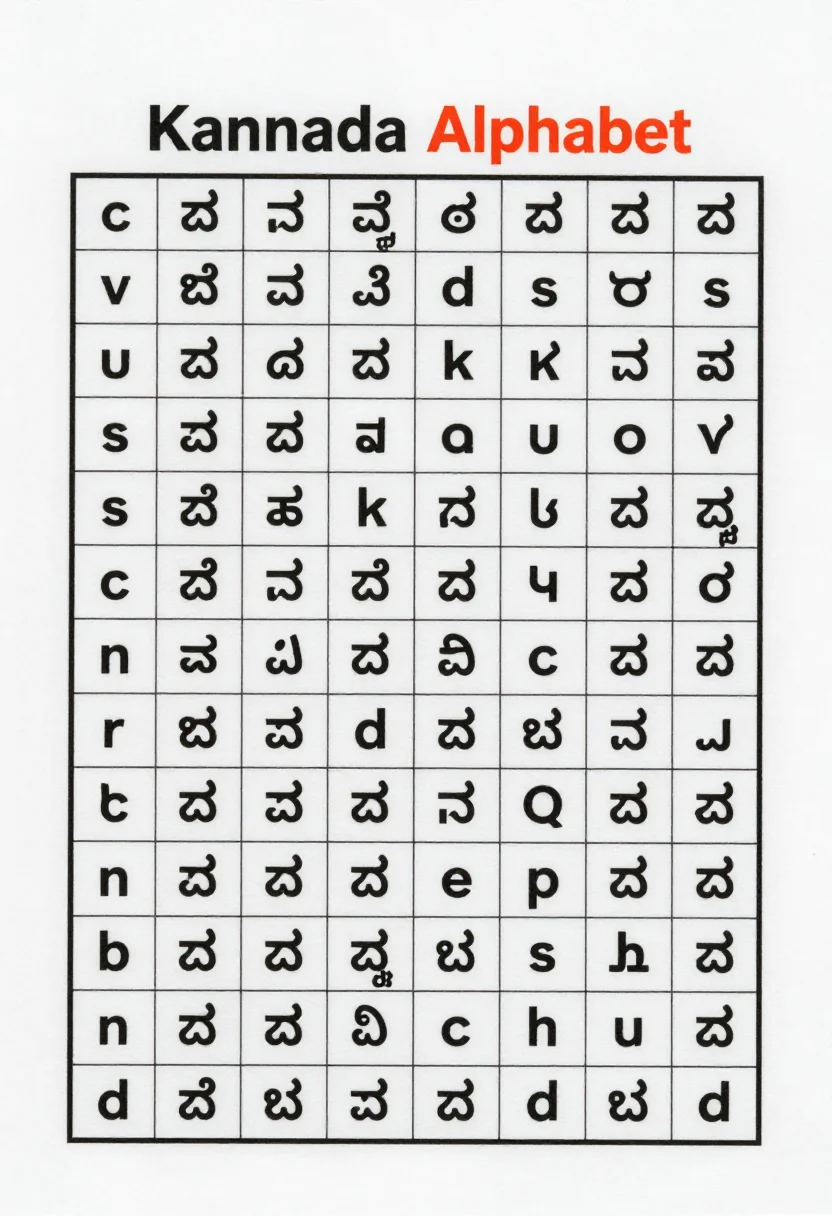
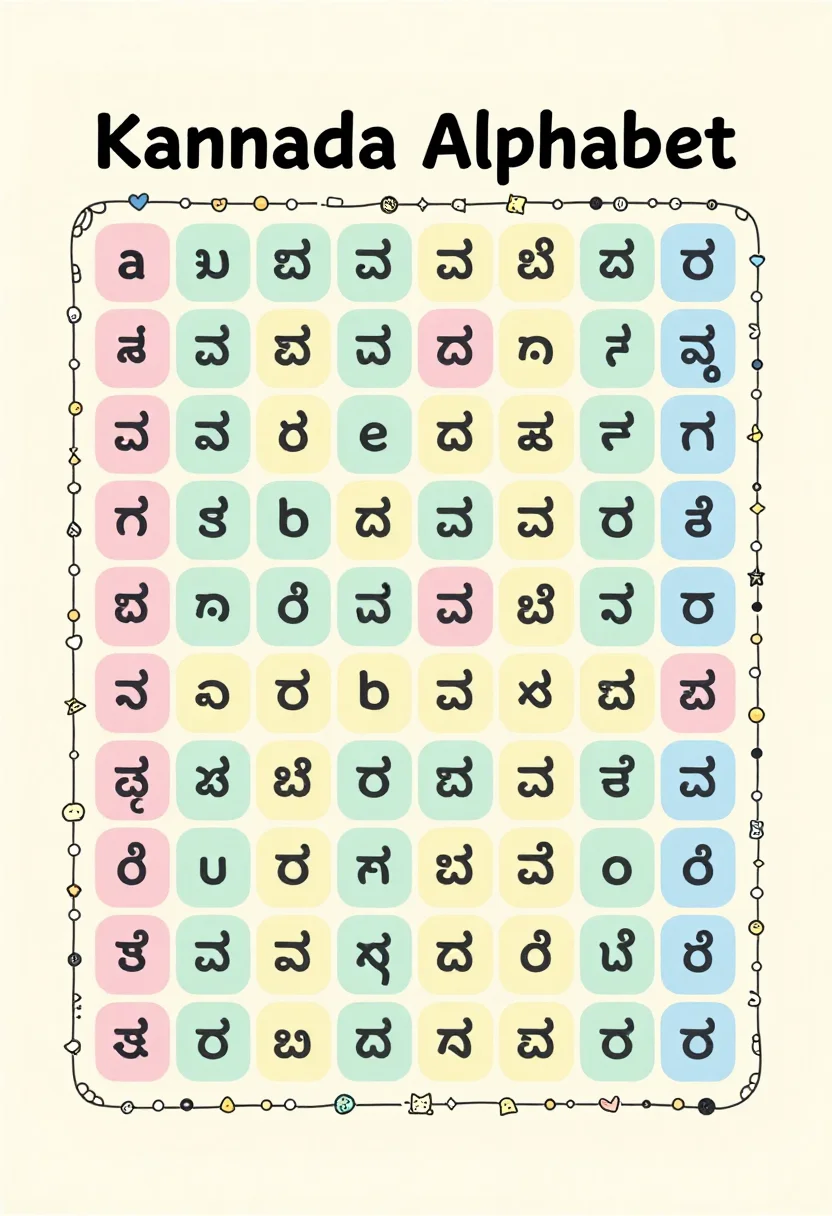
Kannada alphabet charts: full alphabet, picture chart, kagunita
Make your ownKannada alphabet charts
Describe yours. We'll remake the whole pack your way.
More like this
the whole catalog →
every sample — three subjects, three styles ↓
The Kannada alphabet, called varnamale, is the set of vowels and consonants children learn first. These nine pages give a full alphabet chart, a picture chart with pictures beside the letters, and a kagunita grid, one consonant with its vowel signs. Each comes as a ruled classroom sheet, a rainbow chart or a soft pastel chart, with Kannada lettering and an English heading. Type a twist, such as large print or a border, and the same layouts carry it.
- a classroom wall
- a study table at home
- a nursery wall
- a daily practice sheet
Frequently asked questions
- Is the lettering in Kannada?
- Yes. The chart letters are Kannada script. Only the page heading is in English.
- What is a kagunita?
- A kagunita is a grid showing one consonant with each of its vowel signs. The kagunita page shows that grid.
- What is the difference between the three styles?
- Classic ruled uses thin black lines and one accent colour. Rainbow classroom gives each row its own bright band inside a bold border. Soft pastel uses pink, mint, butter yellow and sky blue tiles on cream.
- Can I change the chart or ask for a twist?
- Yes. Type the change, such as large print, black and white or a border. Your request shapes the result; it is not a promise of what these nine pages show.
About toile
This page is a showcase and a starting point: nine samples already rendered, three readings of the pack crossed with three styles, each shown at the size and ratio it was made for. Take any of them further on the wall with a few words, or ask for all nine again under your own direction; a sign-in keeps what you make, and it is free while Toile is new. The recipe behind each sample — the subject, the style, the palette, the framing — travels with the image rather than staying private to the render: it is in the alt text of every sample and in the page's own structured data, so a search engine reads the same handles a person would.