/kitchen-murals · wall-art
Kitchen mural: lemon tree, tile panel or herb garden
Make your ownKitchen murals
Describe yours. We'll remake the whole pack your way.
More like this
the whole catalog →

every sample — three subjects, three styles ↓
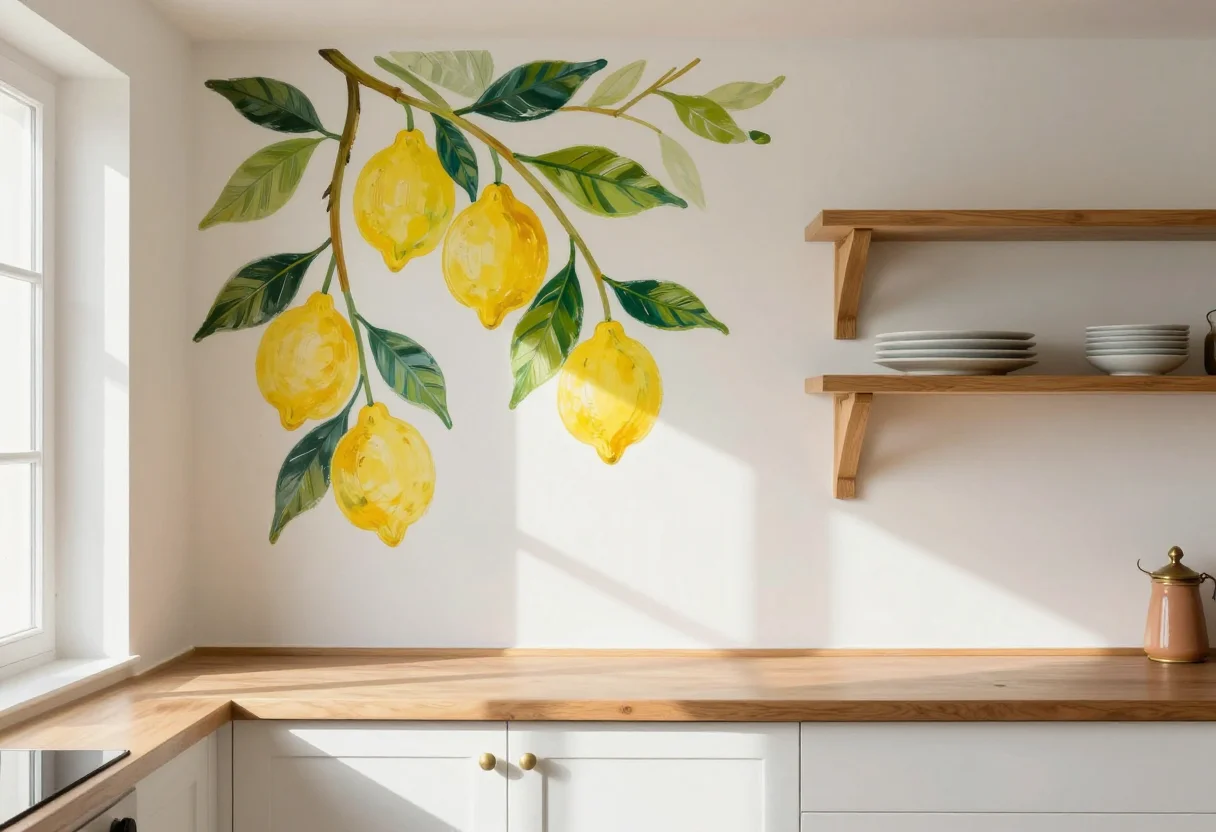
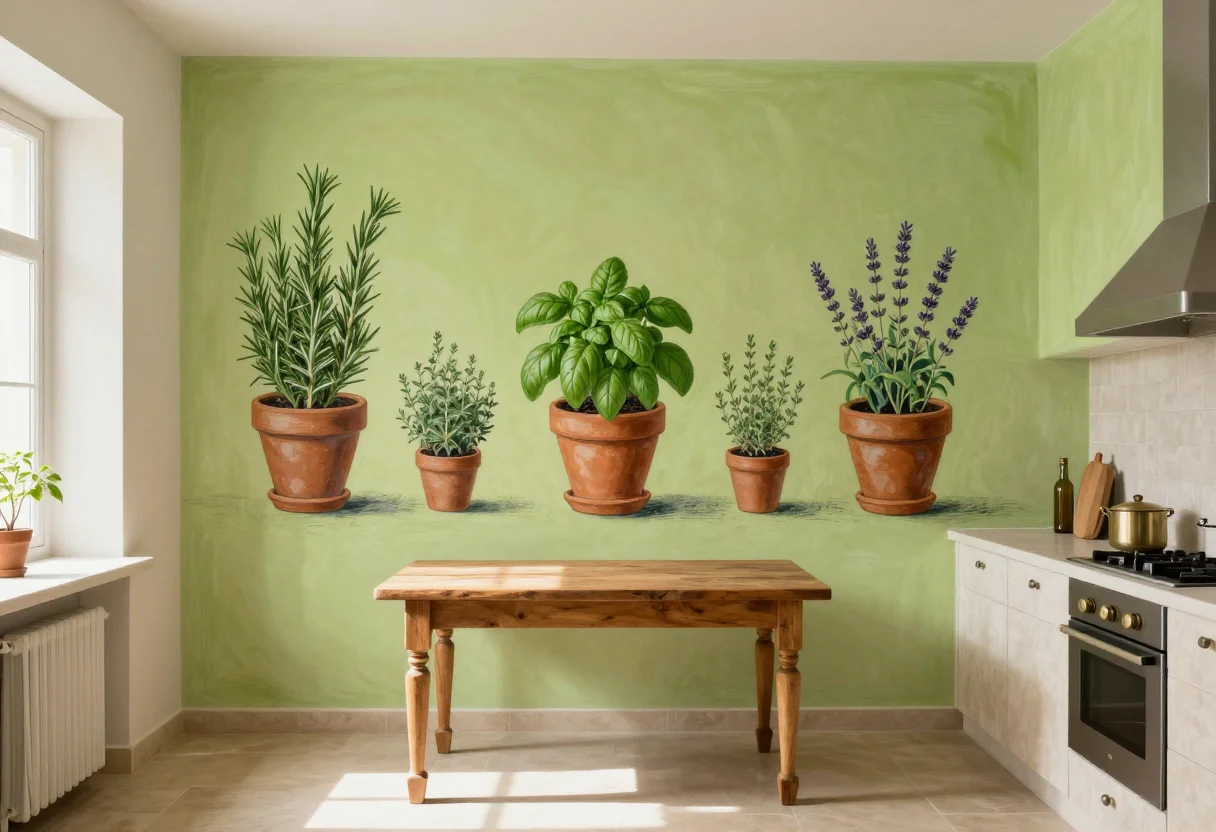
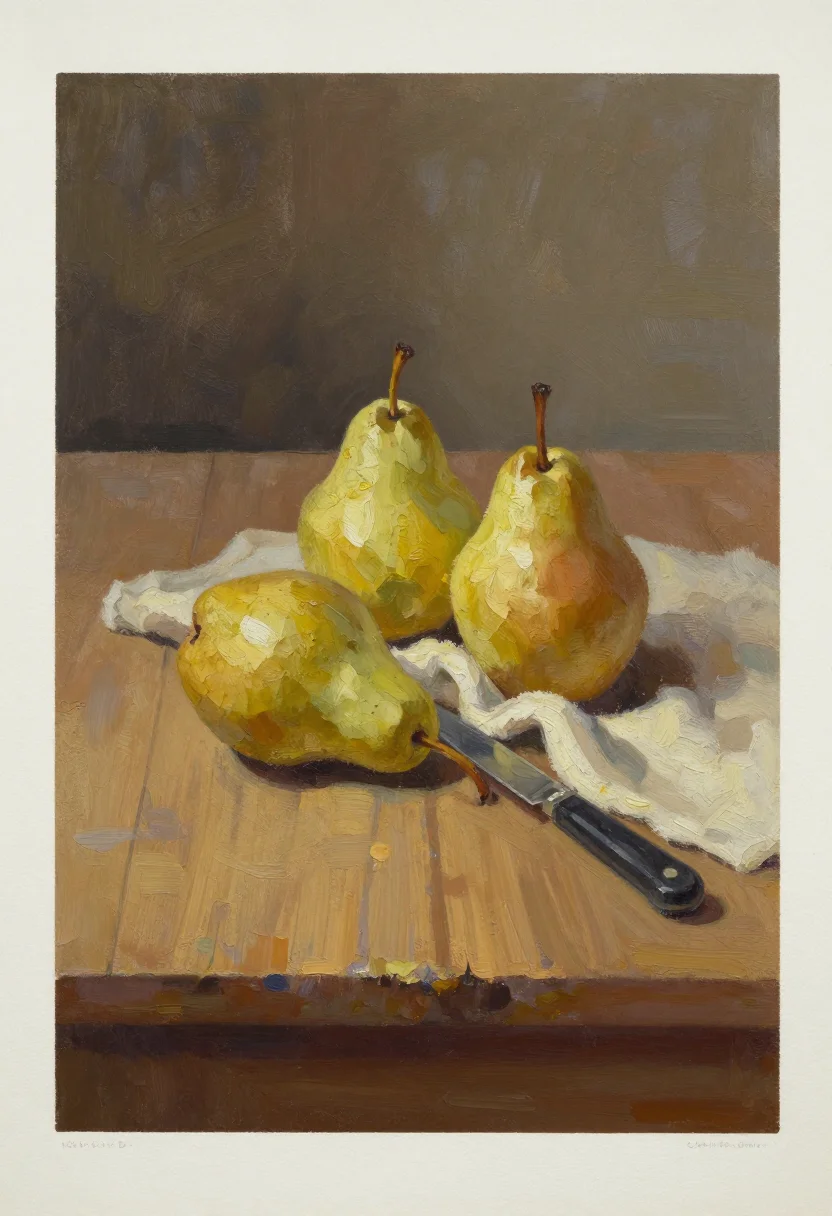
A kitchen mural is a painted wall that makes a cooking room feel sunny and Mediterranean. These nine pictures show a lemon tree behind open shelves, a blue and white tile panel behind the stove, and a herb garden of rosemary, basil and thyme over a breakfast table. Each is shown as a folk-painted wall, a trompe-l'oeil wall and an old villa lime wash. Type a different subject in the direction field and the same finishes can carry it.
- a wall behind open shelves
- a painted panel behind the stove
- a breakfast nook wall
- a reference for a painter before the job
Frequently asked questions
- What do the nine pictures show?
- Three kitchen walls: a lemon tree, a tile panel and an herb garden. Each is shown in three finishes: folk painted, trompe-l'oeil and old villa lime wash.
- Can I get a different subject?
- Yes. Type the subject in the direction field and the same three finishes can carry it. The nine pictures show only the subjects on this page.
- What is the trompe-l'oeil finish?
- Trompe-l'oeil shades each painted form so it looks like a real object on the wall, with depth rather than flat color.
- Are these photographs of a real kitchen?
- No. They are generated images of a painted wall in a kitchen, so use them to plan the wall or to show a painter what you want.
About toile
This page is a showcase and a starting point: nine samples already rendered, three readings of the pack crossed with three styles, each shown at the size and ratio it was made for. Take any of them further on the wall with a few words, or ask for all nine again under your own direction; a sign-in keeps what you make, and it is free while Toile is new. The recipe behind each sample — the subject, the style, the palette, the framing — travels with the image rather than staying private to the render: it is in the alt text of every sample and in the page's own structured data, so a search engine reads the same handles a person would.