/koi-cross-stitch-patterns · craft
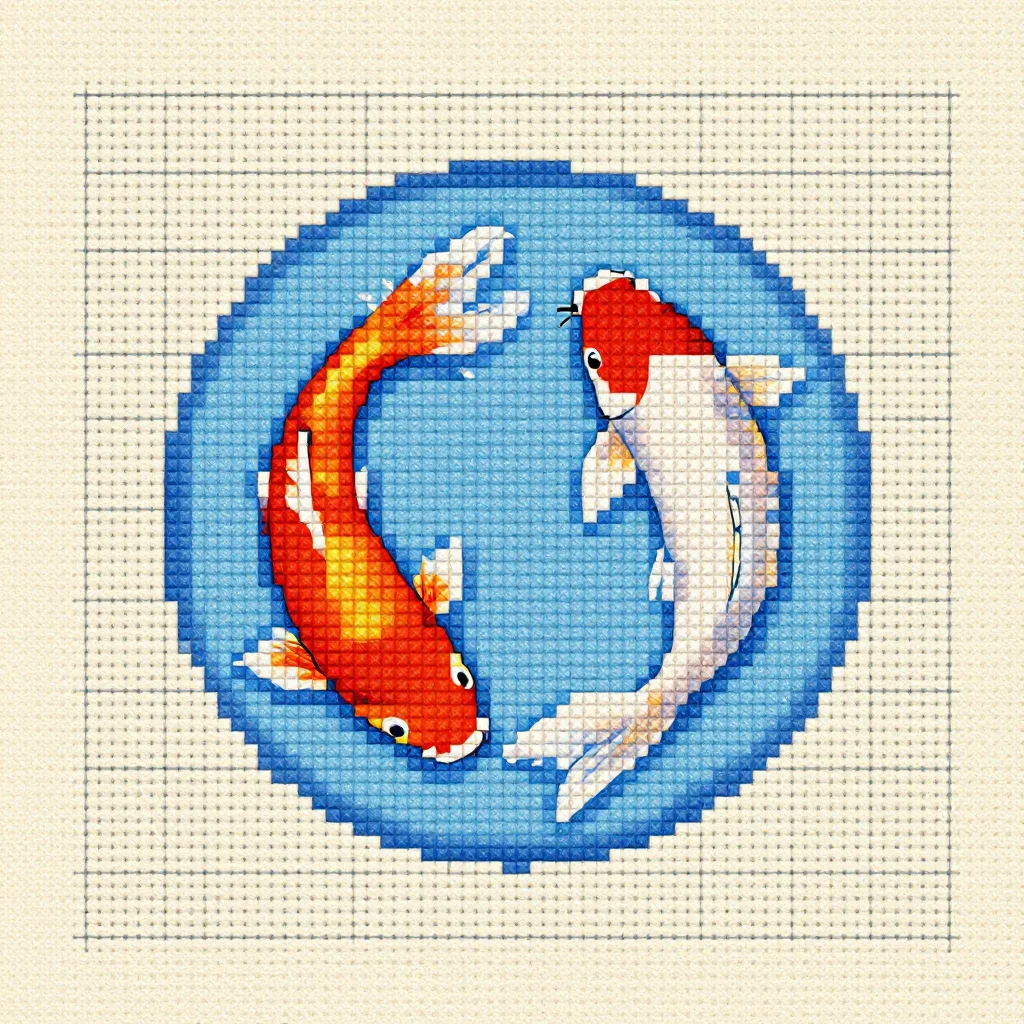
Koi cross stitch patterns: a pair of koi, koi among lily pads, a koi swimming upstream

Make your ownKoi cross stitch patterns
Describe yours. We'll remake the whole pack your way.
More like this
the whole catalog →

every sample — three subjects, three styles ↓
Koi charts are stitched for their orange and white against blue water, for a framed piece or a round hoop. This pack has three scenes: two koi circling head to tail, a koi beneath lily pads, and a single red koi swimming upstream. Each comes as a classic counted chart, an antique sampler inside a stitched border, and a bold modern version. Type another subject, such as a pond or a hoop, and the same styles carry it.
- a round hoop for a bathroom or hallway
- a framed piece for a garden room
- a gift for someone who keeps a pond
- a summer wall piece
Frequently asked questions
- What are the nine pictures?
- Three koi scenes, each in three styles: a pair of koi, a koi among lily pads and a single koi swimming upstream, as classic charts, antique samplers and bold modern charts.
- What is the difference between the three styles?
- The classic chart uses small X stitches on a visible grid in eight to twelve thread colours. The antique sampler uses muted thread colours inside a stitched border. The bold modern version uses saturated flat colours and simplified shapes.
- Can I ask for a different fish or a different setting?
- Yes. Type a subject or a setting in the direction field and the three styles are applied to it. What you type is a request, so the picture may differ from the samples.
About toile
This page is a showcase and a starting point: nine samples already rendered, three readings of the pack crossed with three styles, each shown at the size and ratio it was made for. Take any of them further on the wall with a few words, or ask for all nine again under your own direction; a sign-in keeps what you make, and it is free while Toile is new. The recipe behind each sample — the subject, the style, the palette, the framing — travels with the image rather than staying private to the render: it is in the alt text of every sample and in the page's own structured data, so a search engine reads the same handles a person would.