/kwanzaa-cards · season
Kwanzaa cards: lit kinara, unity cup, Habari Gani
Make your ownKwanzaa cards
Describe yours. We'll remake the whole pack your way.
More like this
the whole catalog →



every sample — three subjects, three styles ↓
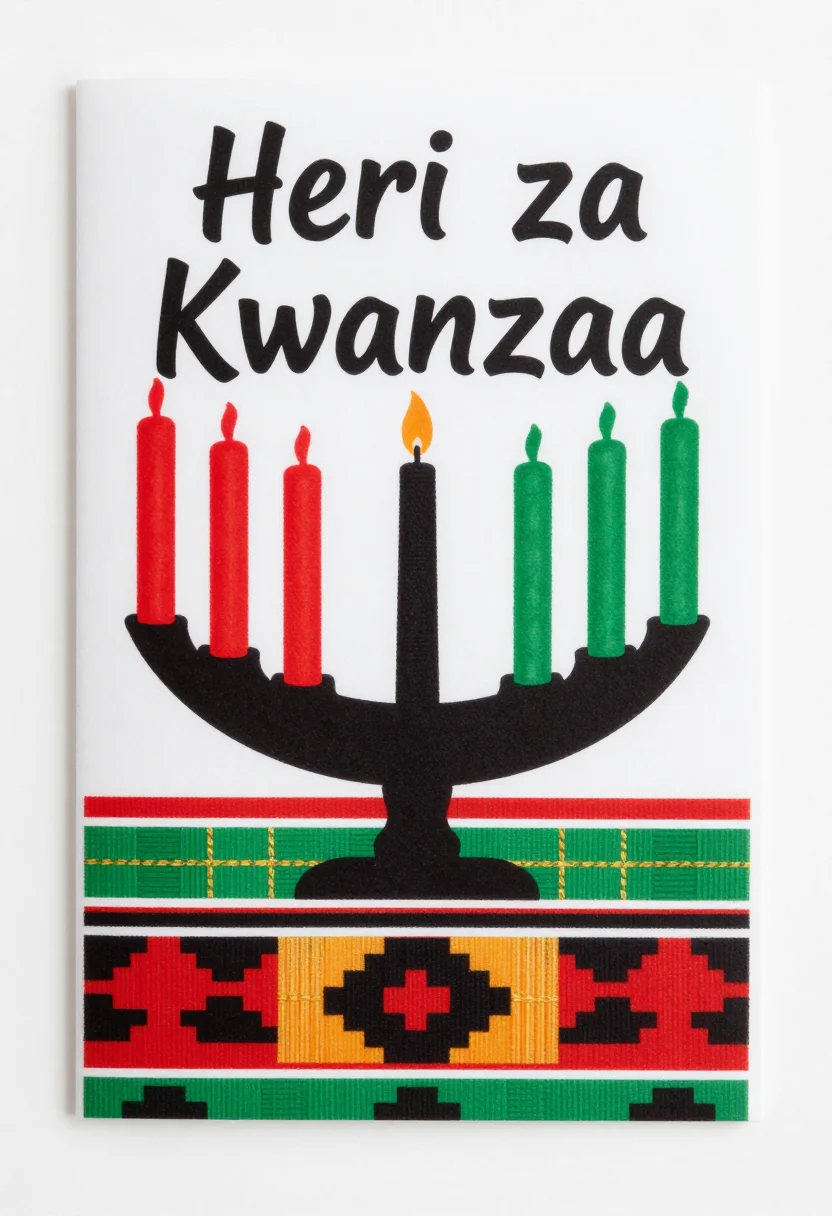
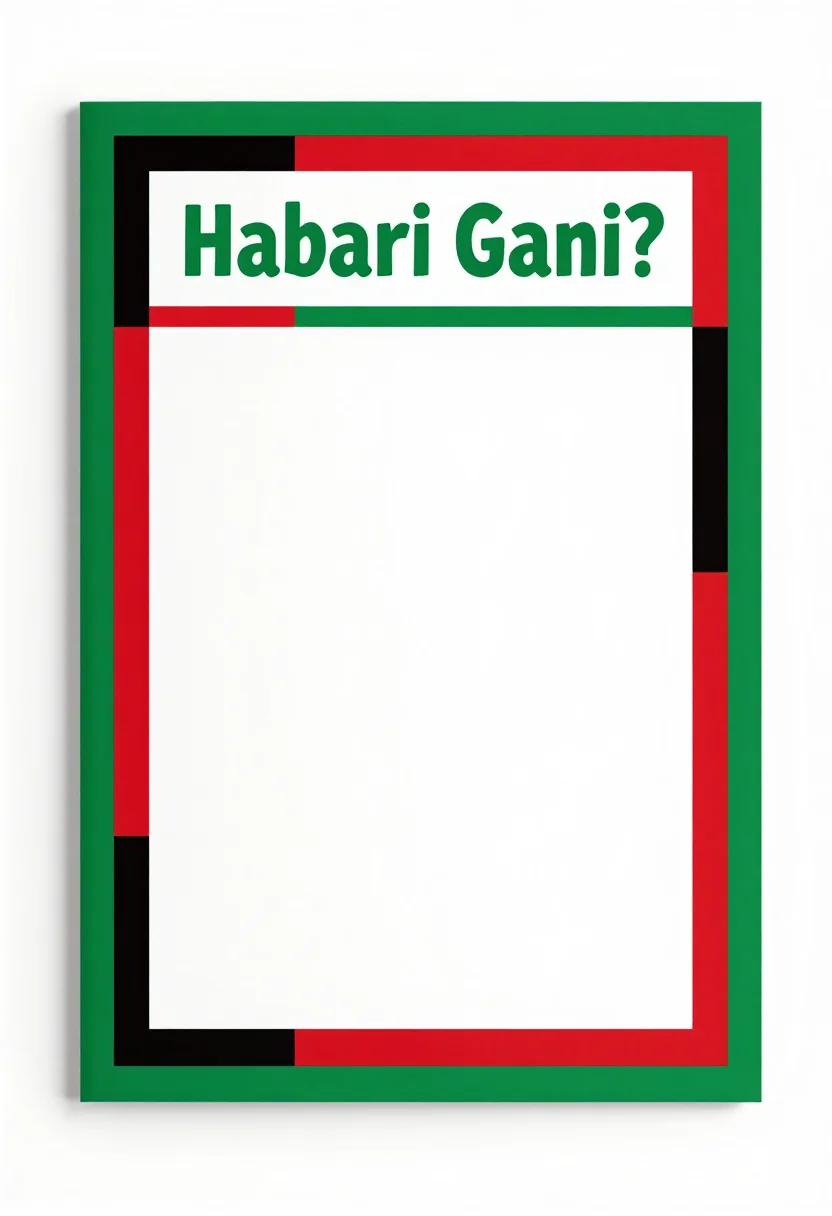
Printable Kwanzaa cards to send to family and friends in the week from 26 December, in the red, black and green of the celebration. The cards show a kinara with three red candles, the black candle and three green candles, a unity cup beside ears of corn, and a Habari Gani card with an empty panel for the day principle. Kente stripe, paper collage and modern graphic give the three looks.
- A card for family during Kwanzaa week
- A card for the day's principle
- A card for a community celebration
- A card for a classroom display
Frequently asked questions
- What is the Habari Gani card?
- It carries the greeting Habari Gani, the question asked on each day of Kwanzaa, with a panel below for the day's principle.
- Which greetings do the cards use?
- Some cards use the Swahili greetings Heri za Kwanzaa and Habari Gani, and one says Happy Kwanzaa.
- What is the difference between the three styles?
- Kente stripe uses woven bands of pattern with bold color blocks. Paper collage uses torn flat shapes on warm cream. Modern graphic uses clean geometric forms in deep green, black and red.
- Can I change the greeting?
- Type a direction such as in Swahili and the card is made with that wording. It is a request, not a guaranteed result.
About toile
This page is a showcase and a starting point: nine samples already rendered, three readings of the pack crossed with three styles, each shown at the size and ratio it was made for. Take any of them further on the wall with a few words, or ask for all nine again under your own direction; a sign-in keeps what you make, and it is free while Toile is new. The recipe behind each sample — the subject, the style, the palette, the framing — travels with the image rather than staying private to the render: it is in the alt text of every sample and in the page's own structured data, so a search engine reads the same handles a person would.