/landmark-coloring-pages · coloring
Landmark coloring pages: Taj Mahal, Eiffel Tower, Statue of Liberty

Make your ownLandmark coloring pages
Describe yours. We'll remake the whole pack your way.
More like this
the whole catalog →


every sample — three subjects, three styles ↓
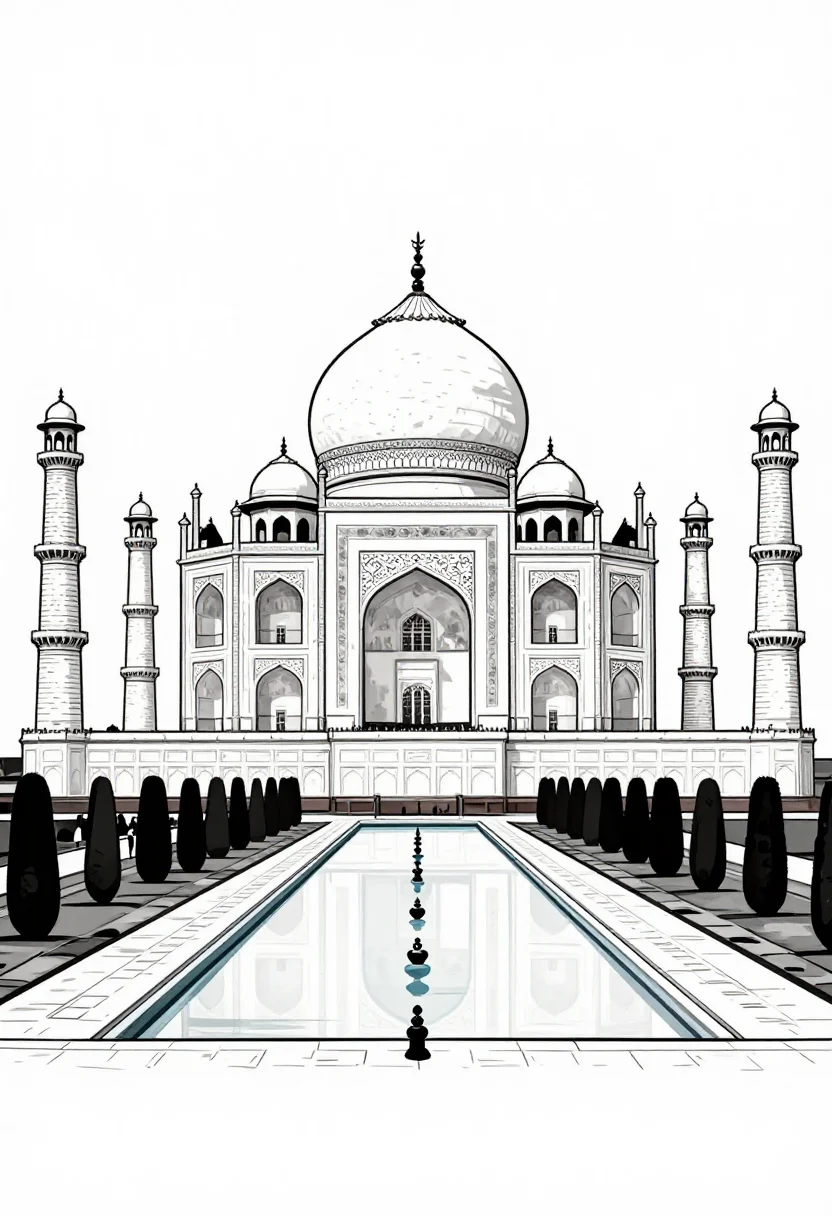
Landmark coloring pages for geography lessons, travel-minded children and adults who like architecture. The nine pages show the Taj Mahal, the Eiffel Tower and the Statue of Liberty, each drawn with its real proportions. The styles are bold and easy, fine detail, and full scene with sky and landscape. Type a different landmark, such as Big Ben or the Colosseum, and the same style carries it.
- a geography lesson on famous places
- a travel planning page before a trip
- a souvenir page for a child who loves travel
- an architecture study page for an adult
Frequently asked questions
- Which landmarks are on the pages?
- The Taj Mahal, the Eiffel Tower and the Statue of Liberty, three pages each, in the three styles.
- What is the difference between the styles?
- Bold and easy uses thick black outlines with simplified architecture. Fine detail draws the bricks, ironwork, windows and ornament, and full scene sets the landmark in sky, clouds, birds and landscape.
- Can I ask for a different landmark?
- Yes. A landmark you type, such as Big Ben, the Colosseum or the Great Wall, is a request; the page keeps the same style but may not match it exactly.
- Are the pages in color?
- No. Each page is a black line drawing on white paper, ready to print and color.
About toile
This page is a showcase and a starting point: nine samples already rendered, three readings of the pack crossed with three styles, each shown at the size and ratio it was made for. Take any of them further on the wall with a few words, or ask for all nine again under your own direction; a sign-in keeps what you make, and it is free while Toile is new. The recipe behind each sample — the subject, the style, the palette, the framing — travels with the image rather than staying private to the render: it is in the alt text of every sample and in the page's own structured data, so a search engine reads the same handles a person would.