/las-posadas-invitations · season
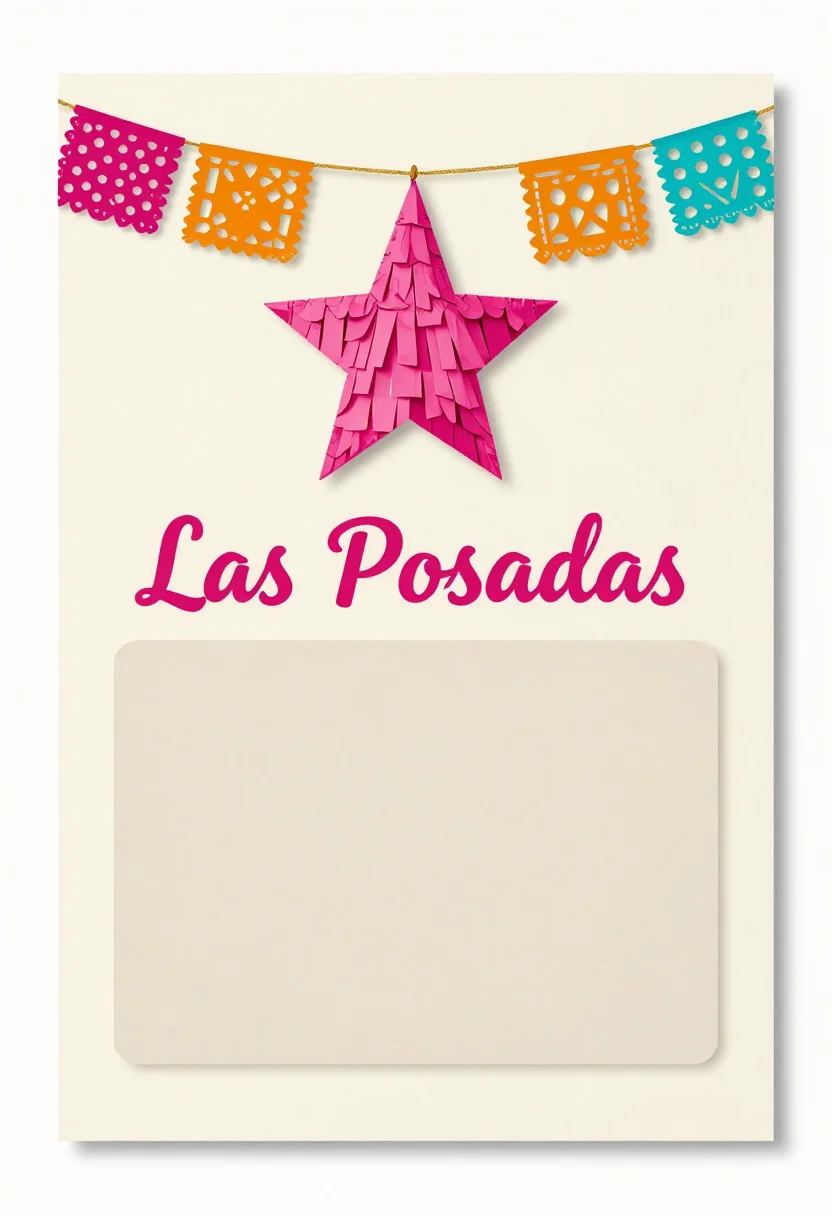
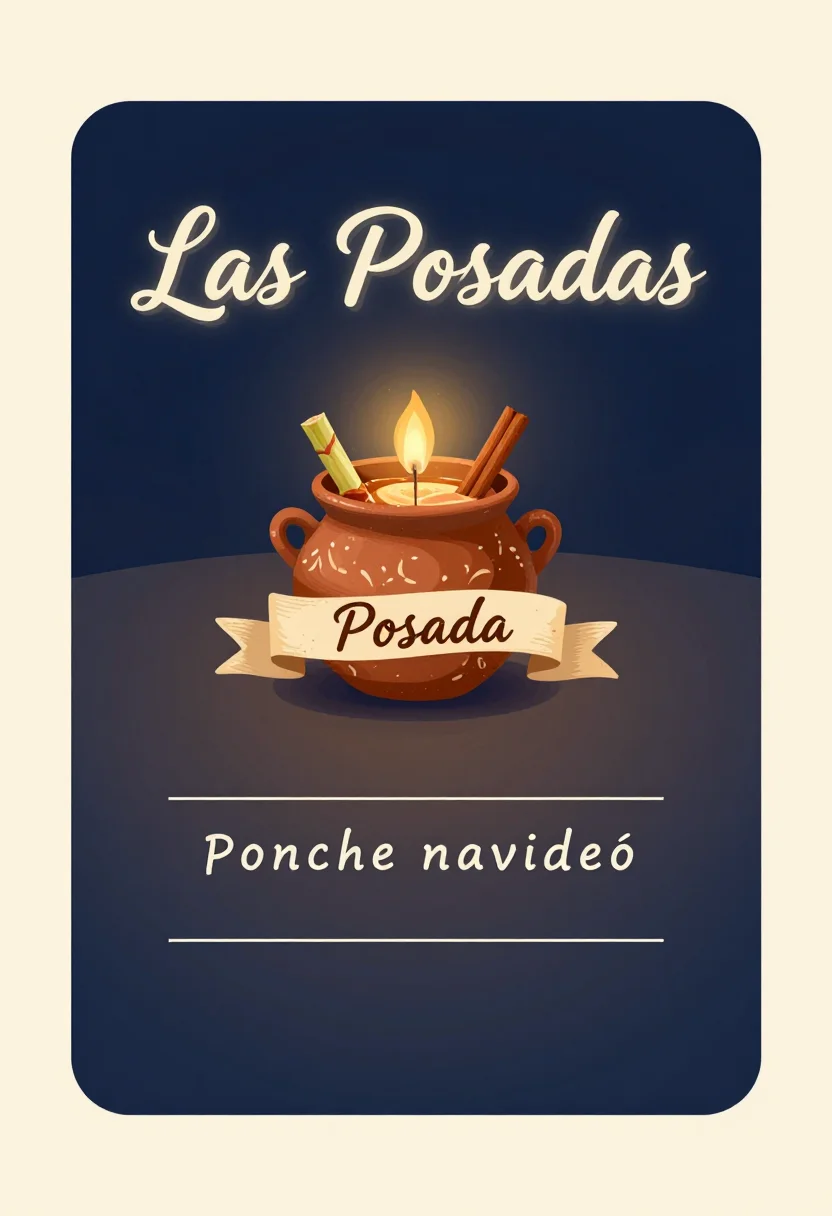
Las Posadas invitations: star piñata, farolitos, pot of ponche
Make your ownLas Posadas invitations
Describe yours. We'll remake the whole pack your way.
More like this
the whole catalog →

every sample — three subjects, three styles ↓
Printable invitations for a posada, one of the nine evenings from 16 to 24 December when Mexican families walk with candles, sing and break a piñata. The invitations show a star piñata with paper streamers, a path of farolitos, and a clay pot of ponche navideño. Each leaves a clear panel or ruled lines for the date, time and address. Papel picado, Mexican folk art and candlelit night give the three looks.
- An invitation to a neighbourhood posada
- A school or parish posada night
- An invitation to a family posada at home
- A flyer for a community walk with candles
Frequently asked questions
- What is a posada?
- One of the nine evenings from 16 to 24 December when families and neighbourhoods walk with candles, sing and break a piñata.
- Where do I write the time and place?
- Each invitation has a clear panel or ruled lines below the wording for the date, time and address.
- What is the difference between the three styles?
- Papel picado uses cut-paper flags in hot pink, orange, turquoise and gold. Mexican folk art uses flat flowers and painted borders in poinsettia red, deep green and marigold. Candlelit night uses warm lights against a deep blue sky.
- Can I ask for the invitation in English?
- Type a direction such as in English and the wording is made in English. It is a request, not a guaranteed result.
About toile
This page is a showcase and a starting point: nine samples already rendered, three readings of the pack crossed with three styles, each shown at the size and ratio it was made for. Take any of them further on the wall with a few words, or ask for all nine again under your own direction; a sign-in keeps what you make, and it is free while Toile is new. The recipe behind each sample — the subject, the style, the palette, the framing — travels with the image rather than staying private to the render: it is in the alt text of every sample and in the page's own structured data, so a search engine reads the same handles a person would.