/leprechaun-trap-templates · season
Leprechaun trap templates: box net, ladder and sign, gold bait
Make your ownLeprechaun trap templates
Describe yours. We'll remake the whole pack your way.
More like this
the whole catalog →

every sample — three subjects, three styles ↓
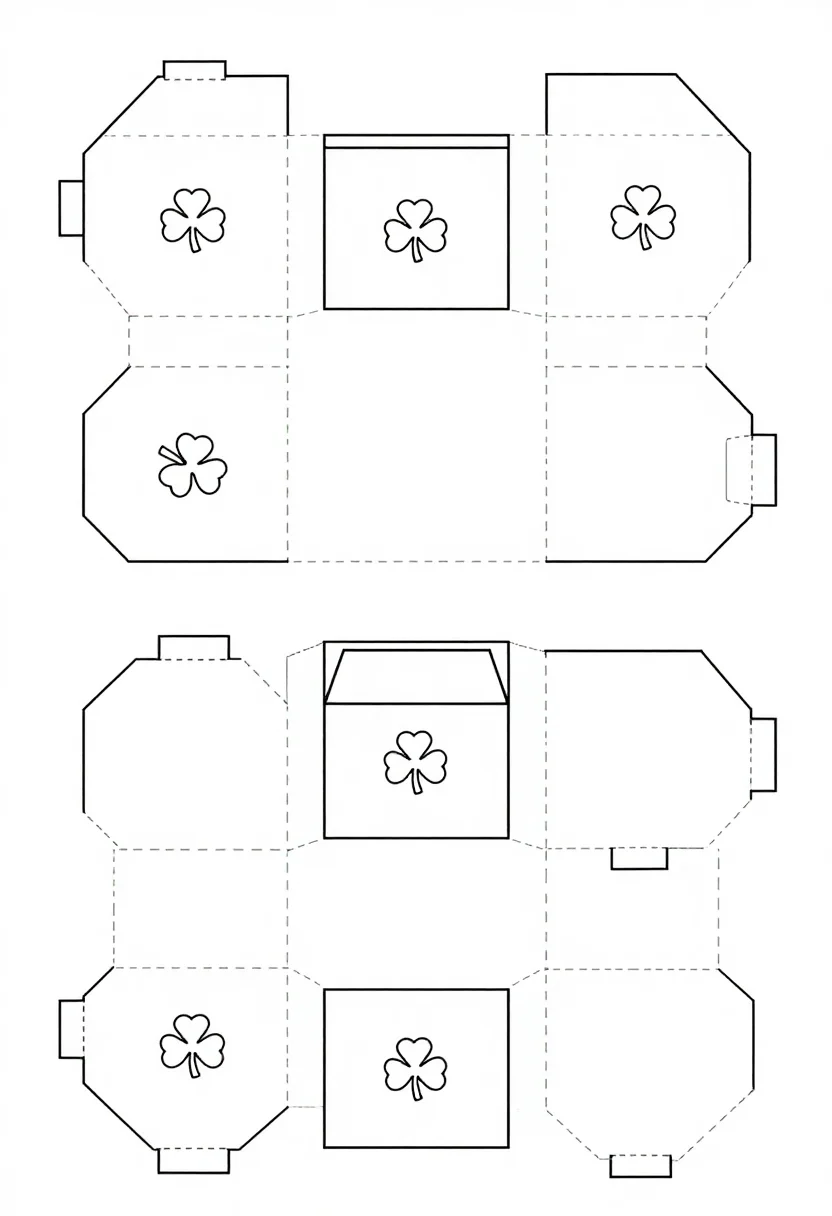
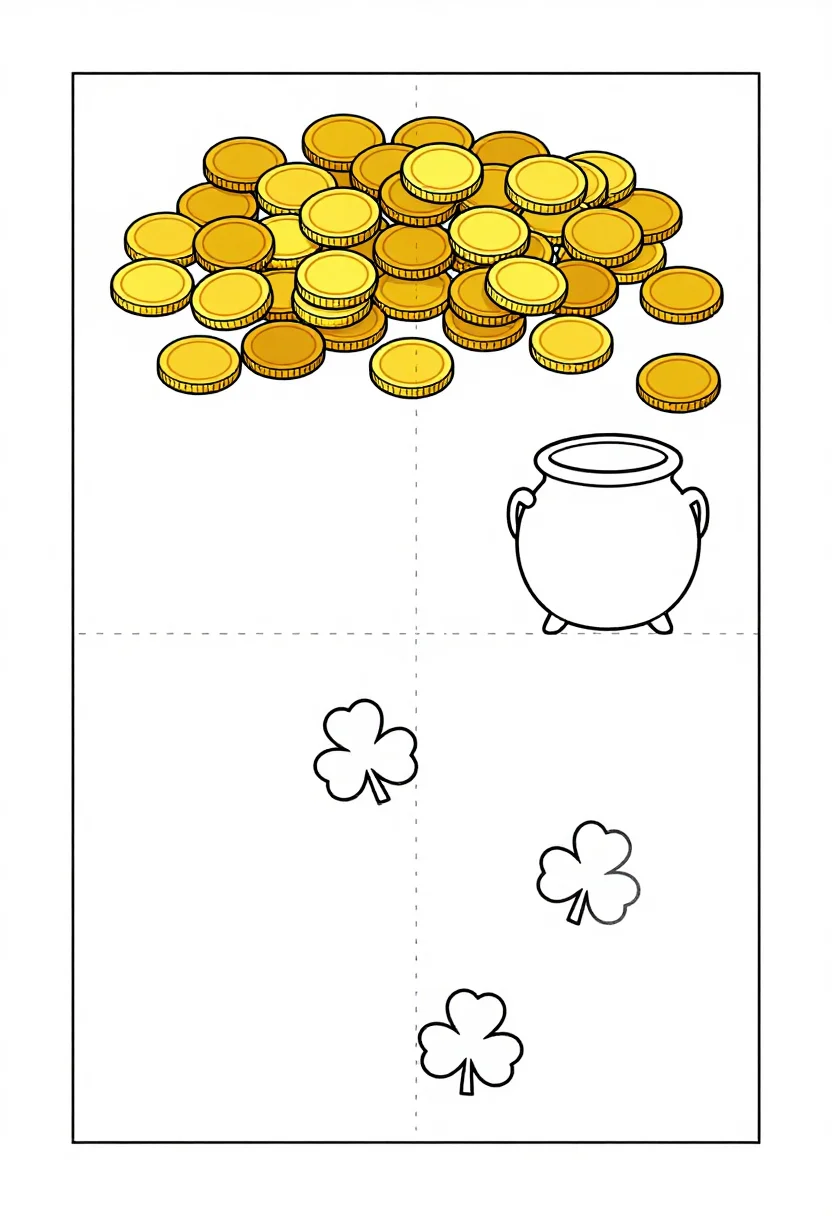
Printable templates for a leprechaun trap, the school project many US children build the night before St Patrick's Day. Each sheet holds one part: the box net with a trapdoor lid, a ladder with a blank picket sign and a small rainbow arch, and the bait of gold coins and a pot. Solid lines are for cutting and dashed lines for folding. Ask for a different trap, such as a cat catcher, and the same sheet style carries it.
- a school project for early March
- a home craft the night before 17 March
- a classroom display of traps
- an after-school club activity
Frequently asked questions
- How do I know which lines to cut and which to fold?
- Solid lines are cuts and dashed lines are folds. Glue tabs are drawn as plain shapes on the edges of the box net.
- What comes on the sheets?
- A box net with a trapdoor lid, a ladder with a blank sign and a rainbow arch, and gold coins with a pot and shamrock footprints.
- What is the difference between the three styles?
- Cut and fold uses a plain craft outline with solid and dashed lines. Colour-in has bold outlines and large open areas. Blueprint has thin precise lines with evenly spaced folds.
- Can I print these in colour?
- The sheets are black line art on white, with empty shapes to colour by hand.
About toile
This page is a showcase and a starting point: nine samples already rendered, three readings of the pack crossed with three styles, each shown at the size and ratio it was made for. Take any of them further on the wall with a few words, or ask for all nine again under your own direction; a sign-in keeps what you make, and it is free while Toile is new. The recipe behind each sample — the subject, the style, the palette, the framing — travels with the image rather than staying private to the render: it is in the alt text of every sample and in the page's own structured data, so a search engine reads the same handles a person would.