/letters-to-santa · season
Letter to Santa template: letter, wish list, Santa's reply
Make your ownLetters to Santa
Describe yours. We'll remake the whole pack your way.
More like this
the whole catalog →


every sample — three subjects, three styles ↓
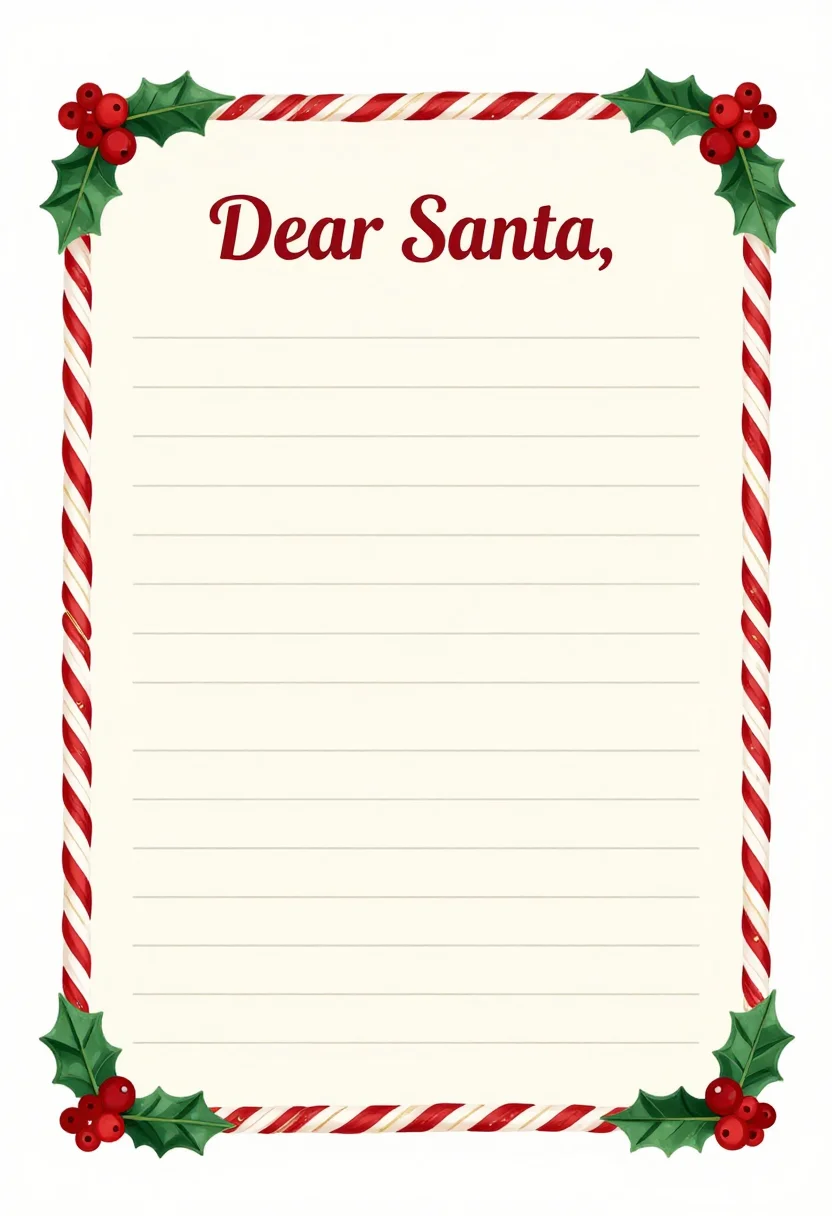
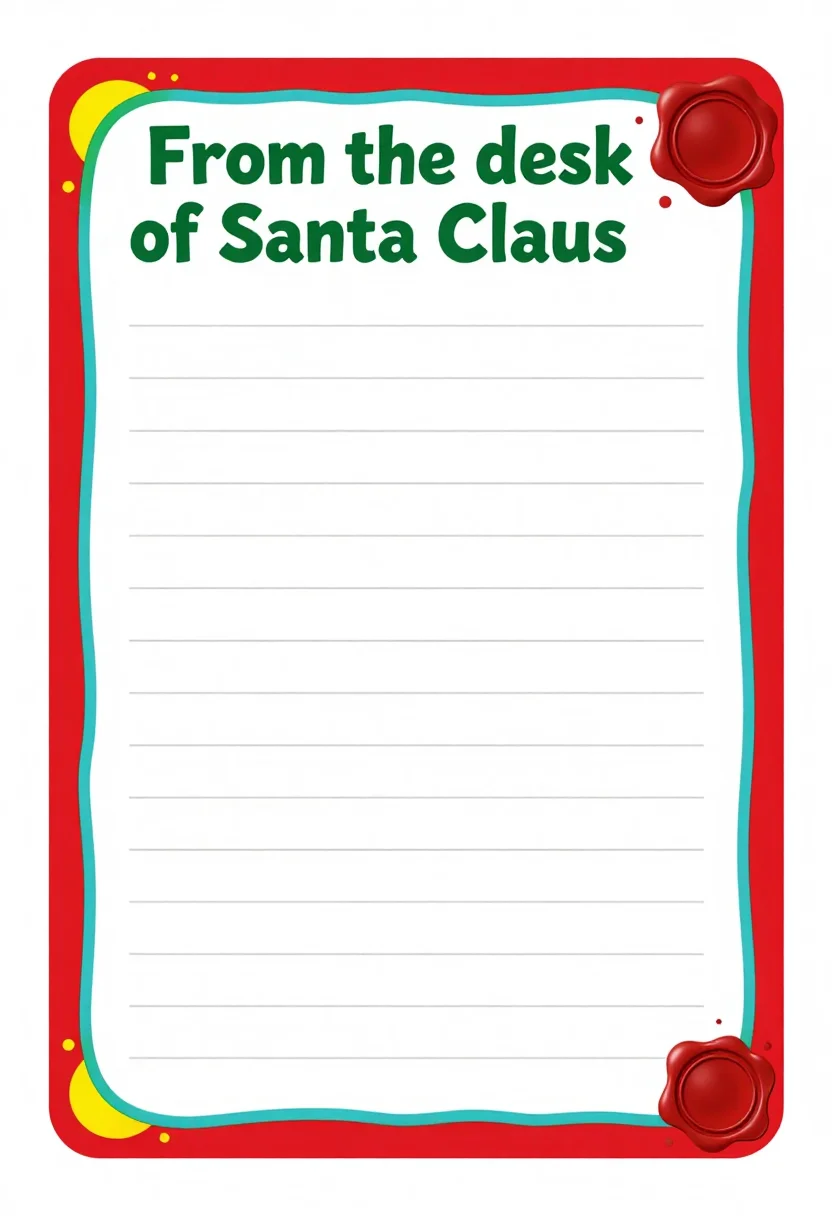
A print-ready page in three formats — a "Dear Santa," letter with ruled lines, a "My Wish List" with numbered checkboxes, a "From the desk of Santa Claus" reply — each drawn classic, nordic minimal, and bright for kids. Ask for a letter from an elf instead, a toddler version, or a two-page set.
- a kids' christmas letter-writing activity
- a family holiday tradition keepsake
- a classroom writing exercise
- a santa's-reply surprise for a child
Frequently asked questions
- What does this pack actually look like?
- Nine printable pages across three formats — a Dear Santa letter, a wish list, a reply from Santa — each in a classic, nordic and kids style, with the header lettered and the body ruled blank.
- Are the ruled lines actually usable for a child's handwriting?
- Yes — each page prints genuine ruled lines sized for writing by hand, not decorative filler.
- Can I use the reply page to write back as 'Santa'?
- Yes — the reply page is designed exactly for that: a parent fills the ruled lines as a personal reply from Santa.
- Can I get a letter from an elf instead, or a toddler version?
- Yes — the direction field takes any variation, including a letter from an elf, a simplified toddler layout, or a two-page set.
- What should I print this on?
- Ordinary paper works fine for a keepsake letter; card stock suits a reply meant to be kept longer.
About toile
This page is a showcase and a starting point: nine samples already rendered, three readings of the pack crossed with three styles, each shown at the size and ratio it was made for. Take any of them further on the wall with a few words, or ask for all nine again under your own direction; a sign-in keeps what you make, and it is free while Toile is new. The recipe behind each sample — the subject, the style, the palette, the framing — travels with the image rather than staying private to the render: it is in the alt text of every sample and in the page's own structured data, so a search engine reads the same handles a person would.