/lohri-rangoli · faith
Lohri rangoli: a bonfire, a dhol, a phulkari pattern
Make your ownLohri rangoli
Describe yours. We'll remake the whole pack your way.
More like this
the whole catalog →
every sample — three subjects, three styles ↓
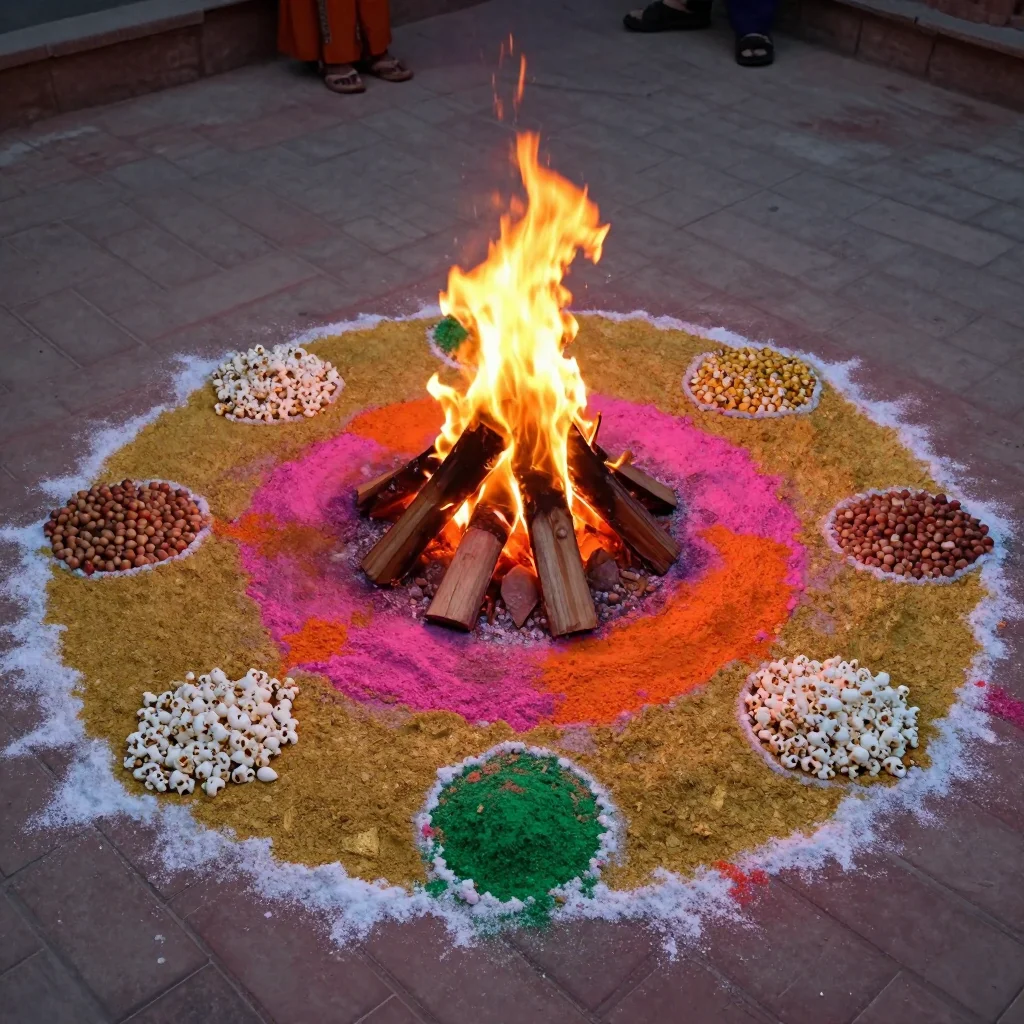
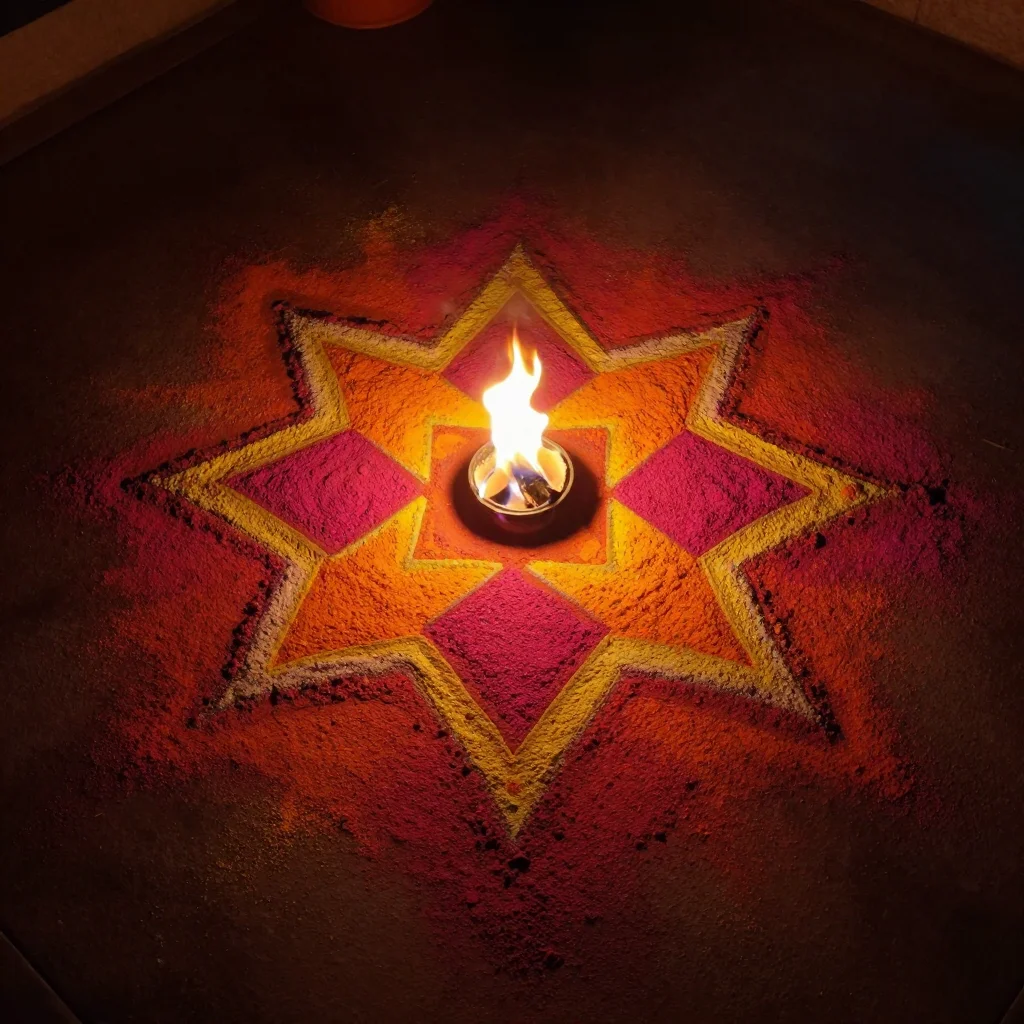
Lohri is Punjab's midwinter bonfire night, when families circle the fire, and a rangoli is laid in the courtyard beside it. These nine show three subjects: a bonfire ringed with popcorn, peanuts and rewri, a dhol drum beside sugarcane and a kite, and a square rangoli in the geometry of phulkari embroidery. Each is shown as courtyard powder, as phulkari stitch and lit by firelight. Type a twist, such as for a newborn, to ask for it.
- a courtyard beside a Lohri bonfire
- a winter evening in a Punjabi home
- a Lohri floor for a family gathering
Frequently asked questions
- What is phulkari?
- Punjabi embroidery worked in silk darning stitch on cotton. This rangoli borrows its geometry of nested diamonds and eight-point stars.
- What goes around the Lohri bonfire?
- Popcorn, peanuts and rewri, which the first picture shows as small heaps round the fire.
- What is the difference between the three styles?
- Courtyard is fine powder on a pale brick floor on a winter evening; phulkari stitch is thread on deep red cotton; firelight is a warm glow on a dark charcoal floor.
About toile
This page is a showcase and a starting point: nine samples already rendered, three readings of the pack crossed with three styles, each shown at the size and ratio it was made for. Take any of them further on the wall with a few words, or ask for all nine again under your own direction; a sign-in keeps what you make, and it is free while Toile is new. The recipe behind each sample — the subject, the style, the palette, the framing — travels with the image rather than staying private to the render: it is in the alt text of every sample and in the page's own structured data, so a search engine reads the same handles a person would.