/modak-designs · faith
Modak designs: ukadiche modak, fried modak, mould modak
Make your ownModak designs
Describe yours. We'll remake the whole pack your way.
More like this
the whole catalog →
every sample — three subjects, three styles ↓
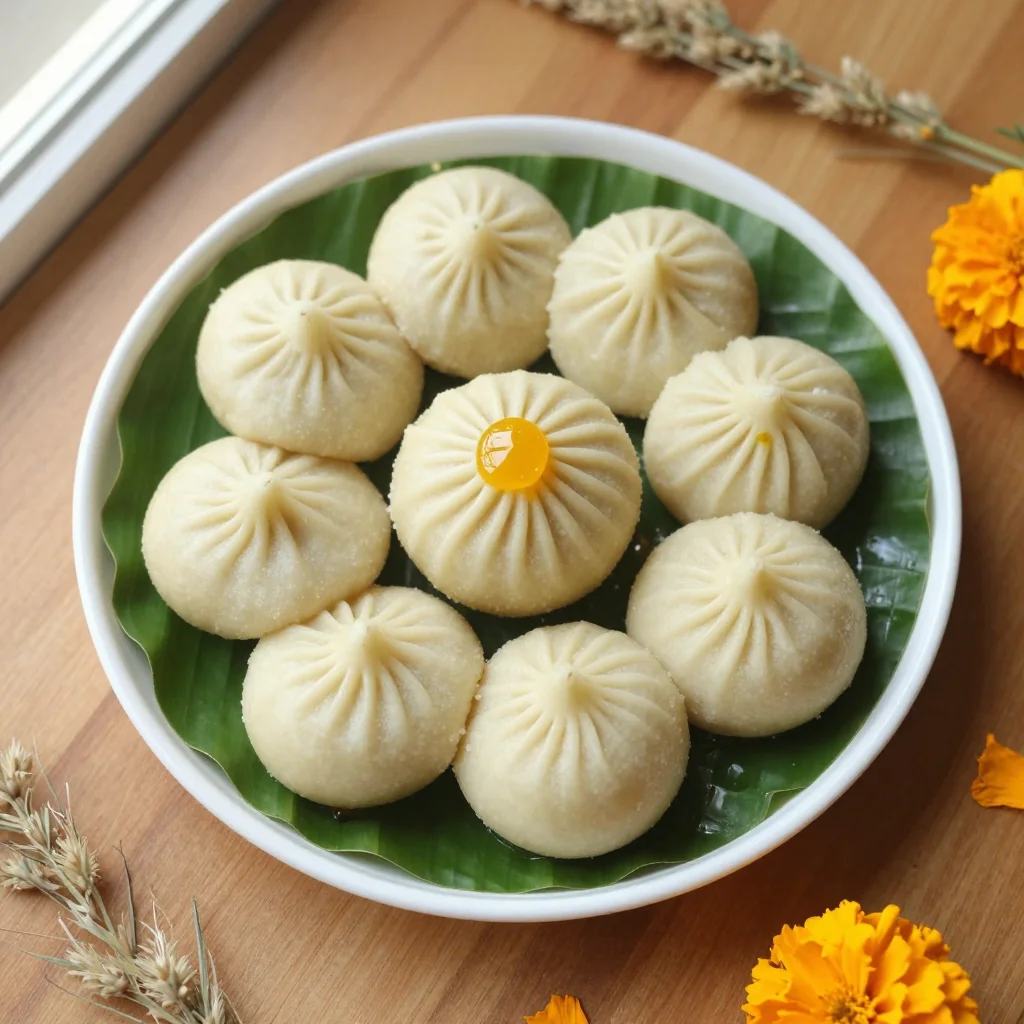
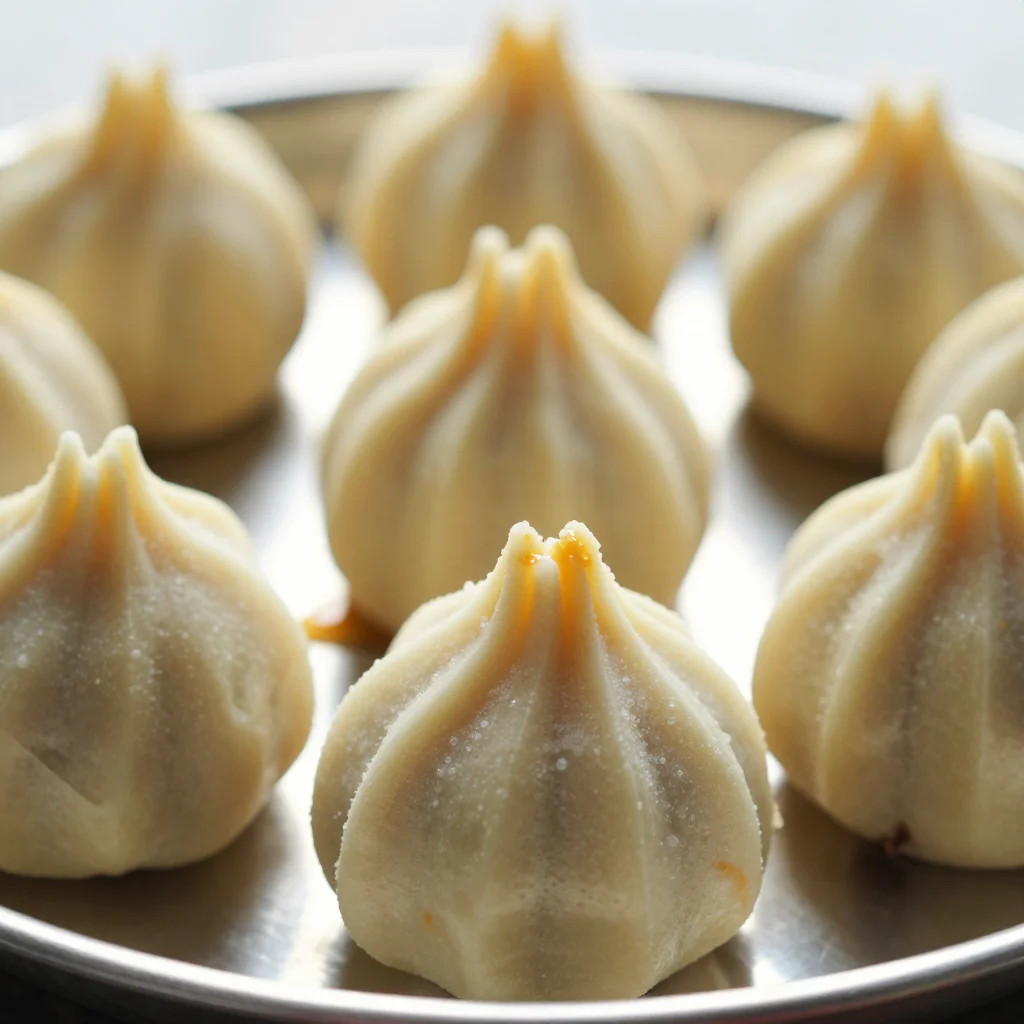
Modak is Ganesha's favourite sweet, made at home and offered as naivedya, often in a count of twenty-one. These nine images show steamed ukadiche modak with fine pleats, golden fried modaks with a coconut and jaggery filling, and mawa or chocolate modaks pressed from a mould. Each is set out as it is served: overhead, on a brass thali with a diya, or close up. Type a different filling, such as rose, and the same three views carry it.
- a festival food post or recipe page header
- a naivedya thali picture for the puja table
- a menu photo for a sweet shop
- a print for a kitchen wall
Frequently asked questions
- Are these photographs of real modaks?
- They are photographic images of modaks set out as they are served. No people appear in them.
- Do the pictures teach a recipe?
- No. They show the shape, the pleats and the serving of each kind. For the steps, use a recipe.
- Can I ask for a different modak?
- Yes. Type it in your own words, such as rose or dry fruit, and the three views apply as a request, not a guaranteed result.
- What is the difference between the three views?
- Overhead is a flat lay in soft daylight. The thali view is a low angle with a diya lit beside it. Macro is a close-up of one modak with the rest blurred.
About toile
This page is a showcase and a starting point: nine samples already rendered, three readings of the pack crossed with three styles, each shown at the size and ratio it was made for. Take any of them further on the wall with a few words, or ask for all nine again under your own direction; a sign-in keeps what you make, and it is free while Toile is new. The recipe behind each sample — the subject, the style, the palette, the framing — travels with the image rather than staying private to the render: it is in the alt text of every sample and in the page's own structured data, so a search engine reads the same handles a person would.