/mothering-sunday-cards · season
Mothering Sunday cards: daffodils, simnel cake, violet posy
Make your ownMothering Sunday cards
Describe yours. We'll remake the whole pack your way.
More like this
the whole catalog →

every sample — three subjects, three styles ↓
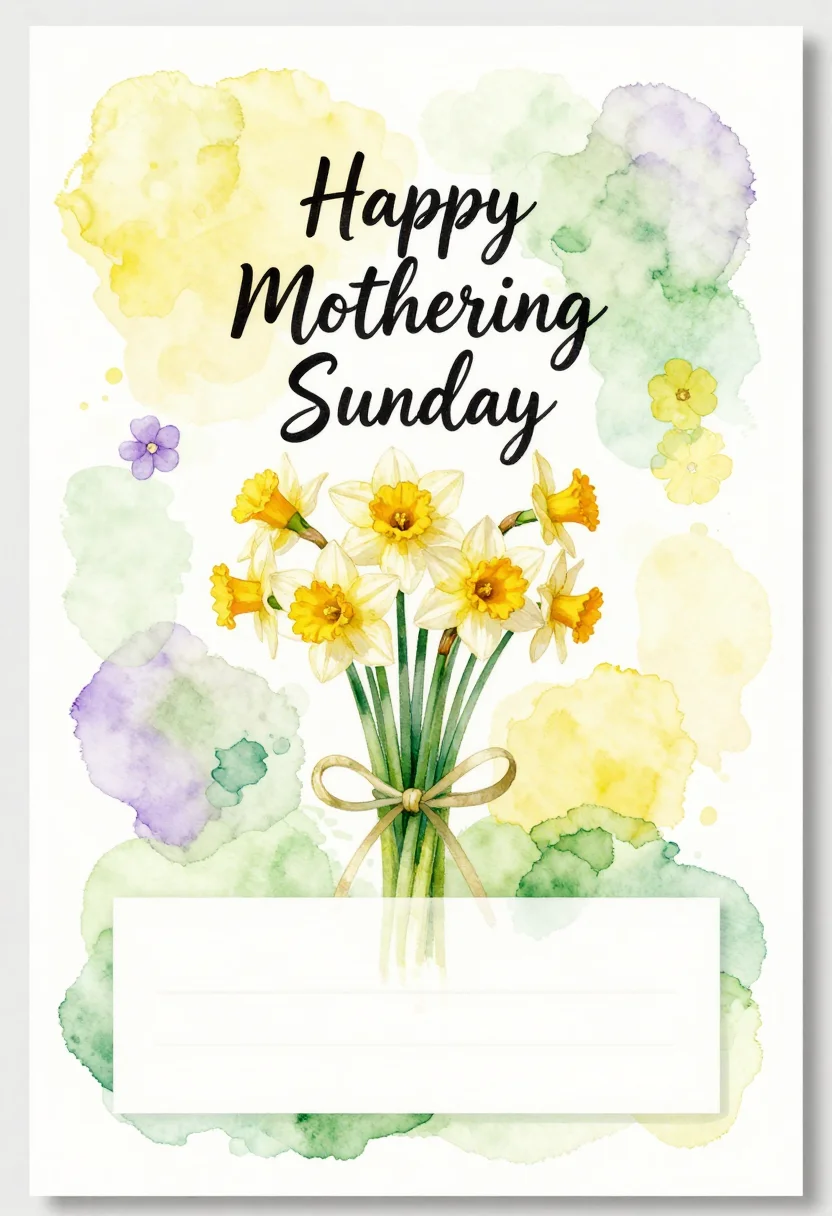
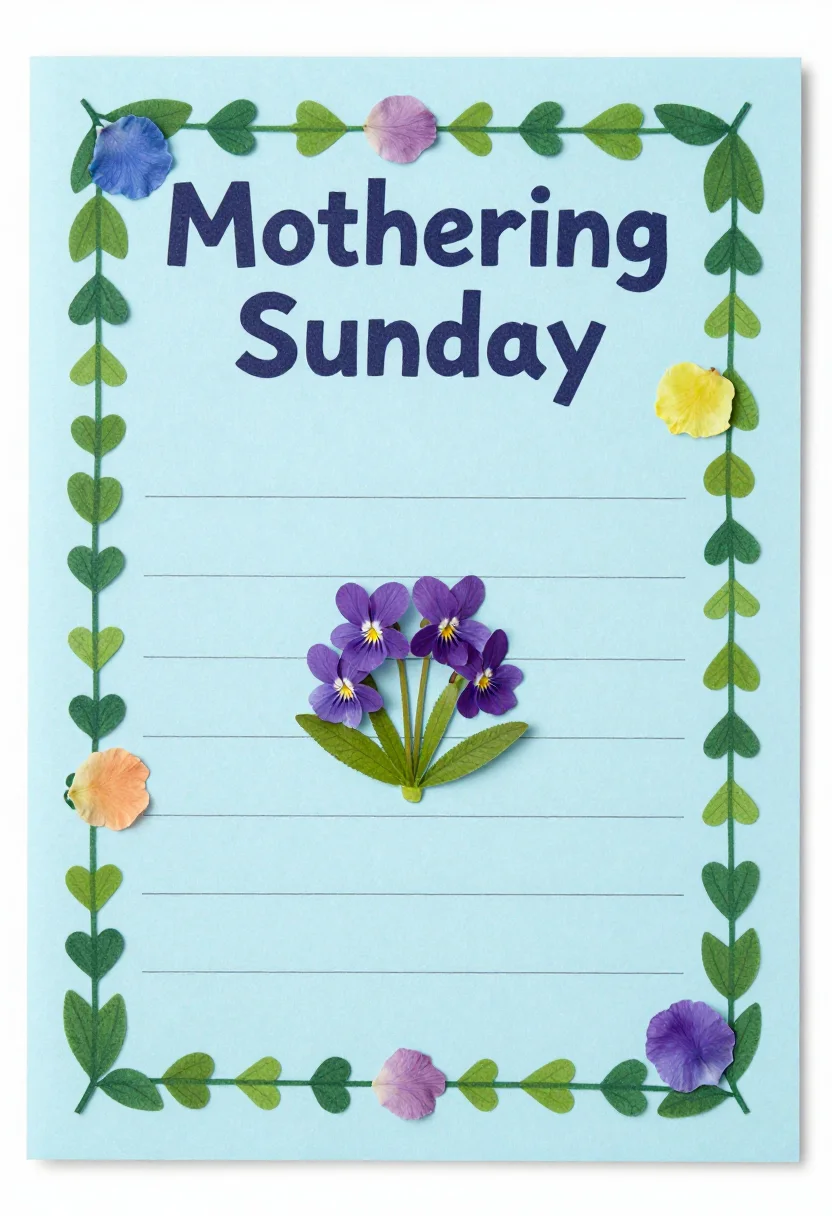
Printable cards for Mothering Sunday, the fourth Sunday of Lent in the UK and Ireland, weeks before the American Mother's Day. Children often make the card at school. The nine show daffodils tied with a ribbon, a simnel cake with eleven marzipan balls, and a small posy of violets. Greetings are spelled as written, and each card leaves room for a name or message. Ask for a different flower, such as tulips, and the same layout carries it.
- a card a child makes at school
- a card posted to a grandmother
- a classroom display in March
- a card for an aunt or a stepmother
Frequently asked questions
- When is Mothering Sunday?
- The fourth Sunday of Lent, in the UK and Ireland. It falls in spring, weeks before the American Mother's Day in May.
- Are the greetings printed as written?
- Yes. 'Happy Mothering Sunday' and 'For Mum' are lettered as shown. The violet posy card has ruled lines for a message instead.
- What are the three styles?
- Watercolour has soft washes in yellow, lilac and green. Linocut is a two-colour print in spring green and daffodil yellow. Child collage uses torn tissue petals and bright colours on sugar paper.
- Can I ask for different flowers?
- Yes. Naming a flower such as primroses is a request, and the result is not a promised picture.
About toile
This page is a showcase and a starting point: nine samples already rendered, three readings of the pack crossed with three styles, each shown at the size and ratio it was made for. Take any of them further on the wall with a few words, or ask for all nine again under your own direction; a sign-in keeps what you make, and it is free while Toile is new. The recipe behind each sample — the subject, the style, the palette, the framing — travels with the image rather than staying private to the render: it is in the alt text of every sample and in the page's own structured data, so a search engine reads the same handles a person would.