/moving-checklists · planner
Moving checklist: week-by-week tasks, box inventory, change of address
Make your ownMoving checklists
Describe yours. We'll remake the whole pack your way.
More like this
the whole catalog →

every sample — three subjects, three styles ↓
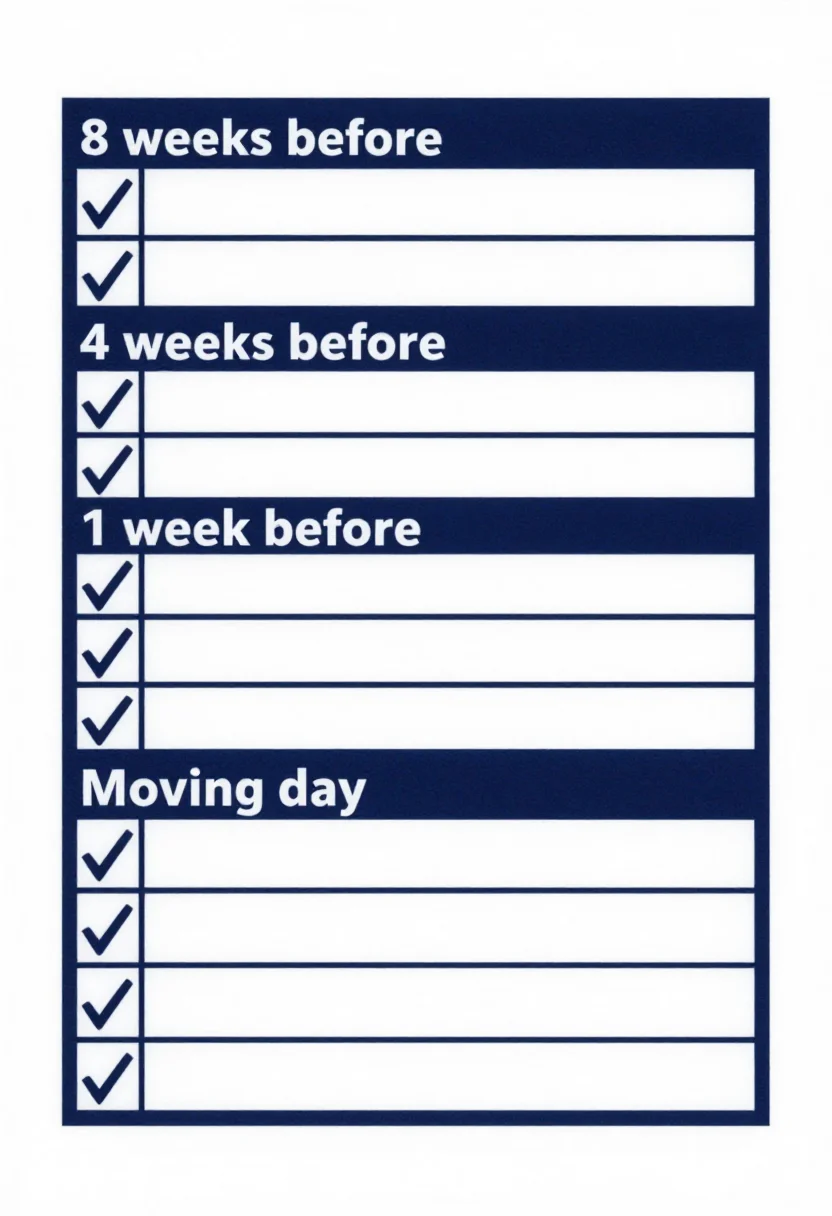
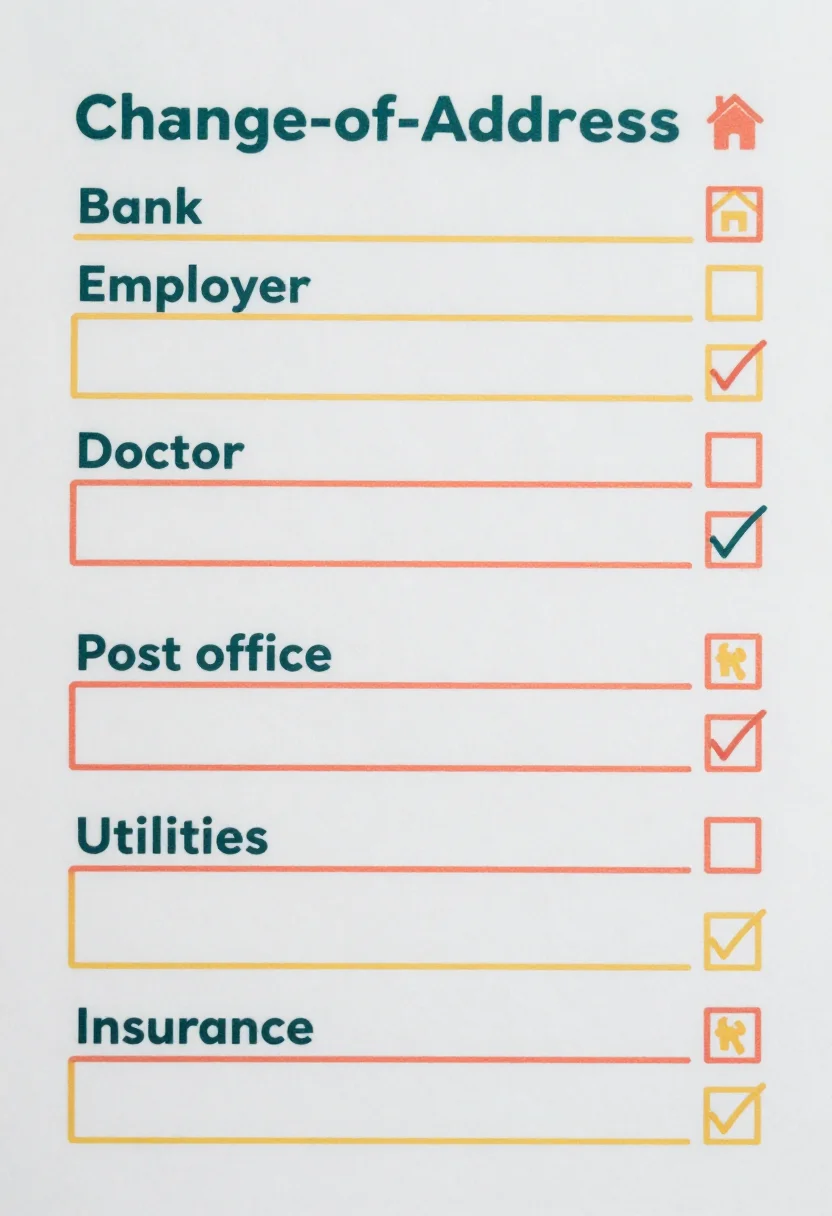
A moving checklist covers the weeks of tasks before a move, and a box inventory shows what went into each box. These nine show three pages: a checklist in sections from eight weeks before to moving day, an inventory with twenty rows for box number, room, contents and whether it is fragile, and a change-of-address list for bank, employer, doctor, post office, utilities and insurance. Type a direction, such as first home, and the pages follow it.
- a first home move
- a family move with children
- a box list for unpacking
- an international move
Frequently asked questions
- What is on the change-of-address list?
- Rows for bank, employer, doctor, post office, utilities and insurance, with blank lines for each.
- What is the difference between the three styles?
- Clean grid has a clear utilitarian sheet with thick section bars. Kraft box looks like a cardboard moving label with tape-strip tabs. Friendly home has rounded headings and small house and box icons.
- Can I change the move?
- Yes. Type a direction such as international. A direction is a request, not a guaranteed result.
About toile
This page is a showcase and a starting point: nine samples already rendered, three readings of the pack crossed with three styles, each shown at the size and ratio it was made for. Take any of them further on the wall with a few words, or ask for all nine again under your own direction; a sign-in keeps what you make, and it is free while Toile is new. The recipe behind each sample — the subject, the style, the palette, the framing — travels with the image rather than staying private to the render: it is in the alt text of every sample and in the page's own structured data, so a search engine reads the same handles a person would.