/multiplication-charts · classroom
Multiplication chart printable: full grid, blank grid and strips
Make your ownMultiplication charts
Describe yours. We'll remake the whole pack your way.
More like this
the whole catalog →
every sample — three subjects, three styles ↓
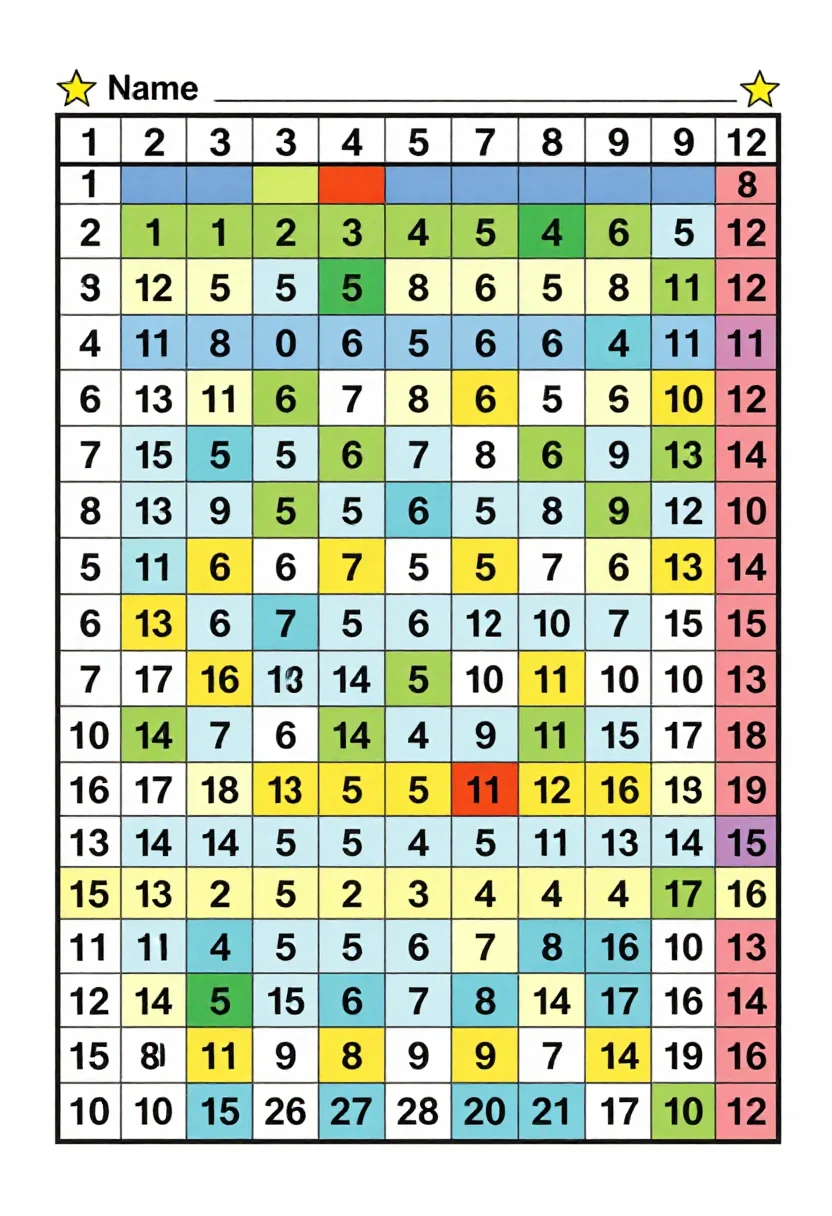
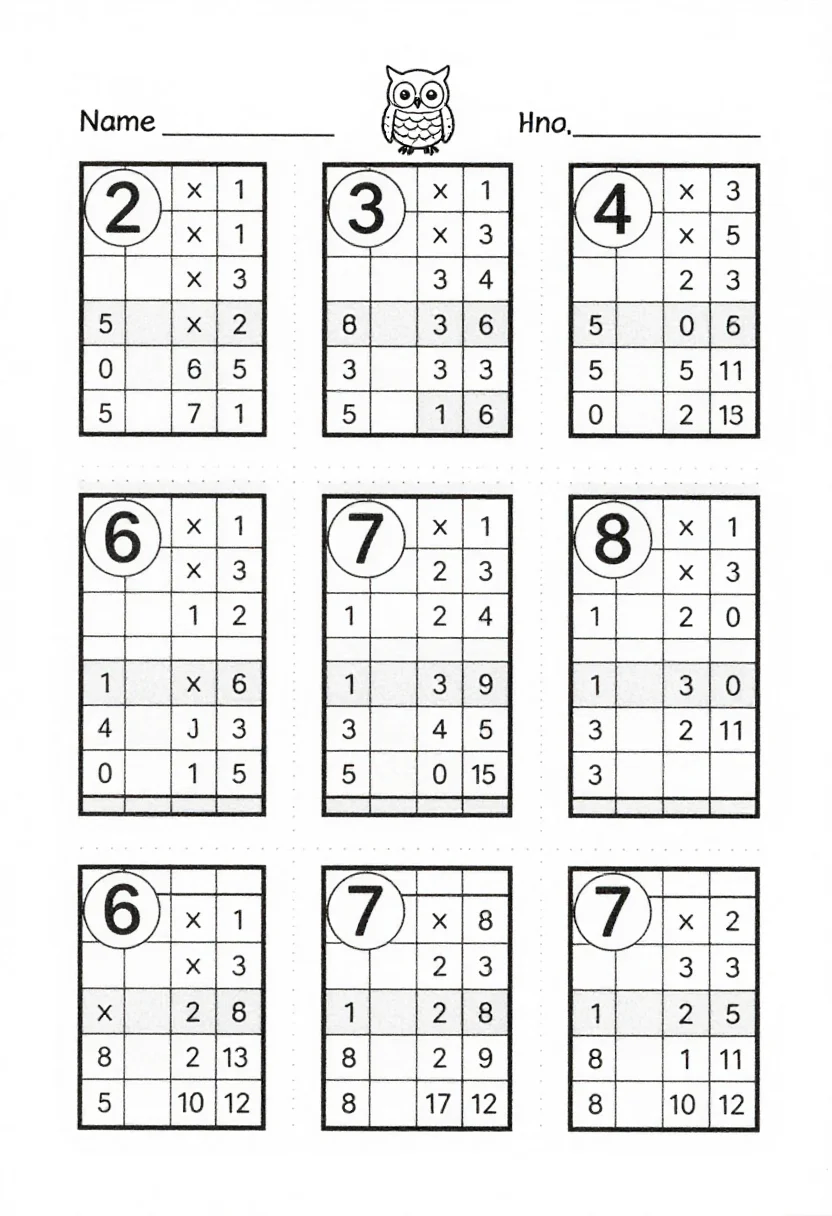
The 12x12 grid on the classroom wall and the skip-counting strip on the desk: numbers are the one text this pack keeps, so digits are exact or absent. These nine cover a full chart, a blank chart to fill in, and a set of times-table strips, in colour-banded, pastel, and blackline columns. A full-precision reading for the exact numbers a multiplication chart needs.
- a multiplication chart for the classroom wall
- a blank multiplication chart to fill in and practice
- times table strips for a math folder
- a desk reference for multiplication facts
- a math center skip-counting activity
Frequently asked questions
- Are the numbers on the chart accurate?
- Yes — this is a math pack, so digits are rendered with exact precision, not decorative approximation. The full chart and strips carry the correct products throughout.
- What's the blank chart for?
- A fill-in practice version — the grid lines are there, the products aren't, so students complete the table themselves.
- What's the difference between colour-banded, pastel and blackline?
- Same grid, three print treatments — colour-banded highlights rows/columns for visual grouping, pastel is a softer palette, and blackline is line art only for cheap black-and-white printing.
- Do the times-table strips cover all the tables?
- The strips are formatted as individual skip-counting columns, sized for the full range a classroom wall or desk reference needs.
About toile
This page is a showcase and a starting point: nine samples already rendered, three readings of the pack crossed with three styles, each shown at the size and ratio it was made for. Take any of them further on the wall with a few words, or ask for all nine again under your own direction; a sign-in keeps what you make, and it is free while Toile is new. The recipe behind each sample — the subject, the style, the palette, the framing — travels with the image rather than staying private to the render: it is in the alt text of every sample and in the page's own structured data, so a search engine reads the same handles a person would.