/national-park-art-prints · wall-art
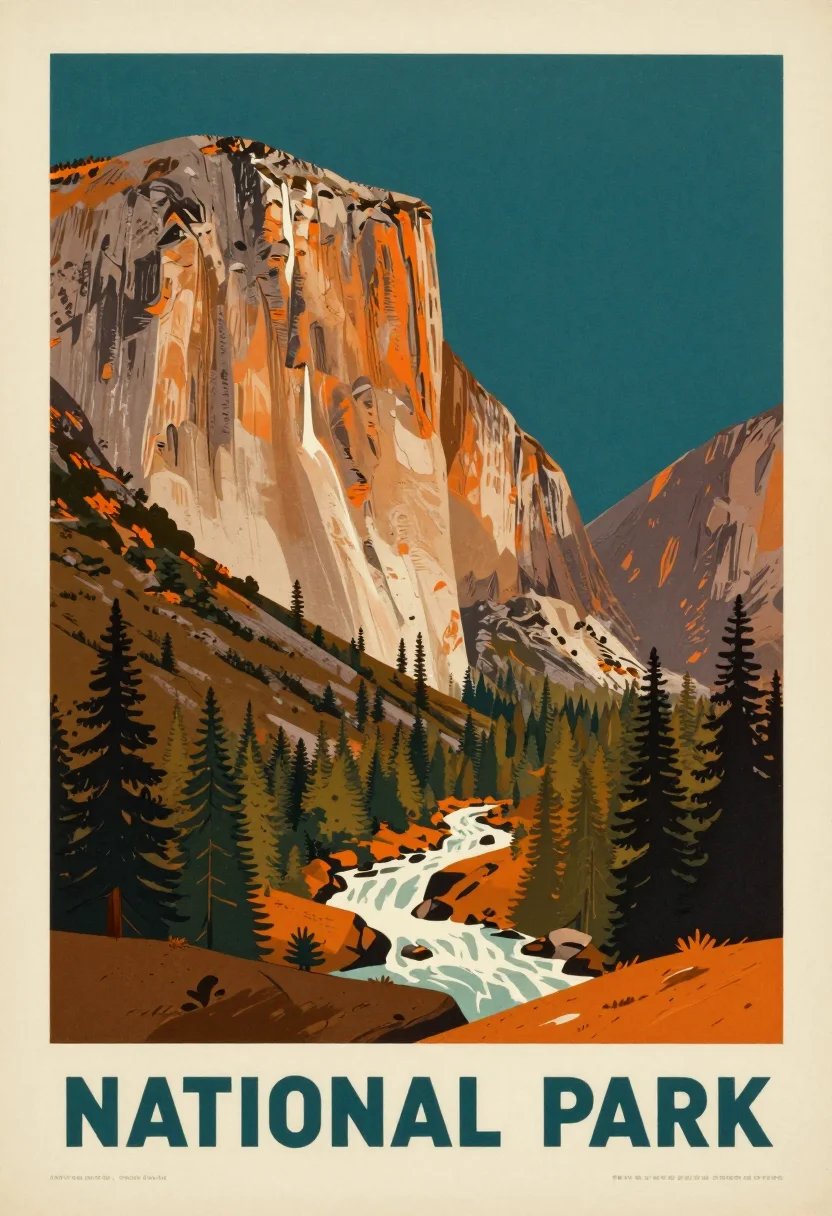
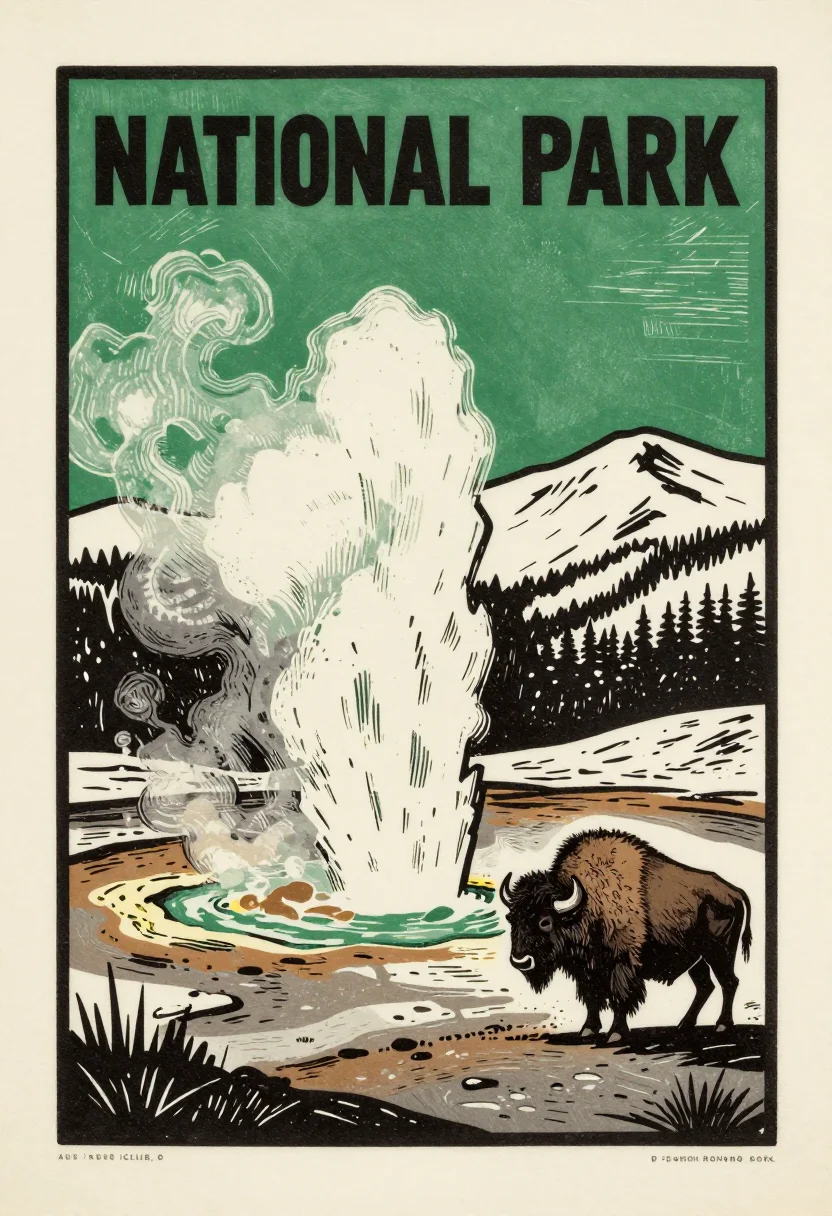
National park posters: granite valley, canyon at sunset and geyser
Make your ownNational park art prints
Describe yours. We'll remake the whole pack your way.
More like this
the whole catalog →

every sample — three subjects, three styles ↓
For travellers who keep a list of the parks they have visited: a granite valley with a long waterfall, a deep canyon at sunset, and a geyser in a frosty basin with a bison at its edge. Each is shown as a 1930s WPA screenprint in flat bands of colour, as a sunset poster in stacked colour bands, and as a bold two-block woodcut. The direction field takes another scene, such as a desert arch, as a request.
- a hallway wall of park prints
- a travel-themed den
- a gift for someone who has hiked national parks
Frequently asked questions
- Which parks are shown?
- The scenes are general landscapes in the poster style: a granite valley, a canyon and a geyser. They are not portraits of named parks.
- What is the difference between the three styles?
- The WPA screenprint has hard flat colour in teal and orange on cream. The sunset bands use magenta, amber and violet over a near-black silhouette. The woodcut is black ink and one forest green with carved gouge lines.
- Can I ask for a different scene?
- Yes. Type it in the direction field, such as a desert arch or ocean cliffs; it is a request, not a promised match.
- Are these photographs?
- No. They are rendered posters in the styles described, not photographs.
About toile
This page is a showcase and a starting point: nine samples already rendered, three readings of the pack crossed with three styles, each shown at the size and ratio it was made for. Take any of them further on the wall with a few words, or ask for all nine again under your own direction; a sign-in keeps what you make, and it is free while Toile is new. The recipe behind each sample — the subject, the style, the palette, the framing — travels with the image rather than staying private to the render: it is in the alt text of every sample and in the page's own structured data, so a search engine reads the same handles a person would.