/navajo-sandpainting · style
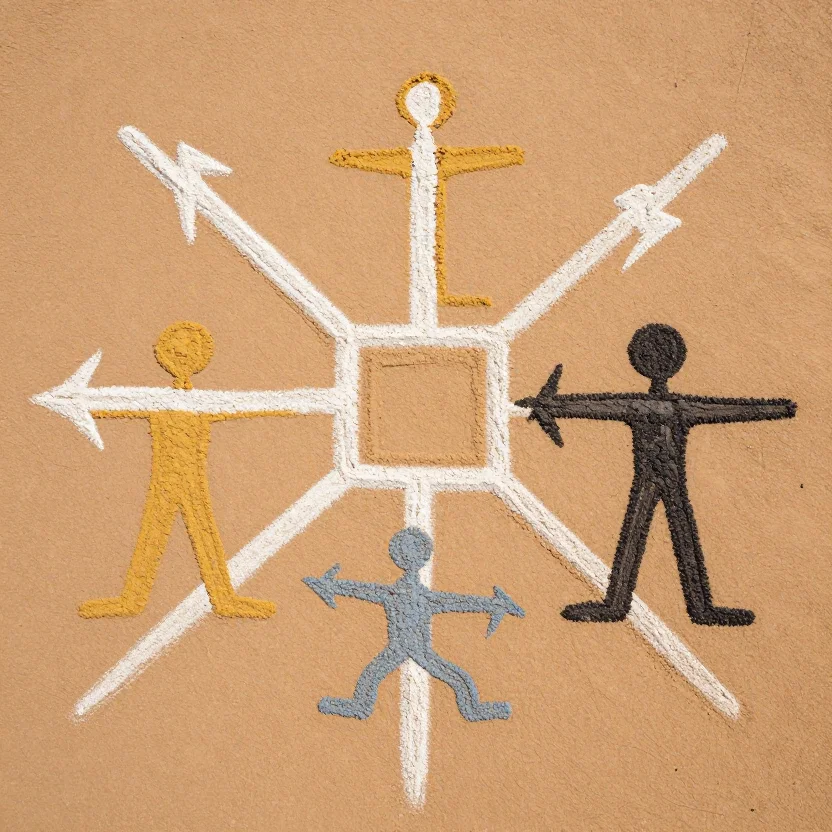
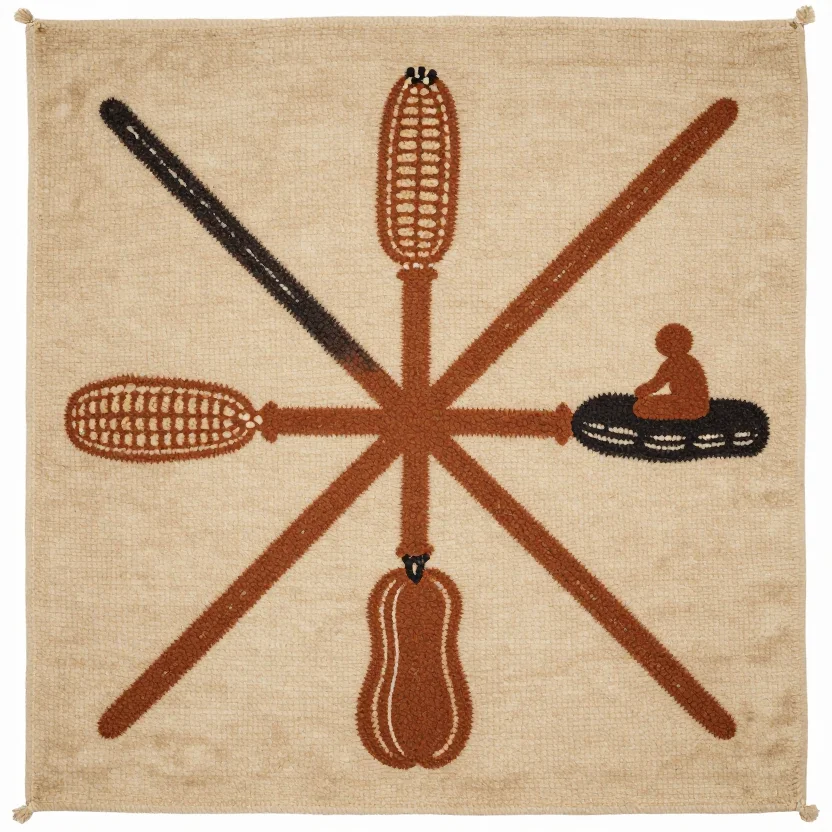
Navajo sandpainting: four figures, a cornstalk design, a whirling-log design
Make your ownNavajo sandpainting
Describe yours. We'll remake the whole pack your way.
More like this
the whole catalog →
every sample — three subjects, three styles ↓
Navajo sandpainting pours coloured sand onto tan ground: four elongated figures radiating from a centre, a rainbow guardian, cornstalks and lightning — square, symmetrical, granular. These nine render the four-figure design, a cornstalk design and a whirling-log design, each across three surfaces — poured sand, a glued sandpainting board, and a woven textile version. Ask for a thunderbird instead, a nursery palette, or blues only — the same three surfaces carry it.
- a Southwestern-themed wall print
- a nursery or kids' room print
- a textile or rug design reference
- a poster or fine-art print
- a gallery wall alongside other Native American art prints
Frequently asked questions
- What size do these print at?
- Each design is composed as a square, symmetrical panel — suited to a square print, a poster or a coaster set.
- Can I get a different design, like a thunderbird or a different palette?
- Yes — the direction field takes any subject or palette change, and the same three surfaces render it.
- What's the difference between the three surfaces?
- Poured sand shows the granular texture of a floor painting made to be swept away; glued board is the same design fixed permanently; woven is the design reinterpreted as cloth.
- Is this a real Navajo ceremonial sandpainting?
- It's a rendered image inspired by the form and geometry of the tradition, not a reproduction of any specific ceremonial painting — no real ceremony is depicted.
About toile
This page is a showcase and a starting point: nine samples already rendered, three readings of the pack crossed with three styles, each shown at the size and ratio it was made for. Take any of them further on the wall with a few words, or ask for all nine again under your own direction; a sign-in keeps what you make, and it is free while Toile is new. The recipe behind each sample — the subject, the style, the palette, the framing — travels with the image rather than staying private to the render: it is in the alt text of every sample and in the page's own structured data, so a search engine reads the same handles a person would.