/nochebuena-menus · season
Nochebuena menus: Caribbean, Mexican and Spanish Christmas Eve dinners
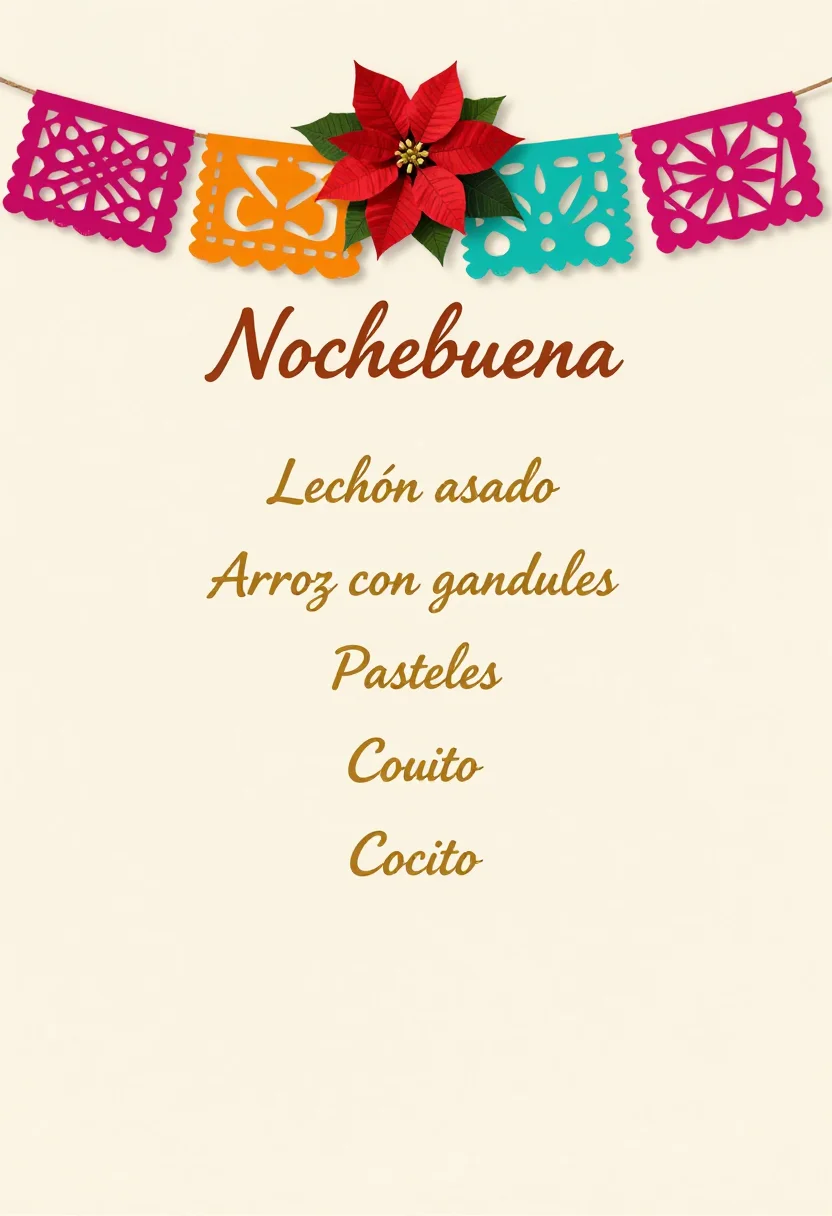
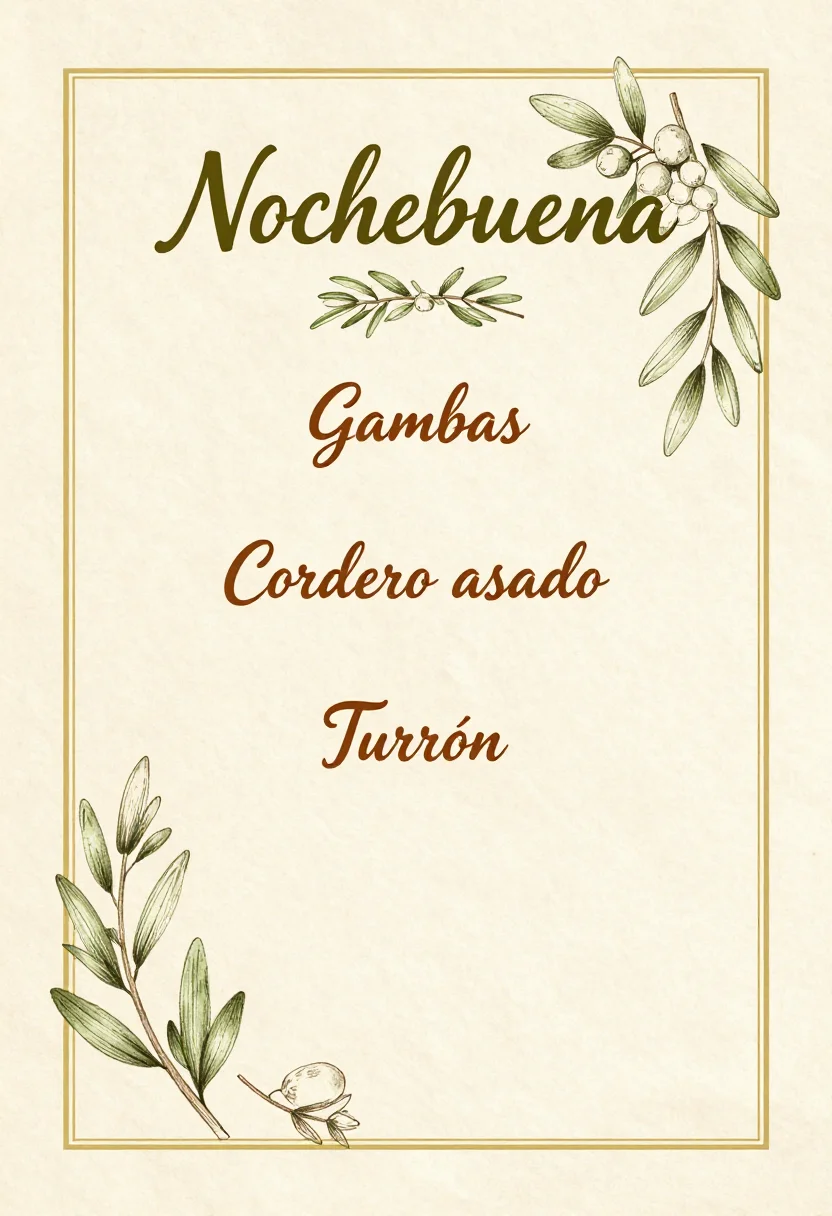
Make your ownNochebuena menus
Describe yours. We'll remake the whole pack your way.
More like this
the whole catalog →

every sample — three subjects, three styles ↓
Printable menus for the Nochebuena dinner of Spain, Mexico, Puerto Rico and Cuba. Print them for the table or send them to family beforehand. The nine menus set out a Caribbean dinner, a Mexican dinner and a Spanish dinner, each with its own dishes. Papel picado, black and gold, and rustic table give the three moods. Type a direction, such as for Cuba, and the same menu carries it.
- A Christmas Eve table setting
- A menu sent to family before the meal
- A party menu for a Nochebuena dinner
- A card on the table for each guest
Frequently asked questions
- Which dishes are on each menu?
- The Caribbean menu lists lechón asado, arroz con gandules, pasteles and coquito. The Mexican menu lists bacalao a la vizcaína, romeritos, pavo relleno and ponche. The Spanish menu lists gambas, cordero asado and turrón.
- Can I change the dishes?
- Type a direction such as for Cuba and the menu is made for that dinner. It is a request, not a promised dish list.
- What is the difference between the three styles?
- Papel picado has cut-paper patterns across the top in magenta, orange, turquoise and gold. Black and gold uses a gold script title on matte black. Rustic table has a hand-lettered title and herb sketches on cream.
- Is the menu ready to print?
- Yes. Each menu is a flat page seen straight on, with a plain margin all round.
About toile
This page is a showcase and a starting point: nine samples already rendered, three readings of the pack crossed with three styles, each shown at the size and ratio it was made for. Take any of them further on the wall with a few words, or ask for all nine again under your own direction; a sign-in keeps what you make, and it is free while Toile is new. The recipe behind each sample — the subject, the style, the palette, the framing — travels with the image rather than staying private to the render: it is in the alt text of every sample and in the page's own structured data, so a search engine reads the same handles a person would.