/notice-writing-formats · classroom
Notice writing format: school notice, lost-and-found notice, society notice
Make your ownNotice writing formats
Describe yours. We'll remake the whole pack your way.
More like this
the whole catalog →
every sample — three subjects, three styles ↓
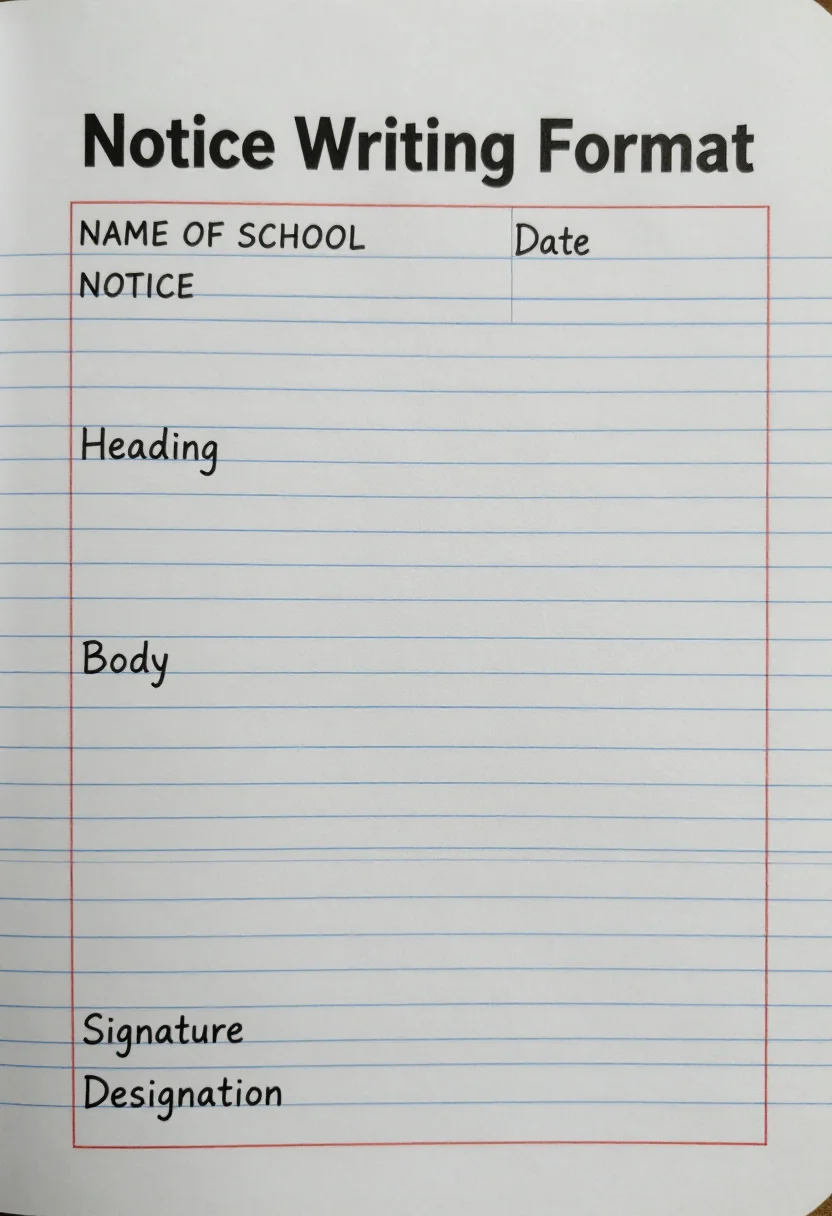
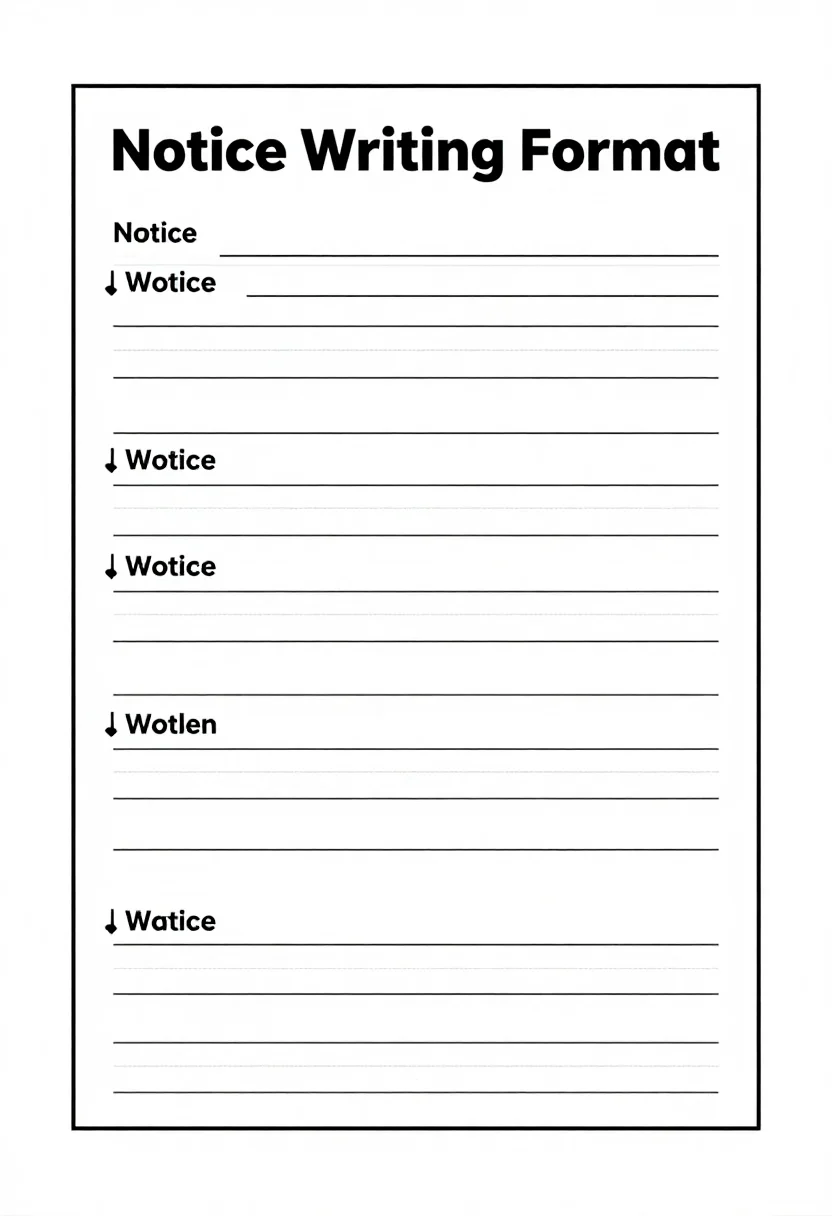
A printable worksheet showing the layout of a notice, with each part boxed and named: the heading, date, body, signature and designation. The nine pages show a school notice, a lost-and-found notice and a residents' society notice. The lost-and-found page carries a word-limit note. Ask for another notice and the same labelled layout is asked for.
- a school notice board
- a revision sheet for notice writing
- a reference for a class project
- a template for a club or society notice
Frequently asked questions
- Which parts of a notice are labelled?
- The school name, the word NOTICE, the date, heading, body, signature and designation, in the order a notice uses them.
- Does the lost-and-found page have a word limit?
- Yes. It has a note in the margin that sets a 50-word limit.
- How do the three styles differ?
- Notebook page is hand-lettered pen labels on ruled lines with a red margin, like a school exercise book. Colour-coded gives each part its own colour in a box. Black and white is thin outlines in ink only, ready to photocopy.
- Can I ask for a notice for another purpose?
- Yes. Add a direction for another purpose and the labelled layout is asked for with it. The nine pages shown are the samples here.
About toile
This page is a showcase and a starting point: nine samples already rendered, three readings of the pack crossed with three styles, each shown at the size and ratio it was made for. Take any of them further on the wall with a few words, or ask for all nine again under your own direction; a sign-in keeps what you make, and it is free while Toile is new. The recipe behind each sample — the subject, the style, the palette, the framing — travels with the image rather than staying private to the render: it is in the alt text of every sample and in the page's own structured data, so a search engine reads the same handles a person would.