/omisoka-cards · season
Ōmisoka cards: toshikoshi soba, temple bell, kadomatsu
Make your ownŌmisoka cards
Describe yours. We'll remake the whole pack your way.
More like this
the whole catalog →


every sample — three subjects, three styles ↓
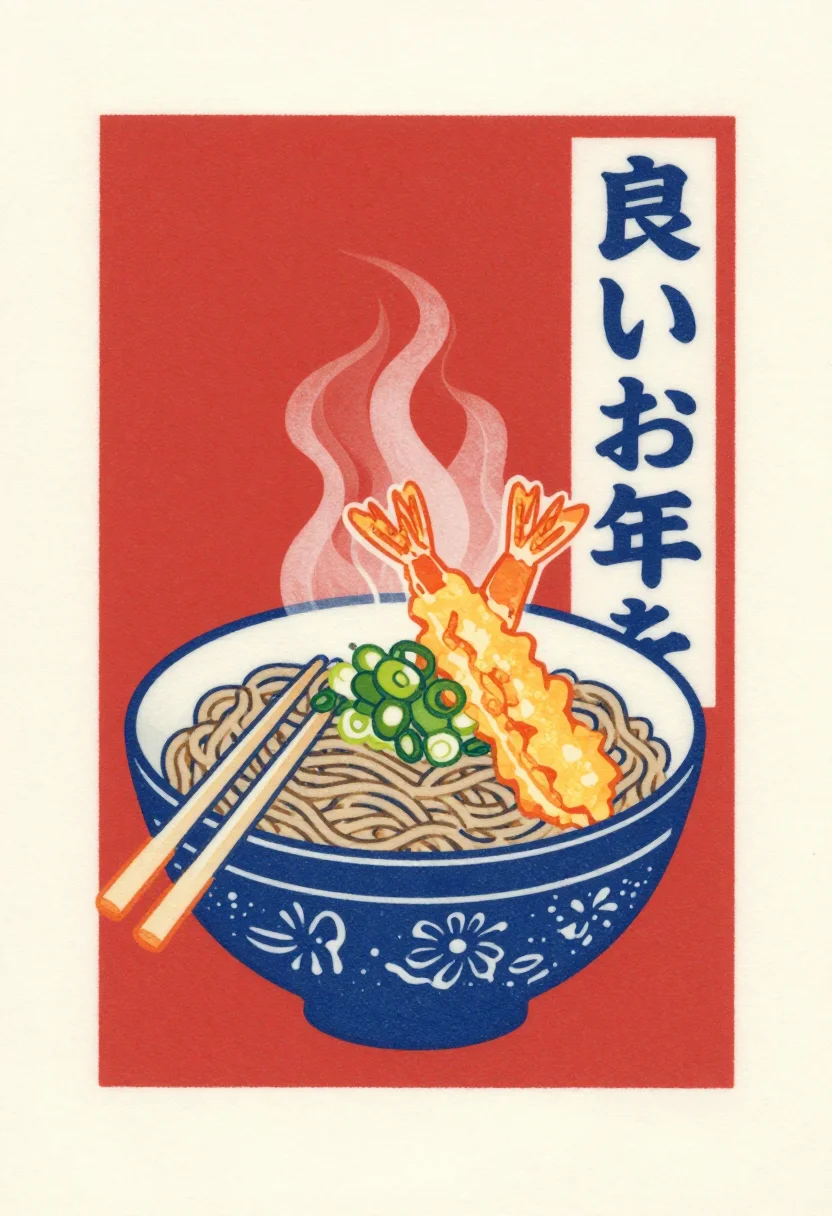
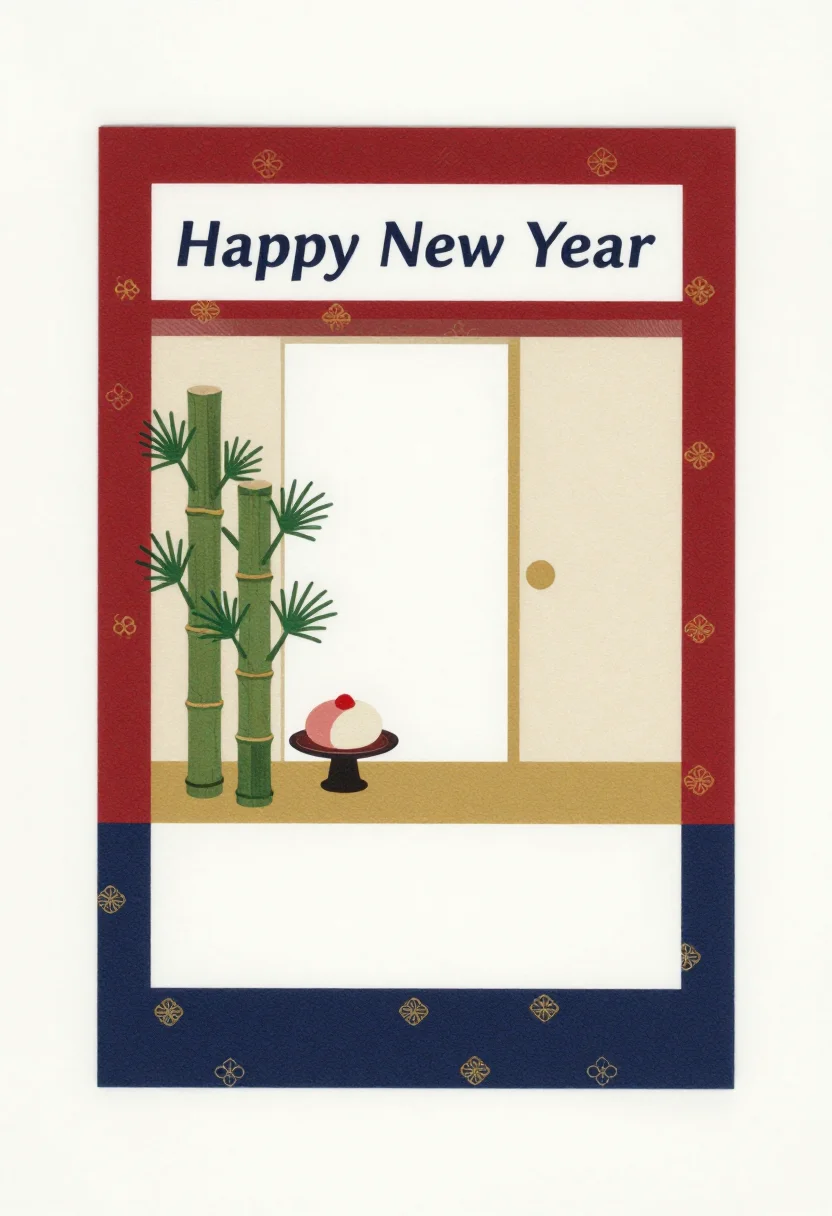
Printable cards for Ōmisoka, the last day of the Japanese year, when families eat toshikoshi soba and temple bells ring 108 times before midnight. The cards show a bowl of soba with prawn tempura, a great bronze temple bell, and a pair of kadomatsu at a doorway. The kadomatsu card leaves an empty panel for a message. Ukiyo-e, sumi ink and washi paper give the three treatments.
- A card to send before the New Year
- A card for a Japanese family abroad
- A card for a New Year's Eve dinner
- A card for a Japanese language class
Frequently asked questions
- What is toshikoshi soba?
- Soba eaten on the last day of the year. The card shows it with prawn tempura and sliced spring onion.
- What is the bell for?
- Temple bells are rung 108 times before midnight on Ōmisoka. The bell card shows the great bronze bell with its striking beam drawn back.
- What is the difference between the three treatments?
- Ukiyo-e uses carved outlines in indigo, vermilion and cream. Sumi ink uses brush strokes in black and grey with one red mark. Washi paper uses patterned paper in deep red, navy and gold.
- Can I have the card in English?
- Type a direction such as in English and the card is made with that wording. It is a request, not a guaranteed result.
About toile
This page is a showcase and a starting point: nine samples already rendered, three readings of the pack crossed with three styles, each shown at the size and ratio it was made for. Take any of them further on the wall with a few words, or ask for all nine again under your own direction; a sign-in keeps what you make, and it is free while Toile is new. The recipe behind each sample — the subject, the style, the palette, the framing — travels with the image rather than staying private to the render: it is in the alt text of every sample and in the page's own structured data, so a search engine reads the same handles a person would.