/opening-hours-signs · shopfront
Opening hours signs: open-closed, weekly grid, back-soon clock
Make your ownOpening hours signs
Describe yours. We'll remake the whole pack your way.
More like this
the whole catalog →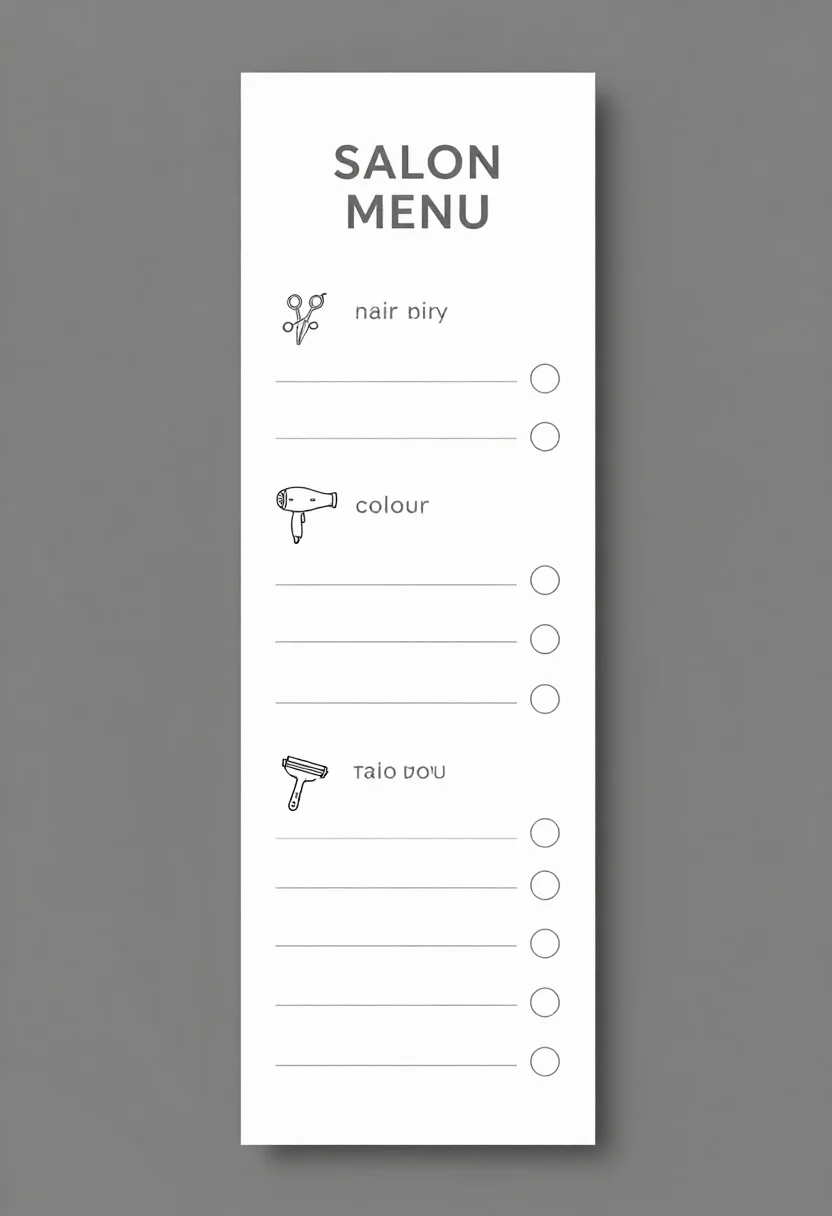

every sample — three subjects, three styles ↓
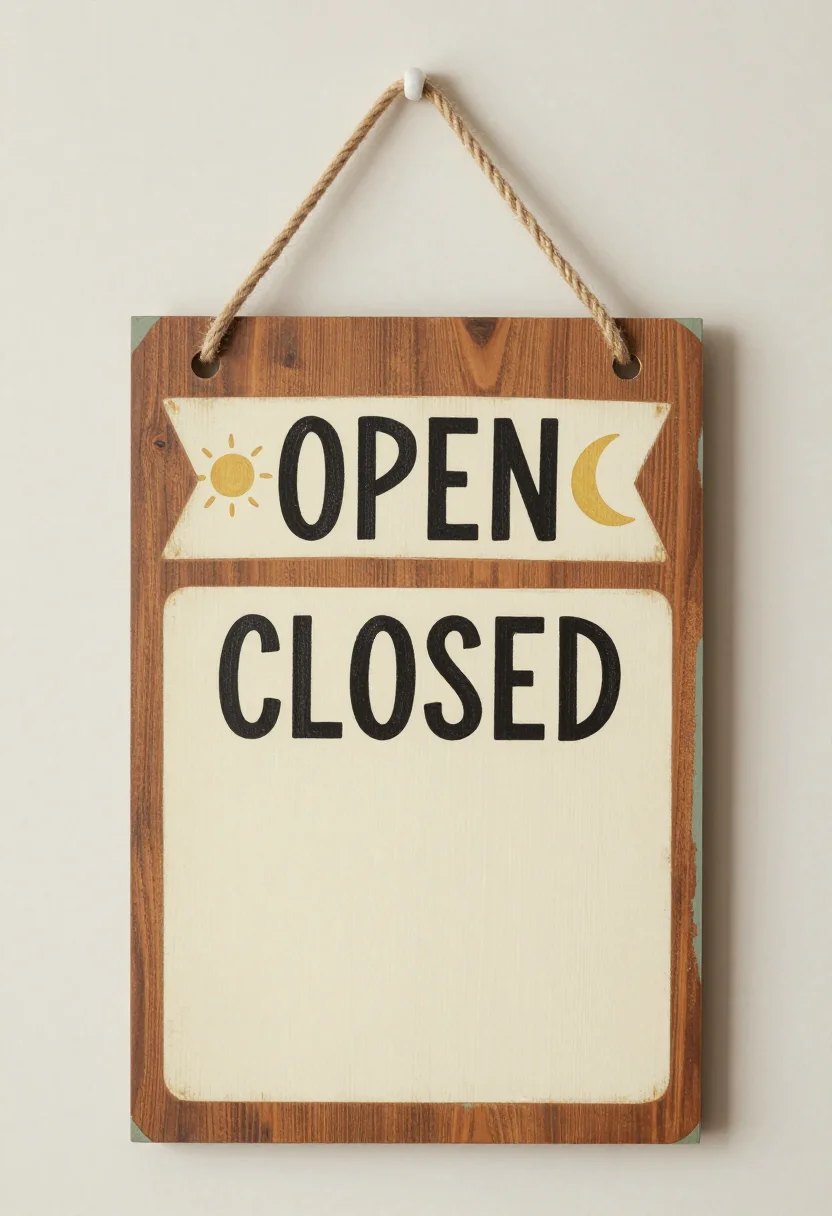
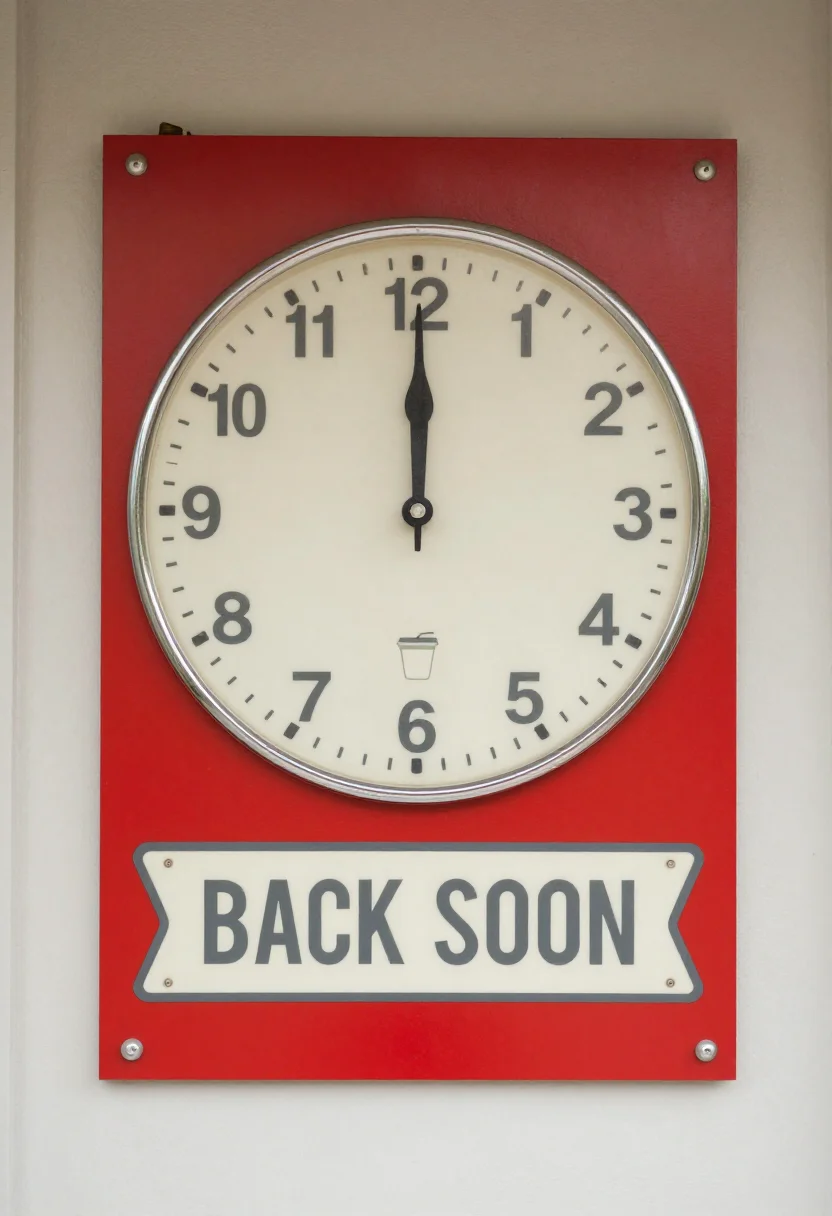
The sign on the door does three jobs — flips open to closed, lists the weekly hours, or promises a quick return — and these nine draw all three as a hanging open-closed pair, a weekly hours grid, and a back-in-five clock sign, in rustic wood, modern minimal and retro diner. Ask for a different trade and the set redraws.
- a shop entrance door
- a cafe front window
- a home-studio door
- a market stall sign
- an office reception door
Frequently asked questions
- What size do these print at?
- Each sign is drawn at a compact portrait or landscape ratio with an even margin, so it prints at A5 or scales up to A4 for a door.
- Are the hours already written in?
- No — the grid lines, banner and clock hands are left blank, so you fill in your own hours or hang the clock sign with real hands.
- Can these be mounted or laminated?
- Yes — the flat, high-contrast design prints and laminates cleanly, or mounts to a hanging sign board with the string hole shown in the design.
- Can I get a different look, like a bakery theme?
- Yes — the direction field takes a request like 'a bakery version' and redraws the set for your trade.
About toile
This page is a showcase and a starting point: nine samples already rendered, three readings of the pack crossed with three styles, each shown at the size and ratio it was made for. Take any of them further on the wall with a few words, or ask for all nine again under your own direction; a sign-in keeps what you make, and it is free while Toile is new. The recipe behind each sample — the subject, the style, the palette, the framing — travels with the image rather than staying private to the render: it is in the alt text of every sample and in the page's own structured data, so a search engine reads the same handles a person would.