/owls · motif
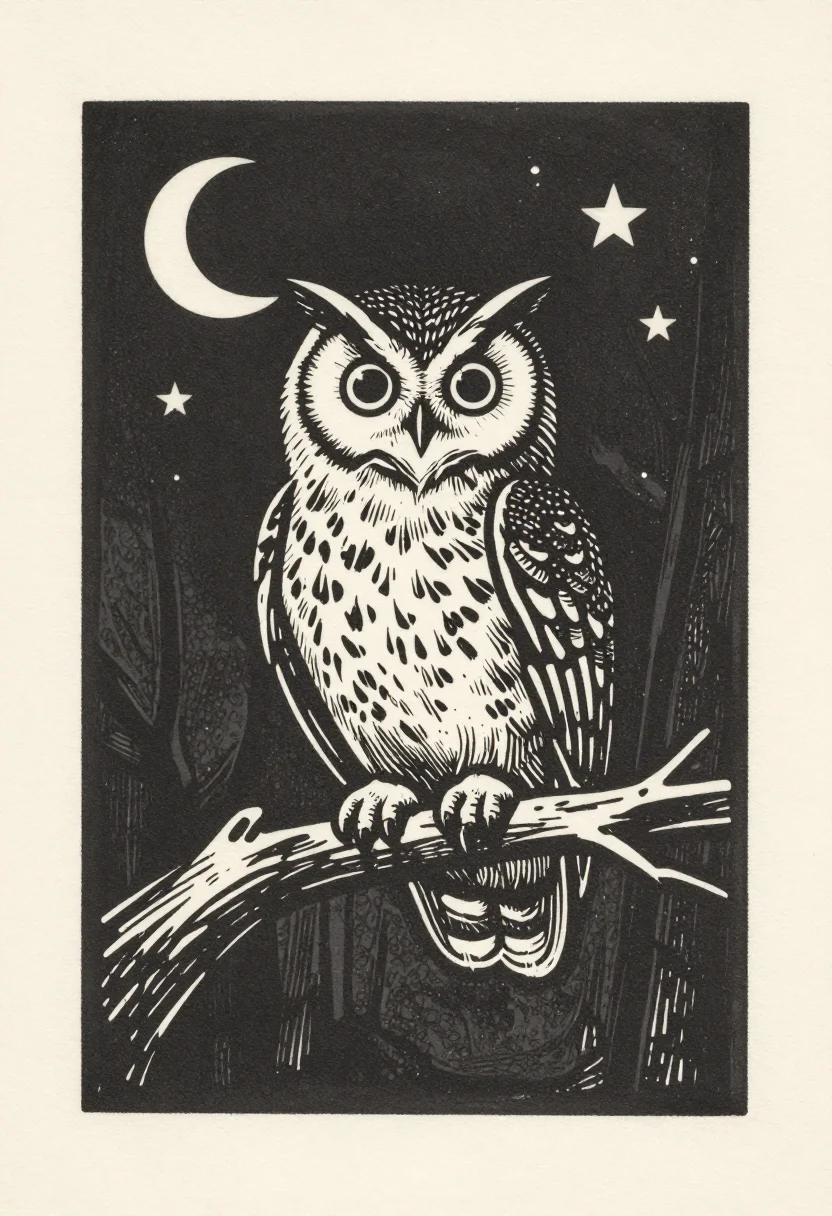
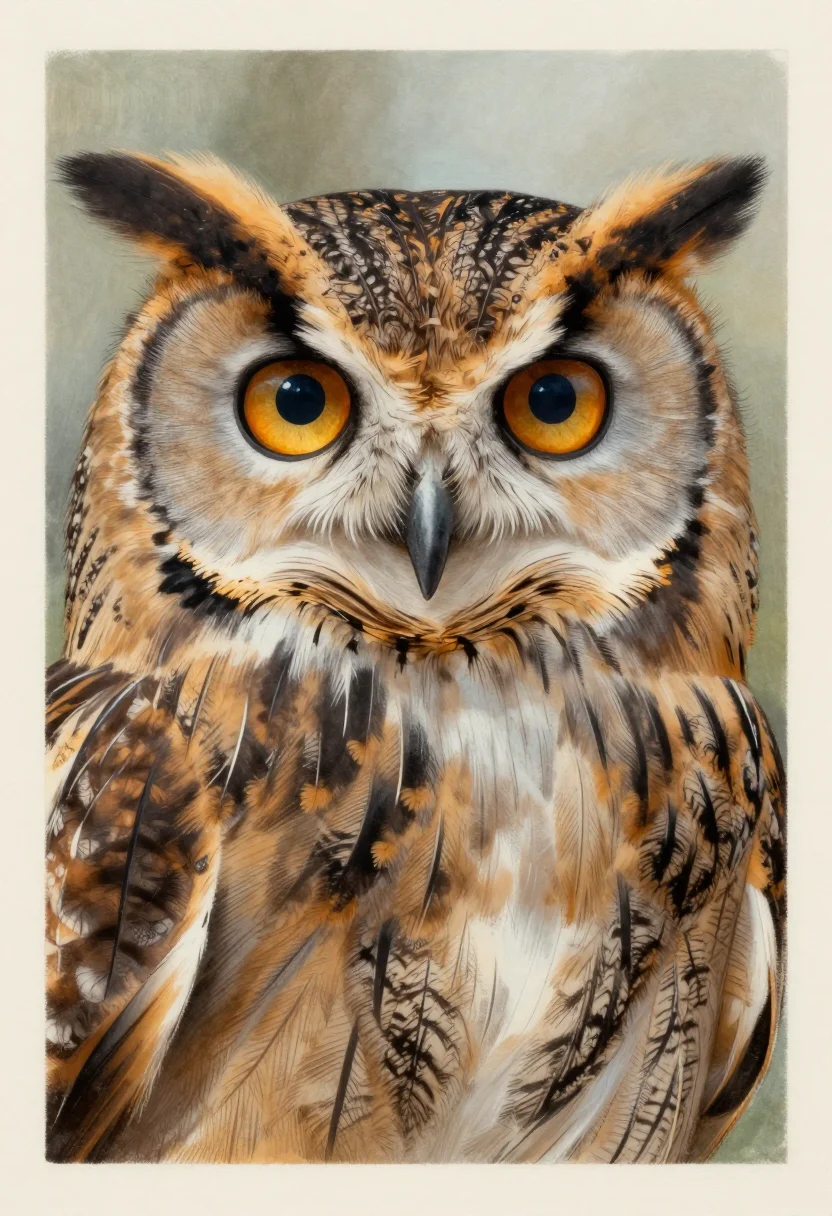
Owl art: on a branch at night, in silent flight, close face
Make your ownOwls
Describe yours. We'll remake the whole pack your way.
More like this
the whole catalog →
every sample — three subjects, three styles ↓
The wise bird crosses every register without changing shape: one owl in three readings — perched on a branch under a crescent moon, coming in on silent wings, the face filling the frame — rendered as a carved woodcut, a kawaii flat sticker and a painted wildlife print. Ask for a snowy owl instead and the same three finishes carry it.
- a bookplate or library gift
- a laptop or notebook sticker
- a classroom mascot or reading-corner print
- a woodland-themed nursery wall
- a gothic or witchy-aesthetic tattoo reference
Frequently asked questions
- What size does this print at?
- Each design is drawn at A3 proportions with an even margin, so it prints clean at A3 or scales down to A4.
- What's the difference between the three finishes?
- The woodcut is bold carved marks with the lights cut away, one ink on cream paper. The kawaii sticker reduces the bird to round pastel shapes with a die-cut border. The painted print picks out each feather in warm, naturalistic color.
- Can I get a different owl, like a snowy owl?
- Yes — the direction field takes any variation, such as a snowy owl, a bookplate treatment, or a classroom-mascot version, and the same three finishes render it.
- Is the woodcut version good for a bookplate?
- Yes — it's drawn as a single-ink print with a carved border, the traditional bookplate format, and prints clean at bookplate size or larger.
About toile
This page is a showcase and a starting point: nine samples already rendered, three readings of the pack crossed with three styles, each shown at the size and ratio it was made for. Take any of them further on the wall with a few words, or ask for all nine again under your own direction; a sign-in keeps what you make, and it is free while Toile is new. The recipe behind each sample — the subject, the style, the palette, the framing — travels with the image rather than staying private to the render: it is in the alt text of every sample and in the page's own structured data, so a search engine reads the same handles a person would.