/palmistry · divination
Palmistry art: palm-line chart, moon-and-stars hand, eye-in-hand
Make your ownPalmistry
Describe yours. We'll remake the whole pack your way.
More like this
the whole catalog →

every sample — three subjects, three styles ↓
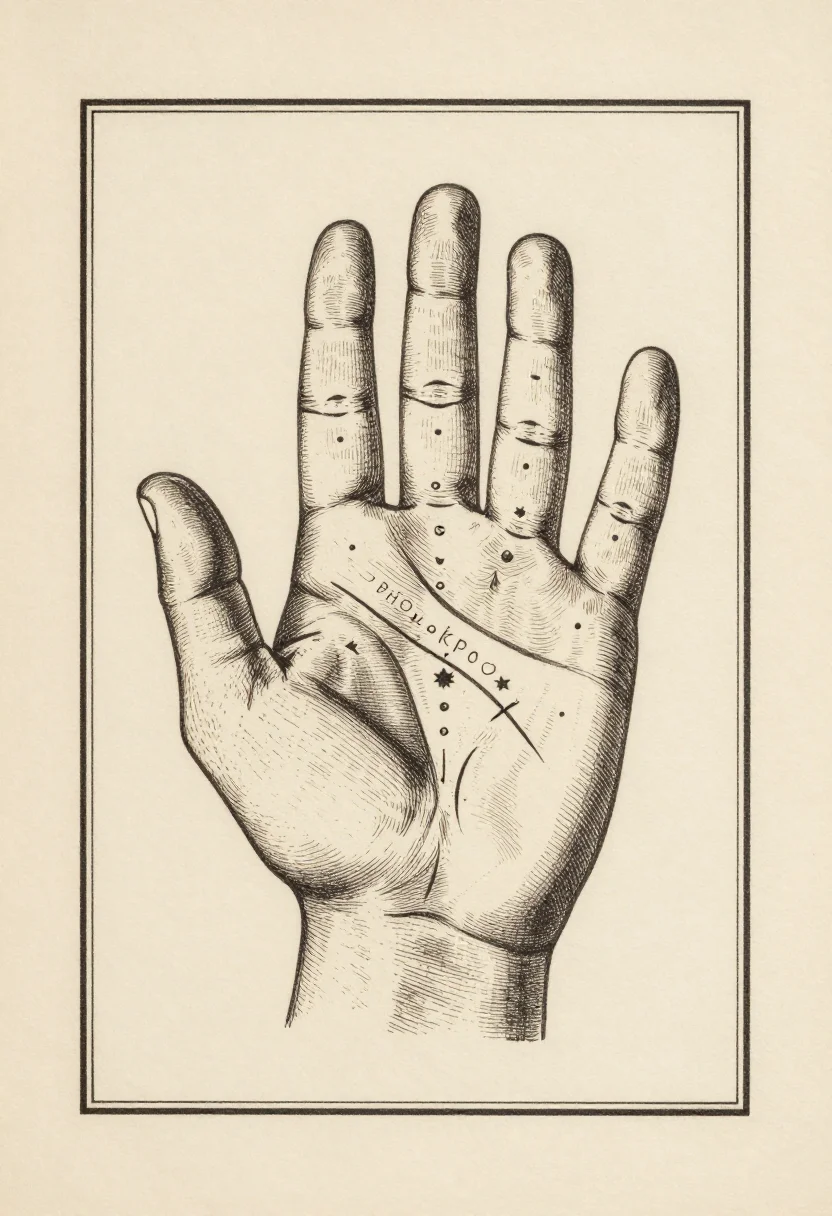
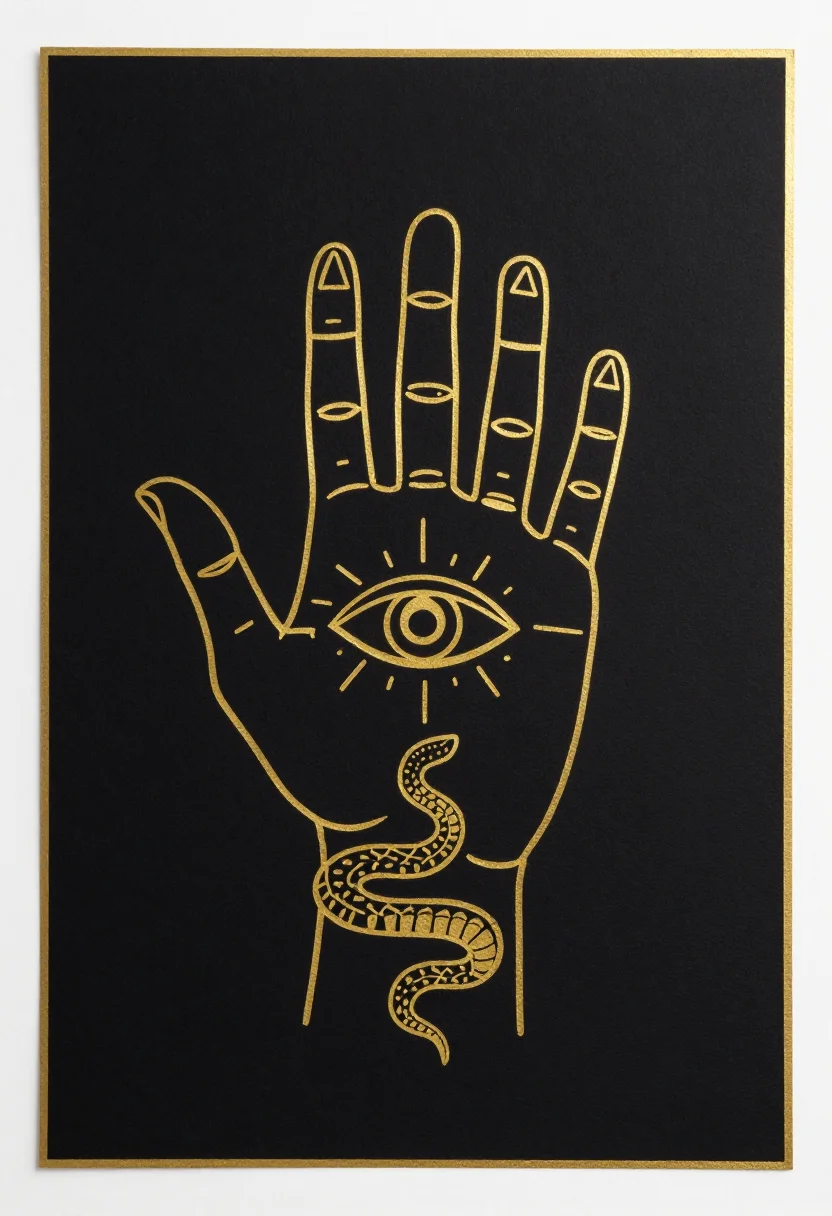
The palm-reading chart renders three ways: an open hand with its lines marked, a hand paired with a moon and stars, and a hand holding an eye. Engraving, fine-line and gold-on-black carry all three, with labels left as marks rather than text. Ask for a different reading and the same three styles carry it.
- a tattoo flash reference
- a reading-room or altar wall
- a gift print for a palm reader
- a phone wallpaper
- a journal or study reference
Frequently asked questions
- What size do these print at?
- Each print is drawn at A3 proportions with an even margin, so it prints clean at A3 or scales down to A4.
- Are the palm lines labeled with real palmistry terms?
- The lines are drawn and marked as a chart composition; any labels render as marks, not as readable palmistry terminology.
- What's the difference between the three styles?
- Engraving uses fine cross-hatched linework; fine-line is a single-weight ink outline; gold-on-black sets metallic linework on a dark ground.
- Are these good tattoo references?
- The fine-line column is drawn at flash-sheet weight and proportion, so it works directly as a reference to bring to a shop.
- Can I get just the hand with no chart marks?
- The direction field can ask for a plainer hand study, and the same three styles will render it.
About toile
This page is a showcase and a starting point: nine samples already rendered, three readings of the pack crossed with three styles, each shown at the size and ratio it was made for. Take any of them further on the wall with a few words, or ask for all nine again under your own direction; a sign-in keeps what you make, and it is free while Toile is new. The recipe behind each sample — the subject, the style, the palette, the framing — travels with the image rather than staying private to the render: it is in the alt text of every sample and in the page's own structured data, so a search engine reads the same handles a person would.