/paper-doll-clothes · classroom
Paper doll clothes: everyday outfits, clothes of the world, dress-up jobs
Make your ownPaper doll clothes
Describe yours. We'll remake the whole pack your way.
More like this
the whole catalog →
every sample — three subjects, three styles ↓
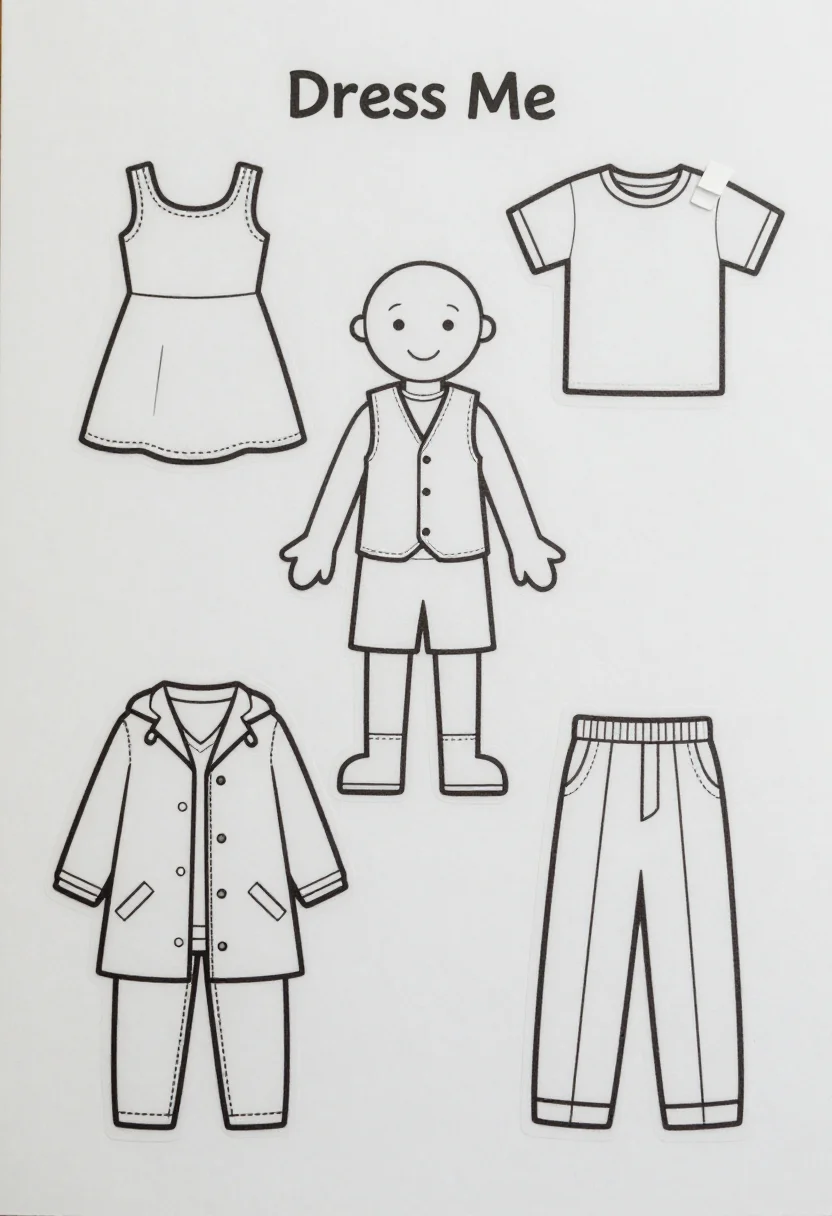
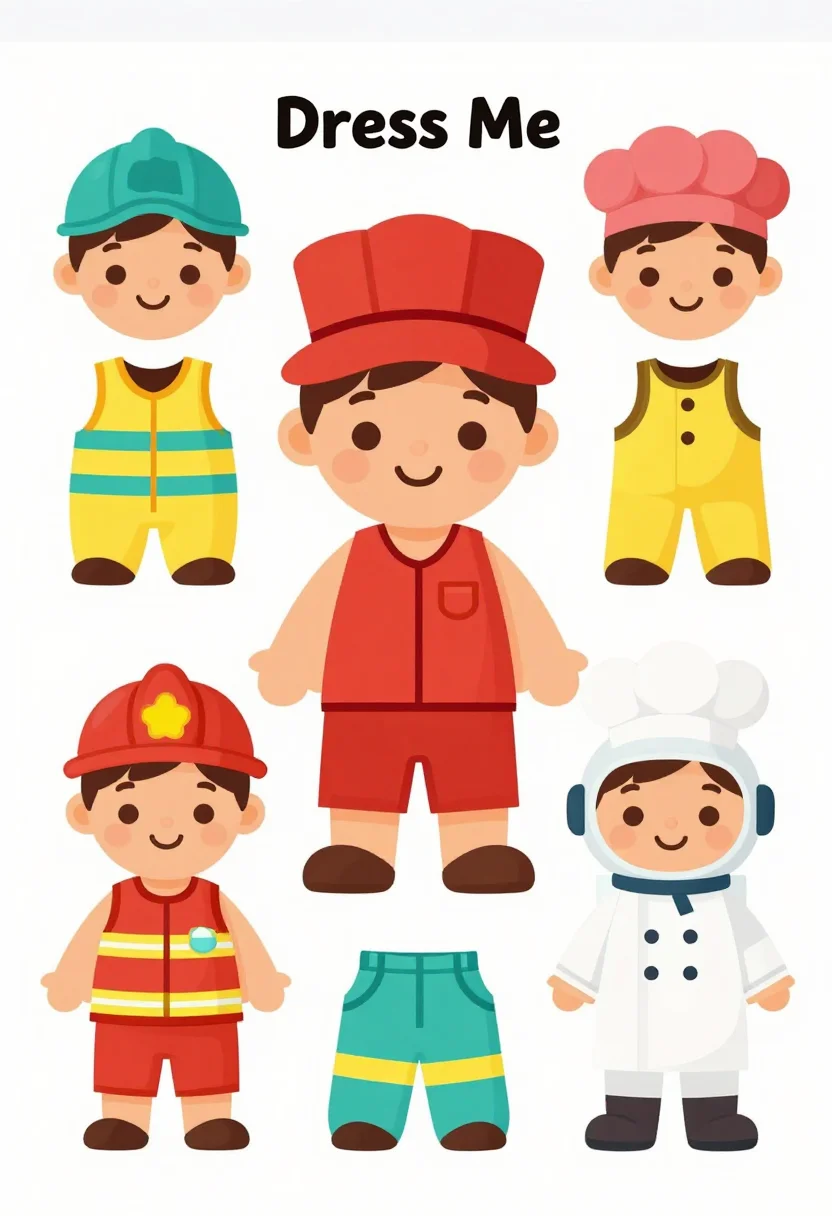
Paper doll clothes are cut-out sheets. A standing doll sits in the middle of the page with outfits around her, each with white fold tabs that bend over her shoulders. Children colour the pieces, cut them out and dress the doll. The sets are everyday outfits, clothes from around the world and dress-up jobs. Type a different twist, such as a boy doll or winter coats, and the same layout is drawn with that change.
- a classroom craft or fashion lesson
- a rainy-day activity at home
- a clothes and weather talk with young children
- a set of dolls for a play corner
Frequently asked questions
- How do I print the sheets?
- Print each sheet at full page size on plain paper or card. Every sheet keeps a wide white margin, so it prints cleanly.
- What is the difference between the three styles?
- Colour-in is closed black line art with no shading. Vintage is soft colour in a 1950s storybook look with a cream page. Bright is flat colour with crisp dark outlines.
- Can I change the doll or the outfits?
- Yes. Type a twist such as a boy doll, winter coats or ballet outfits. The nine pictures on this page are fixed; a twist is a request, not a promised picture.
- Do the outfits have tabs to fold?
- Yes. Each outfit has white fold tabs at the shoulders, so the cut-out clothes can be folded over the doll.
About toile
This page is a showcase and a starting point: nine samples already rendered, three readings of the pack crossed with three styles, each shown at the size and ratio it was made for. Take any of them further on the wall with a few words, or ask for all nine again under your own direction; a sign-in keeps what you make, and it is free while Toile is new. The recipe behind each sample — the subject, the style, the palette, the framing — travels with the image rather than staying private to the render: it is in the alt text of every sample and in the page's own structured data, so a search engine reads the same handles a person would.