/peace-posters · classroom
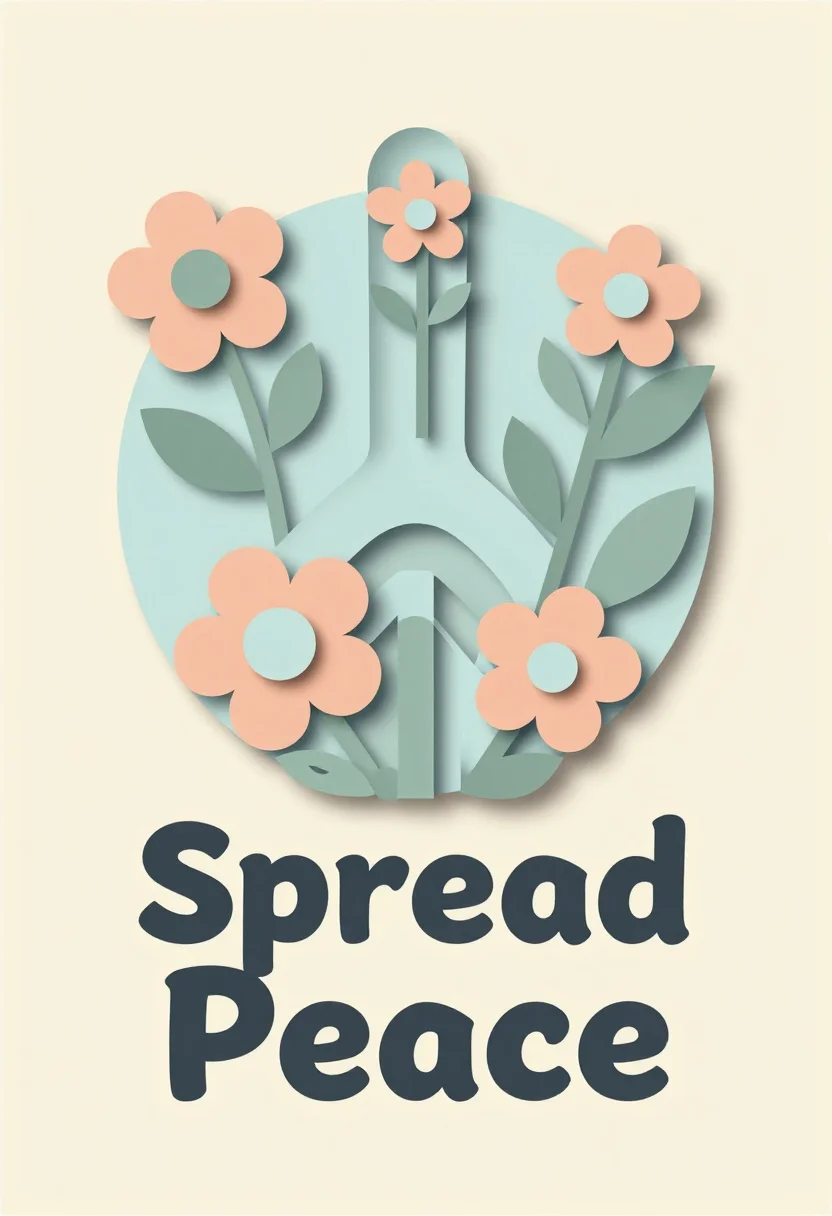
Peace posters: a dove with an olive branch, children around the globe, a flower peace sign

Make your ownPeace posters
Describe yours. We'll remake the whole pack your way.
More like this
the whole catalog →
every sample — three subjects, three styles ↓
Peace posters for the International Day of Peace, peace poster contests and school exhibitions. The nine pictures show a white dove with an olive branch over a blue sky and a rainbow, children of many countries holding hands in a ring around the globe, and a peace sign made entirely of flowers and leaves. Each idea comes in three styles. Type a twist with your request, such as paper cranes or blue and white.
- a school exhibition board
- a peace poster contest entry
- a classroom wall on the International Day of Peace
- a library window display
Frequently asked questions
- What do the nine pictures show?
- Three ideas in three styles: a dove with an olive branch, children around the globe, and a peace sign made of flowers.
- What is the difference between the three styles?
- Bold flat uses clean vector shapes and thick lettering, crayon has wobbly hand-drawn outlines on paper, and paper cut uses layered coloured paper with soft shadows.
- Can I ask for a different twist?
- Yes, add it to your request, such as paper cranes or blue and white; the sample shows one version of that request.
- Are the slogans exact?
- The slogans are set as quoted, with no other lettering in the picture; check every word against your own text before you print.
About toile
This page is a showcase and a starting point: nine samples already rendered, three readings of the pack crossed with three styles, each shown at the size and ratio it was made for. Take any of them further on the wall with a few words, or ask for all nine again under your own direction; a sign-in keeps what you make, and it is free while Toile is new. The recipe behind each sample — the subject, the style, the palette, the framing — travels with the image rather than staying private to the render: it is in the alt text of every sample and in the page's own structured data, so a search engine reads the same handles a person would.