/place-cards · occasions
Place cards: wedding, dinner party and kraft-tag formats in three styles
Make your ownPlace cards
Describe yours. We'll remake the whole pack your way.
More like this
the whole catalog →
every sample — three subjects, three styles ↓
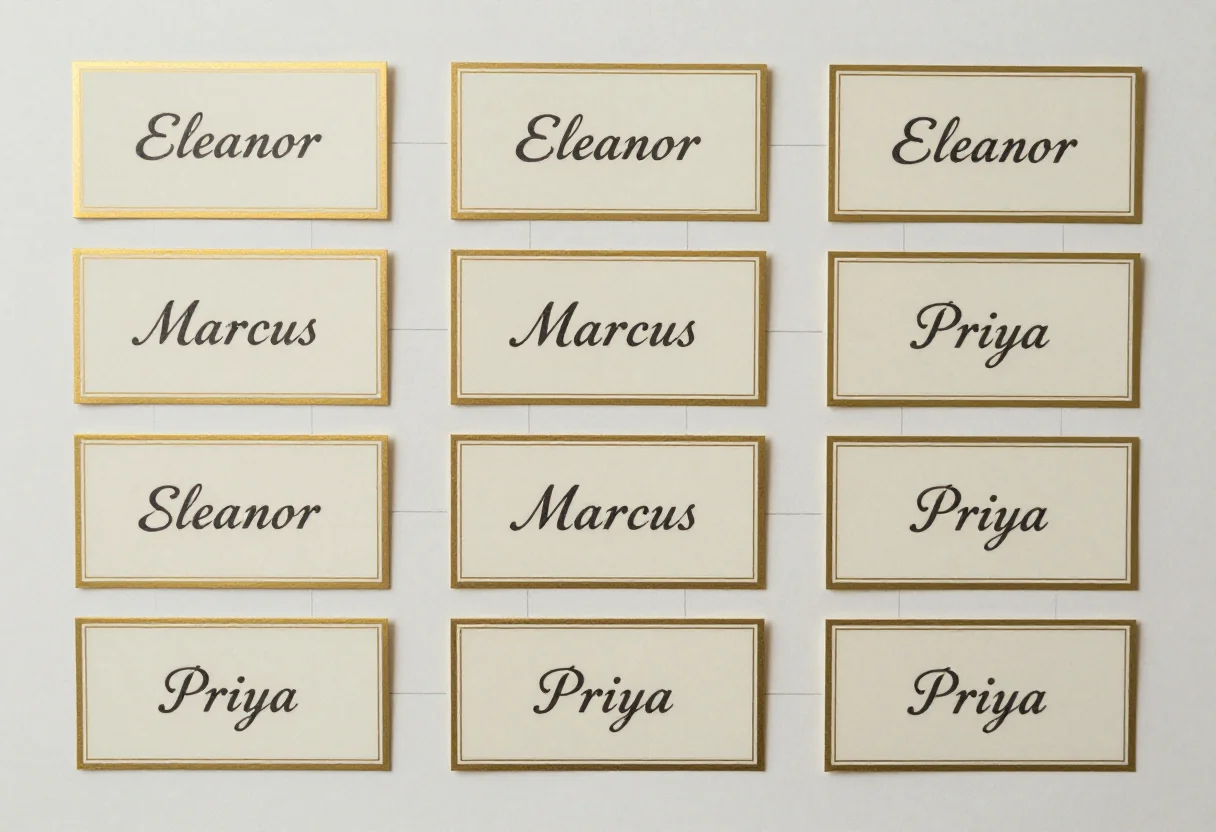
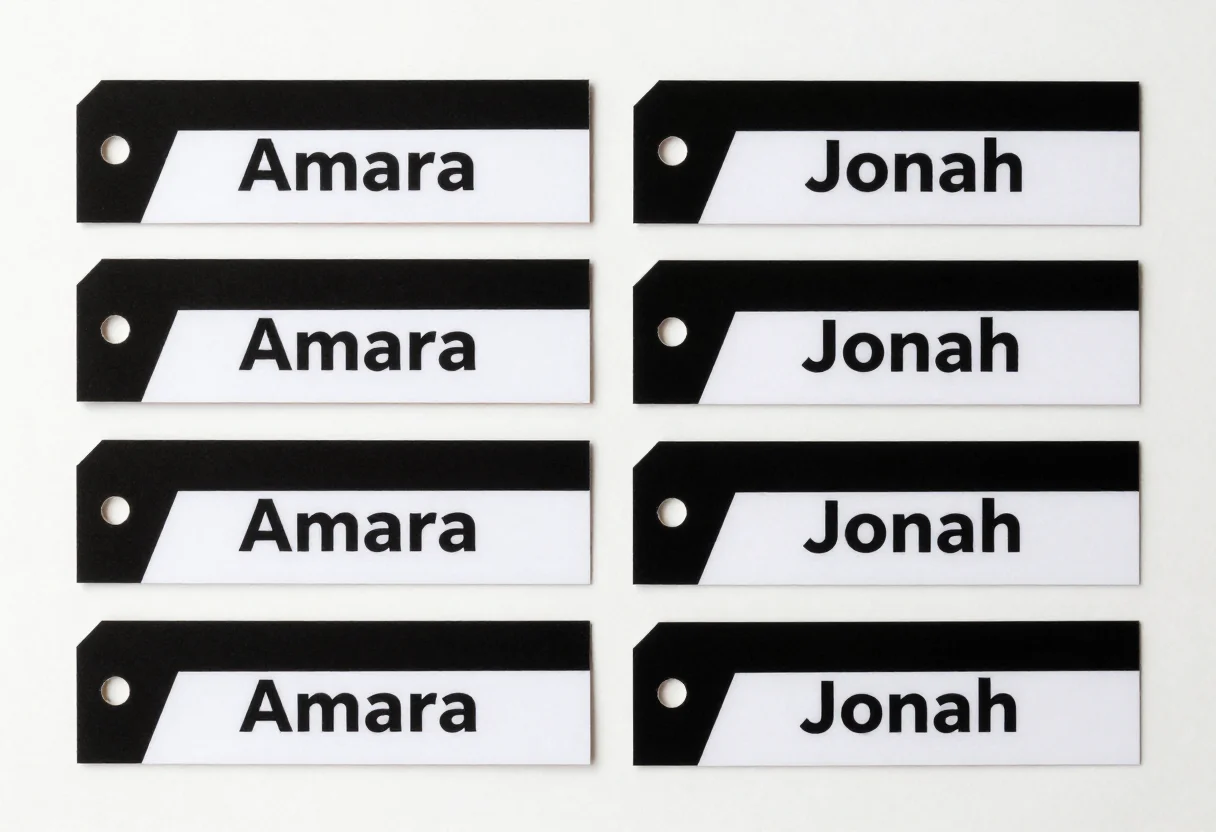
A place card is small but it's the last thing set on the table: a gold-edged classic for a wedding, a modern black bar for a dinner party, a kraft tag with a twine hole for something more casual. Ten print to a sheet with fold and cut lines, in gilded, eucalyptus-sprig, or plain black-bar styles. Ask for table numbers added, or an autumn palette, and it redraws.
- place cards for a wedding reception
- name cards for a dinner party
- kraft tags tied with twine for a rustic table
- a set to match a wedding menu and save-the-date suite
Frequently asked questions
- How many print per sheet?
- Ten place cards print per sheet, with fold and cut lines, so a single sheet sets ten seats.
- Do I write the guest names myself?
- Yes — each card leaves a blank name line; the border, sprig or gilded edge is printed, the name is handwritten or added afterward.
- Can I add table numbers too?
- Yes — type 'with table numbers too' in the direction field and a matching number card is added to the set.
- Is there a rustic option, not just formal ones?
- The kraft-tag style is built for a casual or rustic table — a twine hole is marked and the card is sized to tie on rather than stand.
About toile
This page is a showcase and a starting point: nine samples already rendered, three readings of the pack crossed with three styles, each shown at the size and ratio it was made for. Take any of them further on the wall with a few words, or ask for all nine again under your own direction; a sign-in keeps what you make, and it is free while Toile is new. The recipe behind each sample — the subject, the style, the palette, the framing — travels with the image rather than staying private to the render: it is in the alt text of every sample and in the page's own structured data, so a search engine reads the same handles a person would.