/pooja-room-rangoli · faith
Pooja room rangoli: a lotus, a kolam with a kalash, a diya ring
Make your ownPooja room rangoli
Describe yours. We'll remake the whole pack your way.
More like this
the whole catalog →


every sample — three subjects, three styles ↓
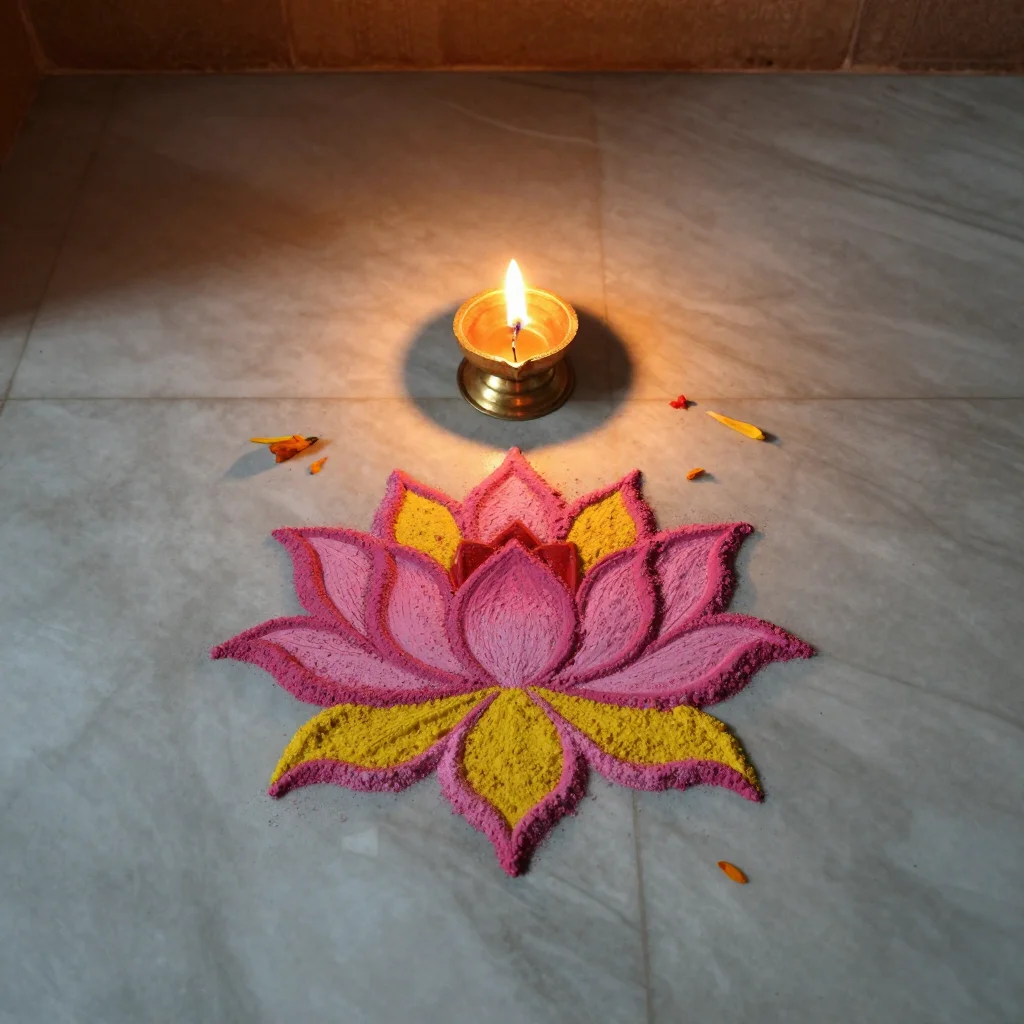
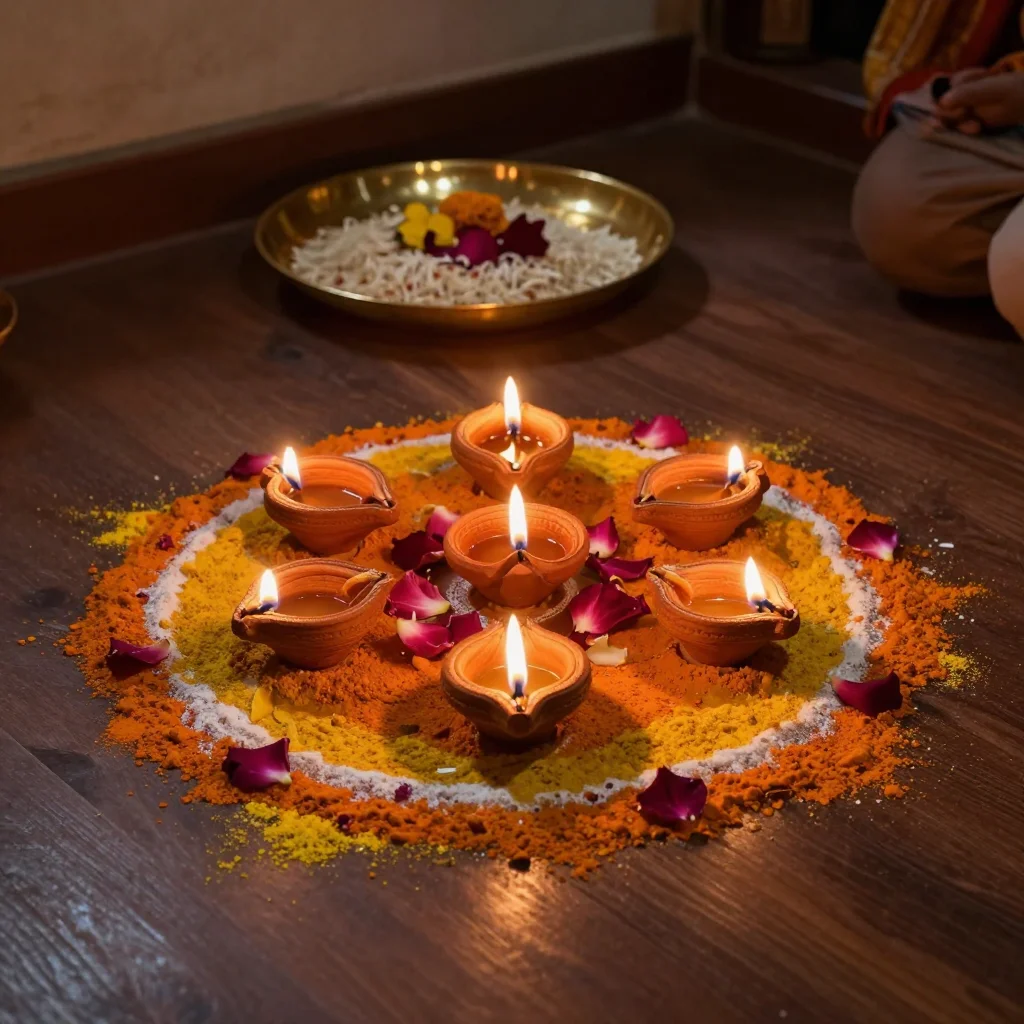
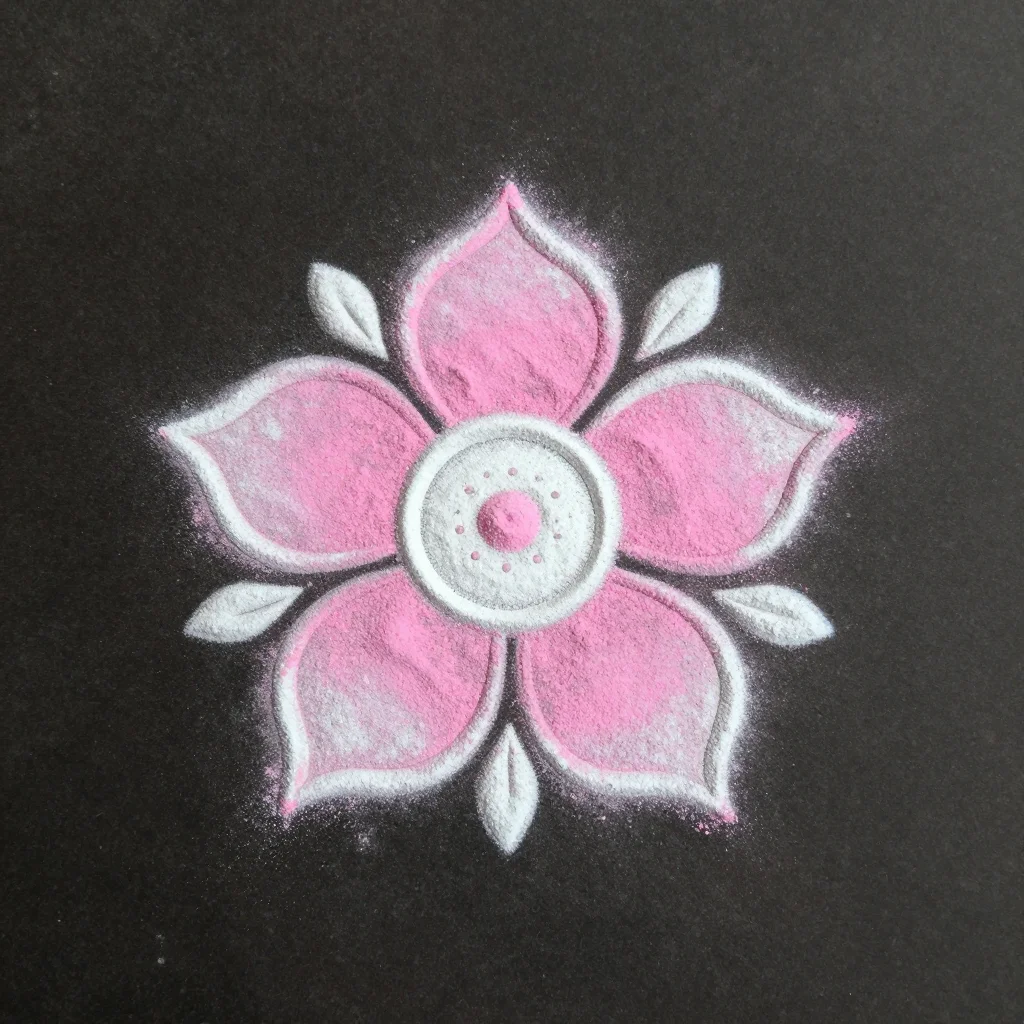
The small rangoli is laid each morning, or on puja days, on the floor before the home mandir. These nine show three designs: a small lotus before a brass lamp, a white rice-flour kolam with a kalash, and a ring of five lit diyas on orange powder. Each is shown from above, at floor level in lamplight, or beside a brass puja thali. Type a twist, such as Om symbol, to ask for it.
- a daily floor before a home shrine
- a puja-day design
- a small corner for a mandir
Frequently asked questions
- Does the picture show the shrine?
- No. The shrine is just out of frame, and none of the nine shows a deity image.
- What is a kalash?
- A pot of water topped with a coconut and mango leaves, used in puja and to welcome guests.
- What is the difference between the three styles?
- Top view shows the whole design centred; close-up is a low shot with the flame sharp and the rest softening; with thali sets a brass plate of rice, kumkum and flowers at the top edge.
About toile
This page is a showcase and a starting point: nine samples already rendered, three readings of the pack crossed with three styles, each shown at the size and ratio it was made for. Take any of them further on the wall with a few words, or ask for all nine again under your own direction; a sign-in keeps what you make, and it is free while Toile is new. The recipe behind each sample — the subject, the style, the palette, the framing — travels with the image rather than staying private to the render: it is in the alt text of every sample and in the page's own structured data, so a search engine reads the same handles a person would.