/quaid-e-azam-day-posters · faith
Quaid-e-Azam Day posters: Mazar-e-Quaid, Unity Faith Discipline, Jinnah cap

Make your ownQuaid-e-Azam Day posters
Describe yours. We'll remake the whole pack your way.
More like this
the whole catalog →

every sample — three subjects, three styles ↓
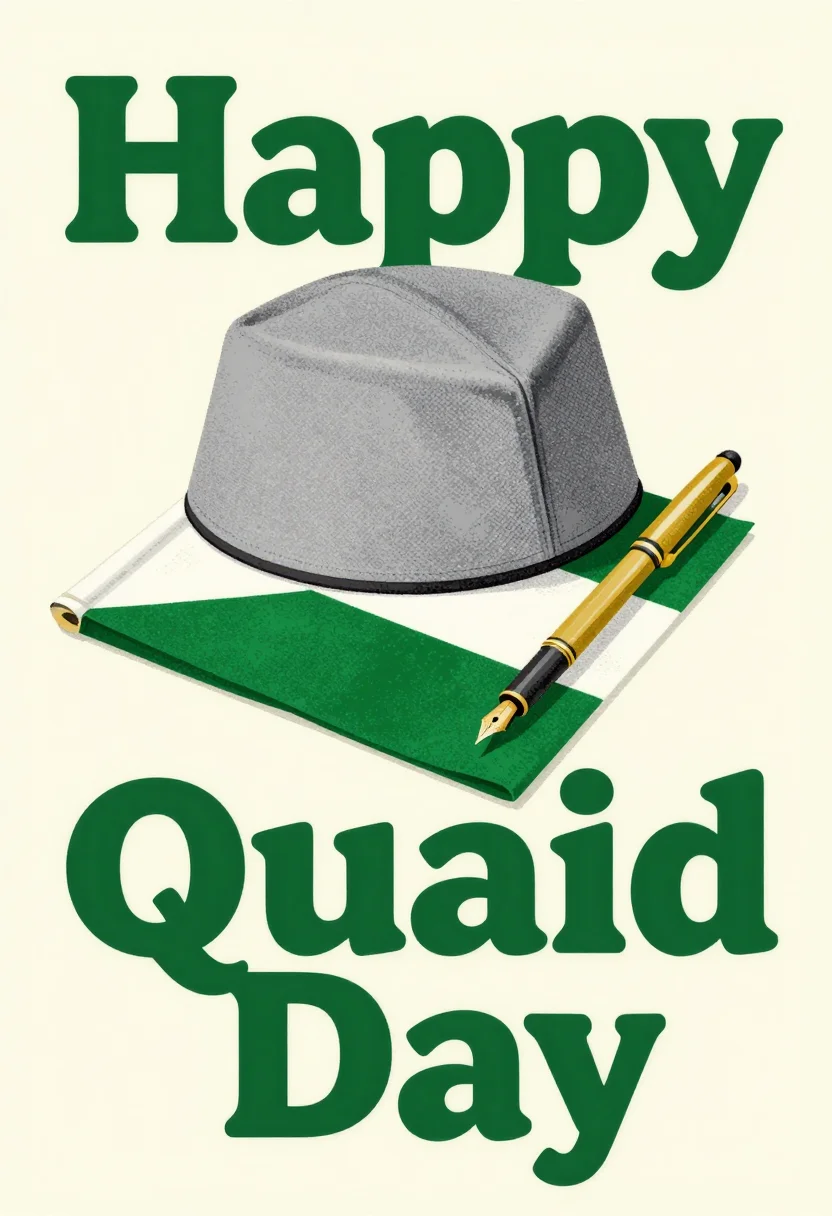
Posters for Quaid-e-Azam Day on 25 December, the birthday of Muhammad Ali Jinnah. They suit school assemblies, office boards and status posts. The three designs show the white marble Mazar-e-Quaid in Karachi, a flag with the words Unity, Faith, Discipline, and a Jinnah cap beside a folded flag, with the greeting lettered in each. Type a different twist, such as a gold border or a night sky, and the same three styles carry it.
- a school assembly poster
- an office notice board
- a status post on the day
Frequently asked questions
- What is in the nine pictures?
- Three designs, each in three styles: the Mazar-e-Quaid in Karachi, a flag with the words Unity, Faith, Discipline, and a grey Jinnah cap on a folded flag.
- What is the difference between the three styles?
- Flat vector is bold clean shapes with hard edges, paper cut is layered card with soft shadows, and screen print is overprinted ink with a faint halftone texture.
- Can I change the subject or add a border or a sky?
- Yes. Type the change, such as a gold border, a night sky or a school assembly scene; a typed direction is a request, not a promised result.
- Do the posters show a person?
- No. They show no faces and no photographs, and the third design is a cap, not a portrait.
About toile
This page is a showcase and a starting point: nine samples already rendered, three readings of the pack crossed with three styles, each shown at the size and ratio it was made for. Take any of them further on the wall with a few words, or ask for all nine again under your own direction; a sign-in keeps what you make, and it is free while Toile is new. The recipe behind each sample — the subject, the style, the palette, the framing — travels with the image rather than staying private to the render: it is in the alt text of every sample and in the page's own structured data, so a search engine reads the same handles a person would.